According to www.automotivelogistics.media, BMW Group has reduced the lifecycle CO₂e emissions of its new fifth-generation X5 by around 40% — a figure benchmarked against industry averages from an internationally recognised life cycle assessment (LCA) database.
Supply chain drives largest emissions reduction
Nils Hesse, vice president of product sustainability at BMW Group, confirmed in an exclusive interview with Automotive Manufacturing Solutions that the supply chain is the main contributor to CO₂ reduction in electric vehicles — and that battery cells represent the single largest lever. “In an electric vehicle, the supply chain is the main contributor to CO₂ reduction. The measures with the highest impact are battery cells. Reducing the CO₂ footprint of the cells was the biggest single lever, followed by aluminum and steel,” he said.
This ordering underscores a critical industry reality: battery cells dominate the carbon footprint of EVs more than body structure, production energy, or any other bill-of-materials component. That insight directly informs BMW’s investment in Gen6 cylindrical high-voltage battery cells used in the iX5 60 xDrive, which deliver a 28% lower CO₂e per watt-hour compared with the Gen5 prismatic cells in the BMW iX.
Material decarbonisation in Spartanburg
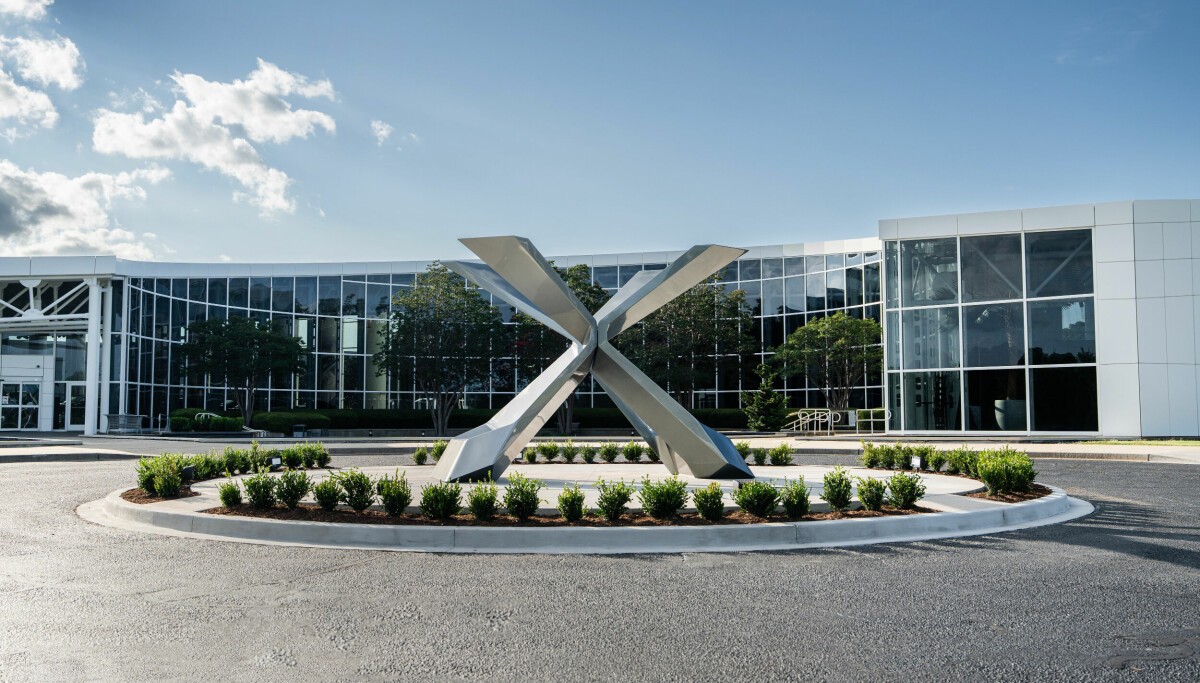
The new X5 is assembled at BMW Group Plant Spartanburg in South Carolina — where local circularity initiatives significantly cut upstream emissions. 50% of flat steel used is electric arc furnace (EAF) steel with high secondary content, produced using renewable energy via long-standing partnerships with North American suppliers. In addition, 35% recycled aluminum is used in doors — sourced via a closed-loop system recovering scrap from Spartanburg’s own press shop.
The vehicle’s interior also reflects material innovation: the headliner yarn is made entirely from 100% recycled PET. And across the iX5 60 xDrive model, roughly one third of total vehicle weight — equivalent to 940 kg — consists of secondary materials, including aluminum suspension parts, rims, wheel carriers, and swivel bearings. All aluminum components in this category are manufactured using 100% renewable energy for both electrolysis and production.
Constraints and contractual levers
Hesse acknowledged persistent challenges: “The most challenging stage remains across the supply chain. In an electric vehicle, the use phase is already largely electrified, shifting the main CO₂ reduction potential into the supply chain itself.” He noted that while BMW mandates 100% renewable energy for all direct battery cell suppliers, scaling secondary materials remains difficult — not due to technical capability, but because recycled battery-grade cobalt, lithium, and nickel are not yet available at sufficient scale.
This constraint shapes BMW’s strategy: it requires every tier-one battery supplier to operate on 100% renewable energy, and it sources high-voltage battery packs from BMW Group Plant Woodruff, located just 15 miles from Spartanburg — enabling tight control over logistics and energy sourcing. Figures cited are preliminary forecast values for the X5 40d xDrive and iX5 60 xDrive, to be confirmed in the official Vehicle Footprint (VFP) ahead of Start of Production — scheduled for 2026.
Source: automotivelogistics.media
Compiled from international media by the SCI.AI editorial team.