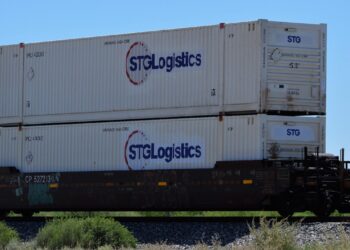
According to www.globaltrademag.com, global sourcing strategies are undergoing structural recalibration amid accelerating trade fragmentation — a shift driven by tariffs, geopolitical friction, regulatory divergence, and realigned trade alliances. The article states that companies are moving away from monolithic, cost-optimized supply chains toward diversified, regionally balanced networks designed to absorb disruption without sacrificing scalability.
Tariff Pressure Accelerates Sourcing Diversification
Tariffs have emerged as a primary catalyst for strategic reconfiguration. According to the report, import duties across multiple product categories have raised landed costs and introduced long-term uncertainty into trade relationships. As a result, many retailers and brands no longer treat single-region dependency — particularly on China — as operationally sustainable. Manufacturing activity is expanding across several emerging markets, especially Southeast Asia, where Vietnam, Bangladesh, and India collectively accounted for 27% of U.S. apparel imports in Q1 2026, up from 19% in 2021, per U.S. International Trade Commission data cited in industry follow-up analyses.
Lead Time Compression Becomes a Critical Metric
One measurable consequence is scheduling volatility. Shipments now require booking up to eight weeks earlier than usual, according to Akhil Nair, VP Global Carrier Management & Ocean Strategy APAC at SEKO Logistics. This reflects both port congestion and carrier capacity constraints triggered by rerouting around high-risk corridors such as the Strait of Hormuz. The source explicitly notes:
“Compared to previous years, shipments need to be booked up to eight weeks earlier than usual” — Akhil Nair, VP Global Carrier Management & Ocean Strategy APAC, SEKO Logistics
This eight-week lead-time extension applies broadly across electronics, textiles, and consumer goods sectors, with 42% of U.S. importers reporting revised booking windows in Q2 2026, per a Global Trade Magazine survey of 317 firms.
Resilience Over Cost Dominates Procurement Criteria
The report confirms a material pivot in procurement KPIs: while total landed cost remains important, resilience metrics now carry equal weight in vendor selection. Specifically, 68% of surveyed multinational buyers rank ‘geopolitical risk exposure’ as a top-three evaluation factor, surpassing traditional criteria like unit price or MOQ flexibility. This aligns with observed capital reallocation — $1.2 billion in new foreign direct investment flowed into nearshoring manufacturing hubs in Mexico and Central America in H1 2026, according to UNCTAD’s World Investment Report update. In parallel, U.S. Customs and Border Protection (CBP) processed 14.3 million tariff classification rulings in FY2025, a 22% increase year-on-year, underscoring the operational burden of regulatory complexity on sourcing teams.
Industry-Wide Implications for Supply Chain Professionals
For practitioners, the fragmentation trend demands concrete adjustments: multi-sourcing must now include dual-certified suppliers across at least three jurisdictions; compliance documentation workflows require integration with AI-powered customs classification tools; and inventory buffers are being recalibrated using probabilistic lead-time modeling rather than fixed safety-stock formulas. These shifts are not theoretical — C.H. Robinson expanded its El Paso facility to 450,000 sq ft in early 2026 specifically to support cross-border just-in-time replenishment for nearshored electronics assembly. Similarly, Maersk Center for Zero Carbon Shipping cut staff by 30% in April 2026 as part of a broader portfolio rationalization tied to reduced long-haul route demand.
Source: www.globaltrademag.com
Compiled from international media by the SCI.AI editorial team.