According to procurementmag.com, DP World screened 500 suppliers in 2025 — representing approximately 18% of global spend — as part of its procurement-led decarbonisation strategy targeting net zero across all emission scopes by 2050.
Sustainability Governance and Supplier Screening
The company uses 2022 as its baseline year and achieved a 14% reduction in combined Scope 1 and 2 emissions versus that benchmark, per DP World’s Sustainability Report 2025. Supplier engagement, responsible sourcing, and supply chain governance were identified as top sustainability priorities following a Double Materiality Assessment — which flagged operational risks from carbon taxes, environmental compliance costs, and climate-driven disruptions. Procurement teams now embed ESG requirements into vendor codes of conduct, due diligence processes, and ongoing supplier management — moving beyond compliance toward collaborative emissions reduction.
Scope 3 Emissions and Renewable Energy Targets
DP World’s total Scope 3 emissions reached 3,259,433 tonnes CO₂e in 2025, with major contributions from upstream/downstream transport, fuel and energy-related activities, capital goods, and purchased goods and services. To improve transparency and hotspot identification, procurement is actively engaging suppliers on carbon measurement and reporting. In parallel, the company sourced 67.6% of its electricity from renewable sources in 2025, against targets of 70% by 2030 and 100% by 2040. Globally, DP World consumed 49,310,616,630 MJ of energy in 2025, of which 5,382,966,789 MJ came from solar, wind, and green electricity procurement.
Low-Carbon Transport and Infrastructure Investment
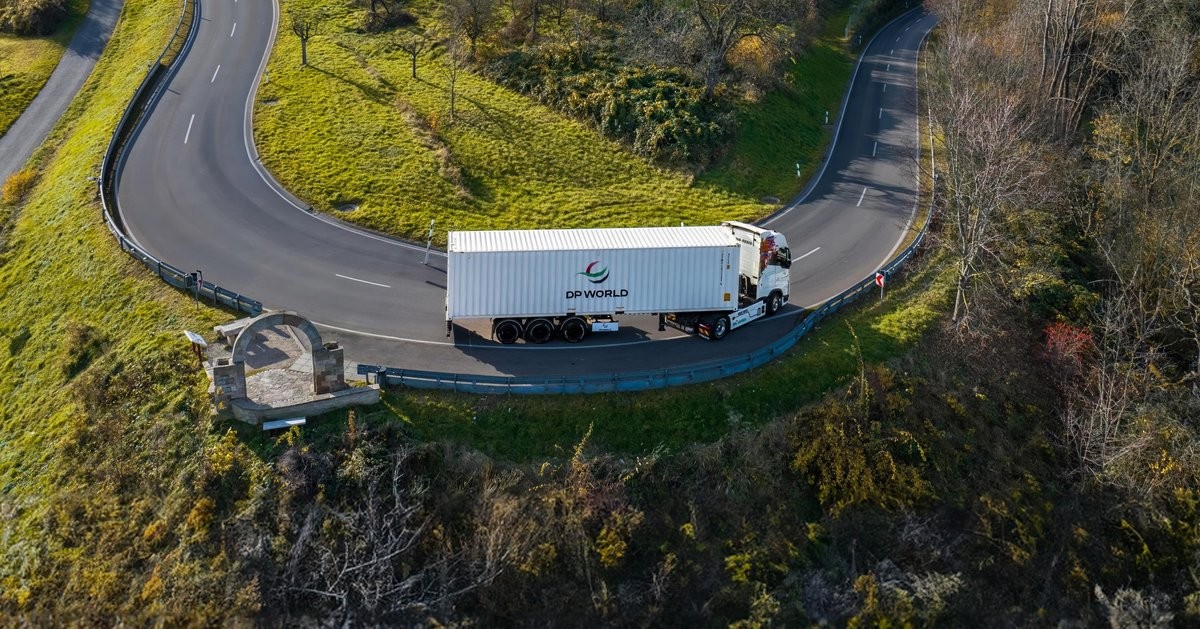
A key logistics intervention was the UK modal shift initiative, which moved 100,000 containers from road to rail, avoiding more than 25,000 tonnes of CO₂e emissions. Electrification efforts expanded across geographies: electric truck operations launched in Germany; electric internal transfer vehicles deployed at terminals in the Philippines, Thailand, and Australia; and electric forklifts introduced in Chile. To accelerate marine decarbonisation, DP World has issued US$67.74 million in blue bond allocations to date — funding diesel-reduction projects, air quality improvements, and efficiency gains. The report notes marine services contributed 67% of total Scope 1 emissions, which stood at 3,066,430 tonnes CO₂e in 2025.
Digital Procurement and Operational Integration
Procurement teams are managing renewable power purchase agreements across multiple regions and scaling infrastructure investments — including rooftop solar installations in Türkiye and South Africa, and renewable electricity programmes in Australia. Digital tools support these goals: AI-powered operational systems, automated stacking cranes, and paperless customs workflows are deployed to reduce fuel consumption and optimise logistics networks. According to the report, these technologies directly support emissions reductions while enhancing productivity across terminals.
“A sustainable future requires ambition, collaboration and perseverance. With the support of our employees, customers, partners and stakeholders, I am confident that we will continue to shape a more resilient, more inclusive and more sustainable future for global trade.” — Yuvraj Narayan, Group Chief Executive Officer, DP World
“Today, with the rising price of fossil fuels, the total cost of ownership of heavy road transport now favours electric solutions, meaning the energy transition is also an economic transition for both our business and our customers.” — Rashid Abdulla, CEO and MD for Europe, DP World
“This year’s report shares our refreshed strategy that looks to clarify and measure impact. The intention is to take a practical business approach prioritising our customers and partners. What is distinct about the refresh is the newly introduced enablers that prioritise governance and risk and innovation and opportunity.” — Ayla Bajwa, Senior Vice President Sustainability, DP World
Source: procurementmag.com
Compiled from international media by the SCI.AI editorial team.