According to americasmi.com, Latin America’s persistent supply chain disruptions — driven by infrastructure deficits, climate shocks, security risks, and regulatory instability — are generating unexpected commercial opportunities across logistics, mining, and energy sectors, even as trade volumes rise. The report notes that Mexico’s exports to the US reached US$425 billion from January to August 2025 and grew 12% year-on-year in September 2025 versus September 2024 — positioning the country to surpass its 2024 total of US$503 billion in US-bound exports.
Logistics: Congestion, Nearshoring, and Transshipment Shifts
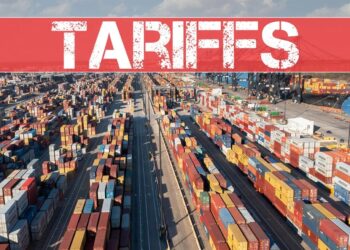
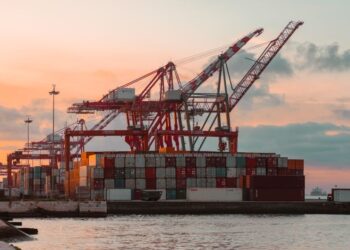
Port congestion remains acute across the Caribbean: the report identifies Cartagena, Caucedo, Kingston, Callao, and Port of Spain as key nodes overwhelmed in 2025 due to front-loading after US tariff suspensions and accumulation of empty containers in the region. While a slowdown in 2026 may ease pressure, structural bottlenecks persist — including outdated infrastructure, Pacific-Atlantic corridor bottlenecks, and limited cold-chain capacity. Notably, cargo theft in Mexico occurs at a rate of one transport vehicle stolen every 38 minutes.
The future of the USMCA, up for renewal in 2026, adds uncertainty: it may lapse or shift to annual review. Yet trade momentum continues — Mexico’s exports to the US rose 6.3% in H1 2025 versus H1 2024. This resilience supports nearshoring expansion beyond Mexico into Central America, where asset-heavy logistics firms are advised to identify trucking and customs partners as strategic hedges.
Global alliance shifts are also accelerating: the Mercosur–EU free trade agreement is being fast-tracked in response to US-led trade disruption. That development could reshape compliance demands — particularly given the EU’s upcoming deforestation rules affecting Brazilian exports. Logistics providers are thus urged to expand compliance and consultative warehousing services, including segregated storage for EU-bound goods pending regulatory verification.
Mining: Processing Investments and State-Major Partnerships
Supply chain volatility is catalyzing domestic value capture in Latin American mining. With shipping reliability and cost under pressure, governments and firms are prioritizing midstream processing — especially for critical minerals. The report forecasts at least a dozen new critical-metal processing plants across Latin America within the next five years, targeting lithium, rare earths, copper, nickel, and cobalt.
A landmark precedent is the US$900 million lithium agreement between Chile’s state-owned Codelco and Rio Tinto, focused on resources in northern Chile’s Salar de Maricunga. This structure — combining capital, technology, and offtake commitments — is presented as a replicable model for future projects in Chile and beyond. Companies are advised to pursue joint ventures, secure offtake agreements, and invest in midstream capacity aligned with U.S. reshoring incentives, including federal grants, loans, and subsidies supporting non-Chinese supply chains.
Regulatory tightening is another driver: stricter requirements for chain-of-custody documentation, proof of non-reliance on sanctioned-country suppliers, and environmental compliance are now expected. Firms unable to demonstrate trusted sourcing risk contract exclusion; those deploying digital traceability systems and embedding compliance into project design stand to win premium contracts.
Strategic Implications for Supply Chain Practitioners
For supply chain professionals, the report underscores three actionable imperatives: First, diversify logistics footprints beyond Mexico into Central America to mitigate USMCA-related risk. Second, accelerate partnerships with state-owned miners — especially in Chile, Brazil, and Canada — using capital, technology, or offtake as entry points. Third, treat regulatory compliance not as overhead but as competitive infrastructure: investments in verifiable digital traceability directly enable access to high-value markets like the EU and U.S. defense industrial base. These moves respond directly to measurable pressures — from 38-minute cargo theft intervals to US$900 million bilateral deals — rather than abstract trends.
Source: americasmi.com
Compiled from international media by the SCI.AI editorial team.