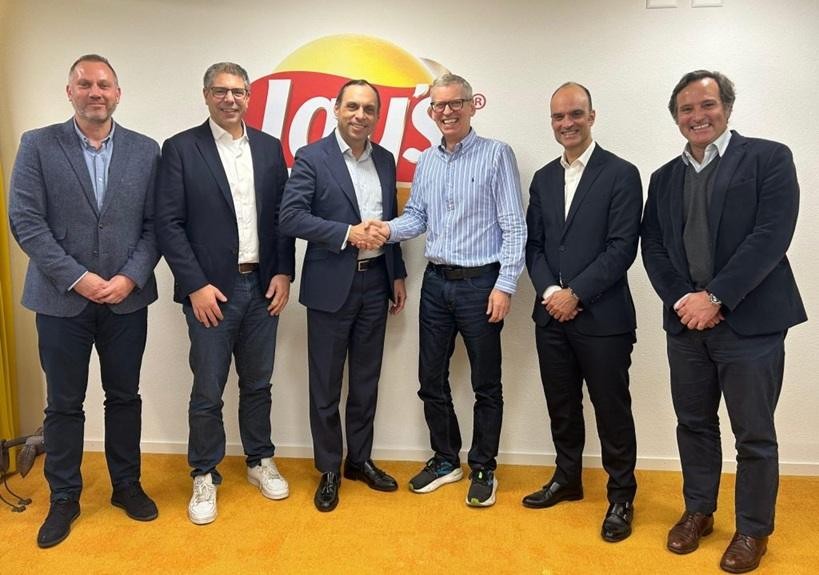
According to www.esgtoday.com, PepsiCo and Spain-based Fertiberia signed a multi-year agreement on May 7, 2026, to deploy low-carbon, green hydrogen-based fertilizers across PepsiCo’s European agricultural supply chain.
Scale and Scope of the Partnership
Under the agreement, Fertiberia will supply PepsiCo with up to 150,000 tons of its Impact Zero crop nutrition solutions annually by 2030. This volume is projected to cover approximately 400,000 acres (about 162,000 hectares) of farmland across Europe. The land grows key PepsiCo input crops: potatoes, corn, sunflower, sugar beet, and rapeseed — ingredients for brands including Lay’s, Doritos, Ruffles, and Cheetos.
Emissions Impact and Baseline Targets
Globally, fertilizer production accounts for approximately 2% of greenhouse gas emissions, according to the source. Within PepsiCo’s European potato supply chain, fertilizer use represents roughly half of the average potato carbon footprint. This makes it one of the company’s highest-leverage intervention points for reducing agricultural emissions. The initiative supports PepsiCo’s broader targets: implementing regenerative, restorative, or protective practices across 10 million acres globally by 2030, and cutting Scope 3 forest, land and agriculture (FLAG) emissions by 30% by 2030, relative to a 2022 baseline.
Pilot Results and Geographic Rollout
A prior pilot project between PepsiCo and Fertiberia in Spain and Portugal demonstrated measurable reductions: potato farming emissions fell by up to 15%, and corn farming emissions dropped by 20%, per the companies’ joint reporting. The new program will launch initially in France, Romania, Serbia, Greece, and Turkey, while expanding existing efforts in Spain and Portugal. Further rollout to additional European countries is planned over time.
Farmer Support and Digital Integration
Beyond fertilizer supply, the partnership includes technical guidance and digital tools for growers. These include precision agriculture technologies designed to optimize fertilizer application rates and track regenerative agriculture practices. According to David Herrero, Chief Operating Officer at Fertiberia:
“Since 2022, we have been developing lower-carbon hydrogen-based fertilisers, powered by cutting-edge technology such as NSAFE, the world’s first bio-inhibitor of nitrification that prevents nitrogen losses and accelerates the transformation of European agriculture. Today, this journey takes on greater meaning thanks to the trust of partners like PepsiCo, with whom we are collaborating to help decarbonise agri-food value chains.”
Strategic Alignment and Industry Context
The collaboration reflects a growing trend among food and beverage multinationals to directly engage upstream in decarbonizing agricultural inputs. In parallel, Sandoz recently unveiled new operational and supply chain climate goals, while Meta signed a 250 MW U.S. renewables deal with EDP Renewables. TotalEnergies is building a $300 million solar project in the Philippines, and Scotiabank and RBC have dropped their financed emissions goals — underscoring divergent corporate approaches to Scope 3 accountability. For supply chain professionals, the PepsiCo–Fertiberia model signals increasing emphasis on verified, traceable low-carbon inputs — requiring integration of agronomic data, emissions accounting tools, and farmer-facing digital platforms to ensure both environmental integrity and operational scalability.
Source: www.esgtoday.com
Compiled from international media by the SCI.AI editorial team.