[Business]
# Explosive Pager Sounds Supply Chain Alarm
By **The New York Times**
Published two days ago
September 26, 2024
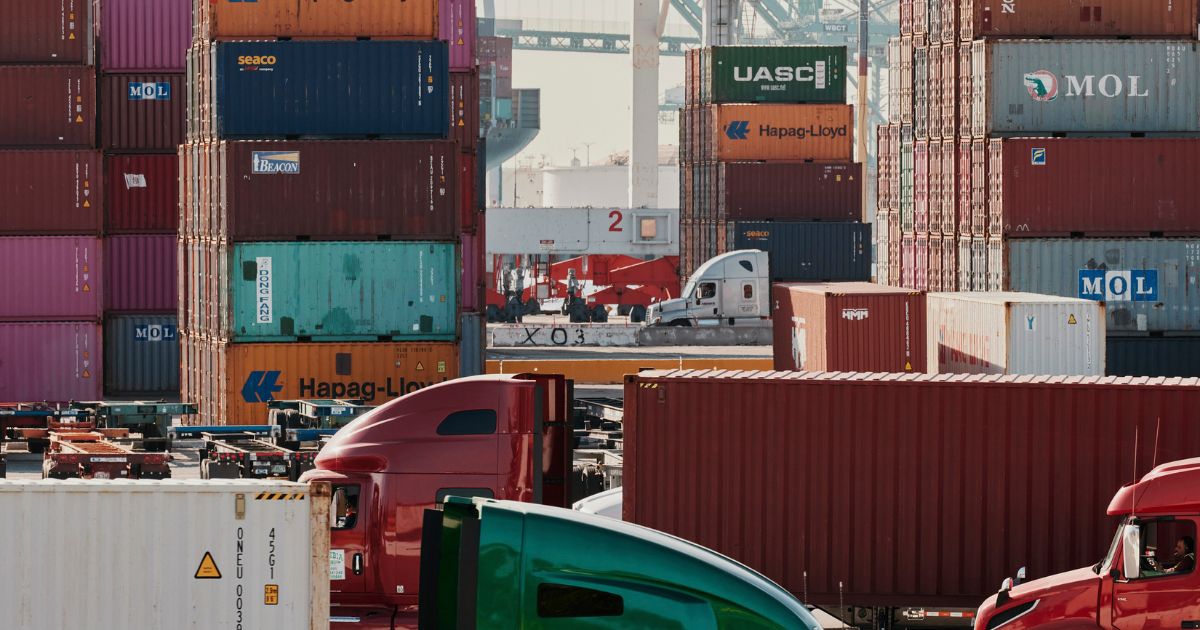
## A container at the Port of Los Angeles in San Pedro, California on November 1, 2023. The attack on Hezbollah could accelerate the shift of manufacturing closer to home. (Adam Amengual/The New York Times)
– The weaponization of pagers in Lebanon highlights security risks within complex international supply chains.
– To mitigate vulnerabilities in global supply chains, U.S. companies may prioritize shifting production closer to their domestic markets.
– Globalization is not ending but evolving, with a focus on shortening the distance between factories and markets for enhanced security.
The recent explosion of handheld pagers and walkie-talkies used by Hezbollah militants in Lebanon not only showcased advanced espionage techniques but also exposed significant vulnerabilities within global supply chains.
These supply chains are so intricate that they often exceed the regulatory capacity of governments, businesses, and other stakeholders. Even the most sophisticated players frequently lack clarity on which critical components and raw materials they depend on or where risks lie.
The disruptions in supply chains during the pandemic clearly demonstrated that the longer the journey required to manufacture any product, the greater the likelihood of issues, delays, and costs.
A powerful and related concern is now emerging: the more complex the journey, the higher the exposure to malicious actions.
Each step along the way and each additional company involved in the manufacturing process presents an opportunity for those pursuing violent agendas to intervene and weaponize products.
“Companies must decide on the level of security measures to implement within their supply chains,” said Hannah Kain, CEO of global supply chain firm ALOM. “Our paranoia has ratcheted up several notches.”
### The attack in Lebanon is likely to accelerate the transformation of supply chains.
In recent years, labor rights activists, politicians, and critics of free trade have urged U.S. companies to repatriate production or at least move it closer to domestic markets. Repatriation and nearshoring are promoted as ways to reduce dependence on distant factories—particularly those in China—and avoid the risks associated with international shipping.
The reality that international supply chains can be infiltrated by war actors will further fuel this trend.
### Security concerns have long been centered around specific high-risk scenarios.
– Many countries rely on Chinese factories for critical items, including masks, key pharmaceutical ingredients, and components of medical devices like ventilators.
– China’s potential attack on Taiwan threatens the concentrated stockpile of advanced computer chips managed by the island.
– Russia’s sanctions following its invasion of Ukraine have reduced energy supplies to Europe.
– In the U.S., those who view China as a national security threat have warned that Chinese-made telecommunications and electrical equipment could serve as Trojan horses for lethal attacks on American infrastructure.
### Recent incidents reveal serious security risks in even less strategic and understated areas of commercial life.
The sheer volume of goods transported in shipping containers across global ports is so vast that no institution can inspect more than a small fraction.
Following the Lebanon attack, politicians may face pressure to expand the push for repatriation and nearshoring beyond strategically critical commodities like computer chips and electric vehicles to a broader range of products. New policies could promote concentrated industries within the U.S. and friendly countries to safeguard supply chains from external disruptions.
### Both Trump and Biden administrations have encouraged companies to relocate their supply chains domestically.
The Trump administration imposed widespread tariffs on Chinese goods, a policy continued by the Biden administration. The Biden administration also provided billions of dollars in subsidies for companies building computer chip factories and electric vehicle plants in the U.S. The government aims to boost the production of active pharmaceutical ingredients as well.
### Many American companies have already tightened their supply chains.
Product shortages and soaring freight costs during the pandemic prompted major companies like Walmart and Columbia Sportswear to shift some manufacturing from Asia to countries such as Mexico and Guatemala. The inland port in Laredo, Texas—a hub for U.S.-Mexico trade—has surpassed Southern California ports, which were long the primary entry points for Asian-made goods.
Faced with the risk of rogue behavior at their foreign factories, many American multinational companies may more aggressively move production to countries with lower risks. In the cost-benefit analysis that has long driven the push to relocate factory jobs from the U.S. to countries with cheaper labor and lighter regulations, the value of producing domestically is rising.
### However, contrary to some premature obituaries, globalization is not dead.
Abandoning international trade would be expensive and disruptive. Instead, globalization is being reconfigured, with a new emphasis on shortening the distance between factories and markets.
All this is a response to an increasing sense that the U.S. must ensure it has adequate reserves of critical elements rather than relying on supply chains spanning oceans. For those inclined toward this view, the exploding pagers ultimately serve as a flashing warning signal.
–
This article was originally published in The New York Times.
By Peter S. Goodman/Adam Amengual
c. 2024 The New York Times Company
—
Source: GV Wire