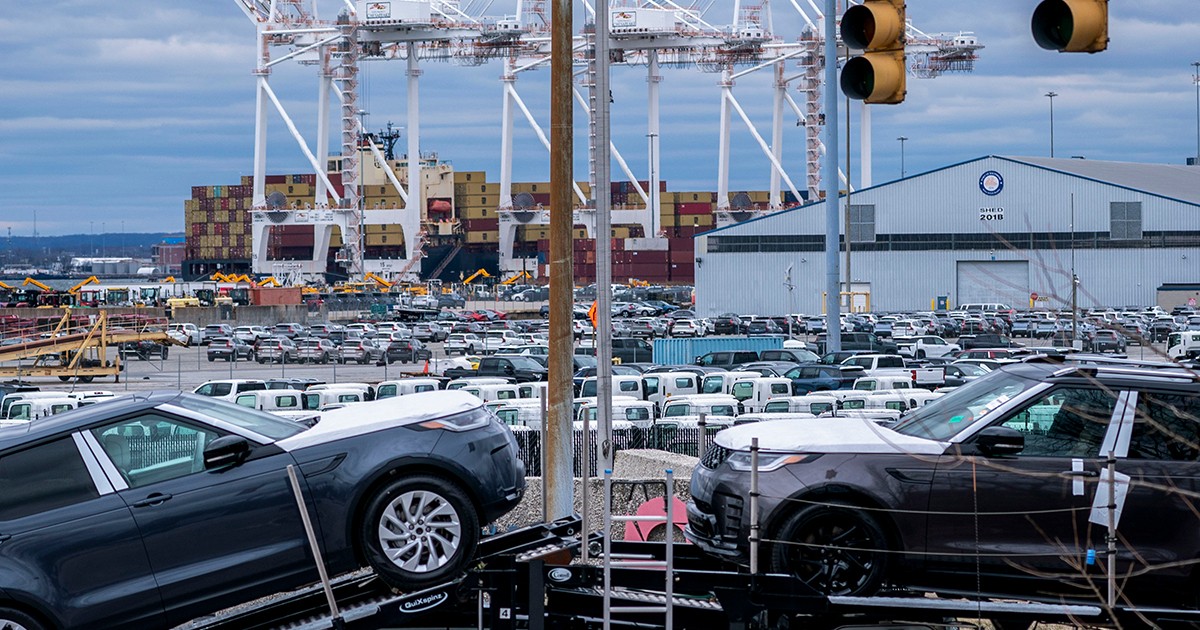
According to www.ttnews.com, the European Union has formally signaled readiness to engage in urgent bilateral trade talks with the United States following former President Donald Trump’s May 1, 2026 announcement that he would raise tariffs on EU-sourced cars and trucks to 25%.
EU Finance Leadership Responds Publicly
Kyriakos Pierrakakis, Eurogroup President and Greece’s finance minister, stated the position during an interview with Bloomberg Television ahead of the euro-area finance ministers’ meeting in Brussels on May 4, 2026. He emphasized dialogue as the top priority but confirmed contingency planning:
“The No. 1 choice is always dialogue — we want to be a predictable partner in the international economy, we believe in the transatlantic relationship,” he told Bloomberg Television.
Pierrakakis added that “all options are on the table” should the U.S. unilaterally deviate from prior commitments.
Stalled U.S.-EU Trade Pact Adds Tension
The tariff threat intensifies pressure on the long-delayed U.S.-EU trade agreement, which both sides initially finalized in July 2025. As of May 4, 2026, the pact remains unratified by the European Parliament, which has demanded further legislative amendments. Trump claimed on May 1, 2026 that the EU failed to comply fully with the deal; Pierrakakis categorically refuted this, asserting the bloc had “met all prerequisites in this equation” and fulfilled its “joint statement commitment and the legislative timetable.” He noted the EU’s implementation was complete, though “we need to speed up” ratification.
Steel and Aluminum Tariffs Remain Unresolved
Prior to the May 1 car tariff escalation, the EU already objected to U.S. Section 232 tariffs on steel and aluminum — despite a recent Trump administration revision. According to the European Commission, nearly half of EU exports using these metals face higher duties under current U.S. rules. The Commission informed EU envoys last week that it stands ready to respond if necessary, confirming formal preparation for countermeasures.
Global Context Amplifies Economic Risk
Trump’s latest move coincides with acute geopolitical stress: hostilities in Iran and a resulting spike in energy prices have disrupted global markets. Pierrakakis cited the Strait of Hormuz as a flashpoint, warning that “the last thing the global and the European economy needs right now is an extra layer of uncertainty on top of what’s happening in the Strait of Hormuz and in the Middle East.” In response to energy-driven inflation, multiple European governments have introduced targeted fiscal support packages. Pierrakakis stressed that “the measures that have worked are the ones that are most targeted” — particularly for vulnerable households and energy-intensive industries — to prevent an energy crisis from triggering a broader fiscal crisis.
Source: Transport Topics
Compiled from international media by the SCI.AI editorial team.