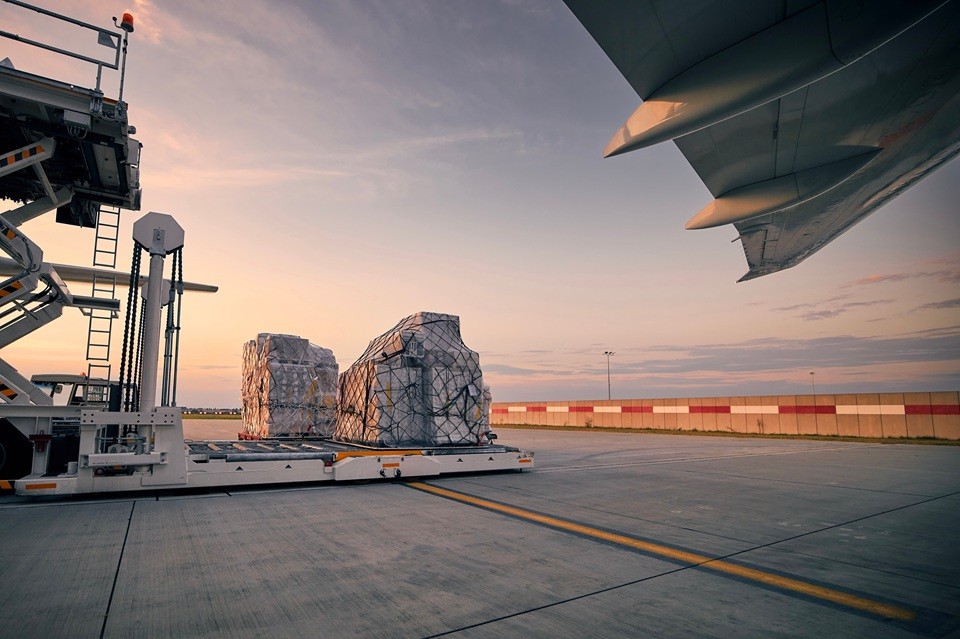
According to www.aircargonews.net, airfreight spot rates surged 30% year on year in April to an average of $3.34 per kg, driven primarily by the Middle East conflict — but Xeneta, the data provider, states the worst may be over as capacity begins returning to affected routes and market fundamentals reassert control over pricing.
Air Cargo Market Dynamics in April
Xeneta’s latest monthly data shows airfreight demand rose 2% year on year, while available capacity declined 1%. The dynamic cargo load factor increased three percentage points to 62%. The conflict disrupted routing, pushed up jet fuel costs, extended transit times, and forced carriers to adopt more direct flights — tightening effective capacity.
Regional Rate Trends
Spot rate movements varied significantly by origin and destination:
- Southeast Asia: Rates to the Middle East and Europe spiked 43% and 61% from pre-Iran conflict levels, reaching $3.78 and $5.12 per kg; to North America, they climbed 33% to $6.46 per kg. However, Europe- and North America-bound rates from this region now appear to be plateauing.
- South Asia: Rates peaked in the week ending 12 April and edged down by single digits in late April.
- Northeast Asia: Outbound rates hit new highs in the week ending 26 April — $5.25 to the Middle East, $5.63 to Europe, and $5.54 to North America — though percentage increases remained modest relative to South and Southeast Asia, likely due to a delayed pass-through of jet fuel surcharges.
- Europe to North America: Rates fell 17% versus pre-conflict levels to $2.57 per kg, as airlines added summer-schedule passenger belly capacity — lowering cargo load factors by ten percentage points month-on-month.
Expert Perspective on Pricing Drivers
“Now capacity is coming back, rates will come down, but not as quickly as they went up. Ultimately, market fundamentals will prevail.” — Niall van de Wouw, Chief Airfreight Officer, Xeneta
Van de Wouw emphasized that freight rates are more sensitive to supply-demand imbalances than to jet fuel prices alone. He cited the Transatlantic corridor as evidence: rates declined recently despite rising jet fuel costs. He advised shippers to avoid embedding fuel charges into long-term pricing mechanisms, noting that many such surcharges remain negotiable. He also noted air cargo is less vulnerable to airline route cuts than passenger services, since long-haul routes — which carry the most cargo — are less likely to be axed amid higher fuel costs.
Broader Demand Outlook
Xeneta flagged broader headwinds for 2026, including rising inflation and a 9% year-on-year drop in e-commerce volumes out of China in March. Van de Wouw observed that this decline follows four consecutive months of falling ex-China B2C e-commerce volumes, suggesting “the B2C e-commerce growth seems to be over” for airfreight demand. He added that recent rate volatility unfolded against “a not-too-rosy outlook for 2026,” with persistent concerns about future trade disruptions.
Source: Air Cargo News
Compiled from international media by the SCI.AI editorial team.