Explore

  • Trending
  • Latest
  • Tools
  • Browse
  • AI Assistant
  • Subscription Feed

Logistics

  • Ocean
  • Air Cargo
  • Road & Rail
  • Warehousing
  • Last Mile

Regions

  • Southeast Asia
  • South Asia
  • Central Asia
  • Japan & Korea
  • Middle East
  • Europe
  • Russia
  • Africa
  • North America
  • Latin America
  • Australia
SCI.AI
  • Supply Chain
    • Strategy & Planning
    • Logistics & Transport
    • Manufacturing
    • Inventory & Fulfillment
  • Procurement
    • Strategic Sourcing
    • Supplier Management
    • Supply Chain Finance
  • Technology
    • AI & Automation
    • Robotics
    • Digital Platforms
  • Risk & Resilience
  • Sustainability
  • Research
  • Expert Columns
  • English
    • Chinese
    • English
No Result
View All Result
  • Login
  • Register
SCI.AI
No Result
View All Result
Home Japan & Korea Supply Chain

Japan’s $16B Rapidus Bet on 2nm Chips

2026/04/21
in Japan & Korea Supply Chain
0 0
Japan’s $16B Rapidus Bet on 2nm Chips

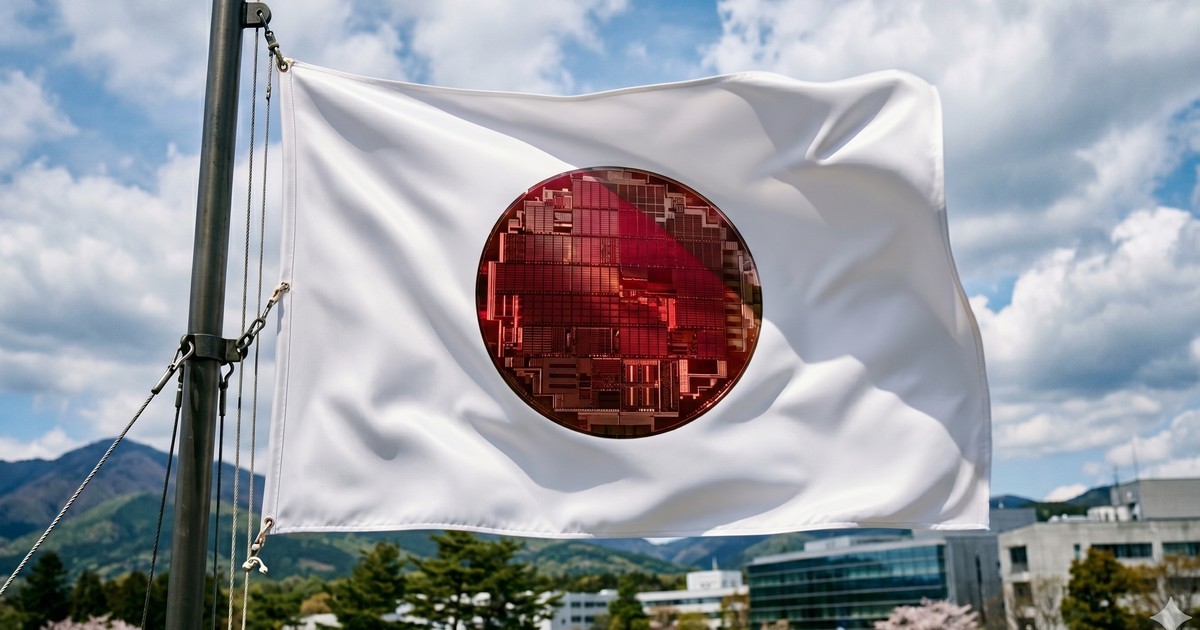
According to knews.media, Japan is deploying unprecedented public investment — totaling approximately 2.6 trillion yen (approx. USD 16 billion) by the end of the 2026/27 fiscal year — to revive its semiconductor leadership through Rapidus, a state-backed microprocessor venture founded in 2022.

From Dominance to Decline

At its peak in the late 1980s, Japan accounted for about half of the global semiconductor market, controlling roughly 80 percent of global DRAM supplies in 1987. Japanese firms Canon and Nikon held a duopoly in wafer exposure machinery at the turn of the 1980s and 1990s. That dominance eroded sharply: Elpida, Japan’s last major DRAM maker, went bankrupt in 2012 and was acquired by Micron in 2013; ASML displaced Canon and Nikon in advanced lithography; and Japan lost relevance in the most strategic segments — advanced logic for AI and high-bandwidth memory (HBM) — where Taiwan, South Korea, and the U.S. now lead.

Strategic Niche Strengths Remain

Despite this regression, Japan retains critical, often irreplaceable, roles in the global supply chain. The source states Japanese companies have de facto monopolized production of EUV photoresists and coaters, and remain key suppliers of lithographic masks, silicon wafers, and ABF — a layered insulating material used in advanced substrates. Kioxia remains a leading NAND flash memory producer, and Sony dominates the photosensitive matrix market.

Government-Led Reindustrialization

In response to supply chain shocks during the COVID-19 pandemic — acutely felt by Japanese automakers — Tokyo declared semiconductor self-sufficiency a national security priority. Over three years, Japan allocated 0.71% of GDP — USD 25.7 billion total — to semiconductor development, the highest share among developed economies. This funding supported foreign investment incentives including:

  • TSMC’s first Japanese fab in Kumamoto (co-owned with Sony, Denso, and Toyota), producing legacy nodes for automotive use;
  • Micron’s DRAM expansion in Hiroshima, backed by 192 billion yen in government support.

Rapidus: The Flagship Project

Rapidus is the largest beneficiary of METI’s (Ministry of Economy, Trade and Industry) semiconductor strategy. Though initially capitalized by eight private firms — Denso, Kioxia, MUFG Bank, NEC, NTT, SoftBank, Sony, and Toyota — and later joined by 26 additional investors by February 2026, the project has been conceived from the outset as primarily publicly funded. It is building a cutting-edge microprocessor factory on Hokkaido Island, targeting mass production of 2 nm chips in the second half of 2027, in collaboration with IBM. This would make Rapidus the first entirely new manufacturer of the most advanced chips in many years — and several months behind TSMC’s own 2 nm ramp.

The Japanese government secured a “golden voice” governance mechanism: while limited to a maximum of 11.5% voting rights, it holds veto power over all strategic decisions — underscoring the project’s centrality to national industrial policy.

Practitioner Implications

For global supply chain professionals, Rapidus signals a structural shift: Japan is no longer solely an enabler of upstream materials but is reasserting vertical capability in high-end logic manufacturing. Its success — or failure — will influence regional diversification strategies, especially for automotive and industrial OEMs reliant on secure, geopolitically stable chip sources. The heavy public backing also highlights how national security imperatives are reshaping supplier qualification criteria, contract terms, and long-term capacity planning across semiconductor-dependent industries.

Source: knews.media

Compiled from international media by the SCI.AI editorial team.
More on This Topic

  • Geodis appoints Eric Gerbi EVP of global freight forwarding (Jun 12, 2026)
  • AI Regulation Gap Widens Supply Chain Competitive Divide — SCMR (Jun 6, 2026)
  • 43% of Firms Shift Sourcing Geography in 2025; 86% of Ecommerce Firms to Expand Fulfillment Centers (Jun 2, 2026)
  • AI Agents Fail in Supply Chains Due to Missing Operational Context (May 31, 2026)
  • USPS, DHL eCommerce ink $10B-plus long-term contract (May 30, 2026)
ShareTweet

Related Posts

Geodis appoints Eric Gerbi EVP of global freight forwarding
Japan & Korea Supply Chain

Geodis appoints Eric Gerbi EVP of global freight forwarding

June 12, 2026
3
AI Regulation Gap Widens Supply Chain Competitive Divide — SCMR
Japan & Korea Supply Chain

AI Regulation Gap Widens Supply Chain Competitive Divide — SCMR

June 6, 2026
11
43% of Firms Shift Sourcing Geography in 2025; 86% of Ecommerce Firms to Expand Fulfillment Centers
Japan & Korea Supply Chain

43% of Firms Shift Sourcing Geography in 2025; 86% of Ecommerce Firms to Expand Fulfillment Centers

June 2, 2026
18
AI Agents Fail in Supply Chains Due to Missing Operational Context
Japan & Korea Supply Chain

AI Agents Fail in Supply Chains Due to Missing Operational Context

May 31, 2026
24
USPS, DHL eCommerce ink $10B-plus long-term contract
Japan & Korea Supply Chain

USPS, DHL eCommerce ink $10B-plus long-term contract

May 30, 2026
15
TPS Cuts Supply Chain Risk by 37% with Global EMS Network
Japan & Korea Supply Chain

TPS Cuts Supply Chain Risk by 37% with Global EMS Network

May 29, 2026
22

Leave a Reply Cancel reply

Your email address will not be published. Required fields are marked *

Recommended

Hershey’s Tech Strategy Cuts Inventory in 2 Years

Hershey’s Tech Strategy Cuts Inventory in 2 Years

11 Views
April 19, 2026
Navigating Last-Mile Delivery’s Evolution: Trends and Technologies for 2026

Navigating Last-Mile Delivery’s Evolution: Trends and Technologies for 2026

38 Views
February 23, 2026
4 Re-shoring Freight Lanes for Small Carriers — FreightWaves

4 Re-shoring Freight Lanes for Small Carriers — FreightWaves

20 Views
May 15, 2026
150+ Industrial Robots to Be Auctioned in Ohio Liquidation

150+ Industrial Robots to Be Auctioned in Ohio Liquidation

24 Views
May 3, 2026
Show More

SCI.AI

Global Supply Chain Intelligence. Delivering real-time news, analysis, and insights for supply chain professionals worldwide.

Categories

  • Supply Chain Management
  • Procurement
  • Technology


  • Risk & Resilience
  • Sustainability
  • Research

© 2026 SCI.AI. All rights reserved.

Powered by SCI.AI Intelligence Platform

Welcome Back!

Sign In with Facebook
Sign In with Google
Sign In with Linked In
OR

Login to your account below

Forgotten Password? Sign Up

Create New Account!

Sign Up with Facebook
Sign Up with Google
Sign Up with Linked In
OR

Fill the forms below to register

All fields are required. Log In

Retrieve your password

Please enter your username or email address to reset your password.

Log In

Scan to share via WeChat

Open WeChat and scan the QR code to share

QR Code

Add New Playlist

No Result
View All Result
  • Supply Chain
    • Strategy & Planning
    • Logistics & Transport
    • Manufacturing
    • Inventory & Fulfillment
  • Procurement
    • Strategic Sourcing
    • Supplier Management
    • Supply Chain Finance
  • Technology
    • AI & Automation
    • Robotics
    • Digital Platforms
  • Risk & Resilience
  • Sustainability
  • Research
  • Expert Columns
  • English
    • Chinese
    • English
  • Login
  • Sign Up

© 2026 SCI.AI