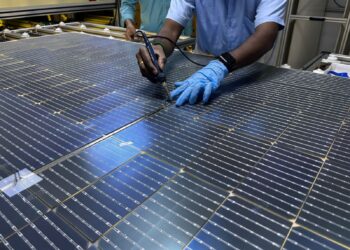
According to www.thehindubusinessline.com, Chennai-based listed energy solutions company SWELECT Energy Systems is actively evaluating entry into solar wafer manufacturing. The move comes as the Ministry of New & Renewable Energy (MNRE) has proposed including solar wafers under the Approved List of Models and Manufacturers (ALMM) from June 1, 2028 — contingent on India achieving approximately 15 GW of cumulative domestic wafer manufacturing capacity.
Strategic Rationale and Regulatory Context
A. Rulkumar Shanmugasundaram, MD and CEO of SWELECT Energy Systems, stated in an interview with BusinessLine that wafer manufacturing presents lower complexity and fewer regulatory hurdles compared to solar cell production. He cited Tamil Nadu’s ‘red category’ pollution control norms as a key barrier that previously prevented the company from entering cell manufacturing.
“We missed out on the cell bus because of some regulatory challenges, especially Tamil Nadu’s ‘red category’ norms regarding pollution control. Wafers are much easier and do not have such challenges. And with 50–60 GigaWatt(GW) of cell capacity expected to come up this year, it does not make sense to wait,” — A. Rulkumar Shanmugasundaram, MD and CEO, SWELECT Energy Systems
The company aims to initiate these wafer plans within the next six months, though specific investment figures, location, or technology roadmap were not disclosed. This evaluation occurs against a backdrop where India currently lacks a considerable domestic manufacturing ecosystem for large-scale production of polysilicon, ingots, and wafers — creating both a gap and an opportunity for vertically integrated players.
Broader Supply Chain Implications
For global supply chain professionals, SWELECT’s move signals growing Indian industry efforts to de-risk reliance on imported wafers — predominantly sourced from China, which accounts for over 95% of global wafer output (per established industry data from IEA and Wood Mackenzie 2024 reports). Similar vertical expansion is underway among other Indian manufacturers: Adani Solar announced a 2 GW wafer facility in 2023, and Tata Power commissioned its first integrated wafer-cell-module line in early 2024. These developments align with India’s Production-Linked Incentive (PLI) Scheme for Advanced Chemistry Cell (ACC) Battery Storage and Solar PV Modules, which now implicitly incentivizes upstream integration.
Practically, supply chain teams must monitor ALMM policy evolution closely: inclusion of wafers would mandate government procurement — including for projects under the National Solar Mission — to source only from ALMM-listed domestic wafer producers from 2028 onward. This could reshape sourcing protocols for EPC contractors, IPPs, and module integrators across South Asia.
Parallel Business Expansion
Alongside wafer evaluation, SWELECT continues scaling its core businesses:
- Module manufacturing capacity expansion to 2 Giga Watt(GW), with emphasis on rooftop solar in northern markets — supported by recent empanelment and distribution network establishment in Bihar, Uttar Pradesh, Haryana, and Rajasthan
- Entry into Battery Energy Storage Systems (BESS), launching residential and commercial/industrial (C&I) portfolios, with additional hybrid and BESS products planned within the next three months
- Progress toward its 1 GW Independent Power Producer (IPP) target through solar power plant development and operation
Supply chain pressures remain tangible: forex volatility linked to geopolitical tensions has slightly impacted imports, while partners supplying steel, powder coating, and Ethylene Vinyl Acetate (EVA) reported disruptions due to LPG and broader petrochemical shortages.
In financial terms, SWELECT Energy Systems posted revenues of ₹139 crore and Profit after Tax of ₹9.52 crore for the quarter ending December 2025 (as reported in the source).
Source: www.thehindubusinessline.com
Compiled from international media by the SCI.AI editorial team.