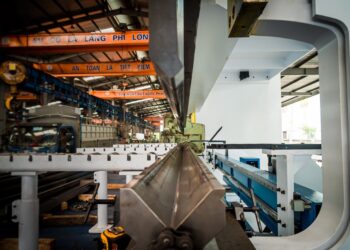
According to www.thescxchange.com, Belgian racking and storage solution provider Stow will open a fully automated racking production plant in Gordon County, Georgia — its first manufacturing footprint in the United States.
Strategic U.S. Manufacturing Expansion
The new Georgia facility supplements Stow’s existing North American office in Romeoville, Illinois, and joins its network of manufacturing plants across Europe. The company described the move as a “major milestone” in its North American expansion strategy. According to the report, the Georgia plant will enable Stow to serve the U.S. market with greater speed and flexibility, offering locally manufactured, high-quality racking systems that meet strict domestic standards.
Integrated Automation at MODEX 2026
Stow showcased its solutions at MODEX 2026 in Atlanta, exhibiting at Booth B13128 alongside Movu Robotics — a brand under the Stow Group umbrella. The joint presence highlighted the synergy between high-quality static storage infrastructure and fully automated robotics. As part of this demonstration, Stow introduced the Stow Atlas 4.0, a next-generation pallet shuttle system designed for high-density storage, which launched in the U.S. market during the show.
Industry Context for Supply Chain Professionals
This development reflects a broader industry trend toward localized, automated warehousing infrastructure. Over the past three years, multiple global material handling firms — including Daifuku, KION Group (via Linde Material Handling), and Swisslog — have expanded U.S.-based production or assembly capabilities to reduce lead times and mitigate supply chain volatility. Stow’s entry into U.S. manufacturing also aligns with rising demand for compliant, scalable racking systems amid record e-commerce fulfillment growth: U.S. warehouse construction reached 509 million square feet in 2025, per CBRE’s Industrial Report. For supply chain professionals, the Georgia plant means shorter delivery windows for custom racking, faster integration with robotics deployments like the Atlas 4.0, and enhanced support for compliance-driven projects requiring domestic content verification or ANSI/RMI-certified components.
Source: www.thescxchange.com
Compiled from international media by the SCI.AI editorial team.