Explore

  • Trending
  • Latest
  • Tools
  • Browse
  • Subscription Feed

Logistics

  • Ocean
  • Air Cargo
  • Road & Rail
  • Warehousing
  • Last Mile

Regions

  • Southeast Asia
  • South Asia
  • Central Asia
  • Japan & Korea
  • Middle East
  • Europe
  • Russia
  • Africa
  • North America
  • Latin America
  • Australia
SCI.AI
  • Supply Chain
    • Strategy & Planning
    • Logistics & Transport
    • Manufacturing
    • Inventory & Fulfillment
  • Procurement
    • Strategic Sourcing
    • Supplier Management
    • Supply Chain Finance
  • Technology
    • AI & Automation
    • Robotics
    • Digital Platforms
  • Risk & Resilience
  • Sustainability
  • Research
  • Expert Columns
  • English
    • Chinese
    • English
No Result
View All Result
  • Login
  • Register
SCI.AI
No Result
View All Result
Home Supply Chain Manufacturing

Humanoid Robots Scaling: 3 Supply Chain Hurdles

2026/04/19
in Manufacturing, Supply Chain
0 0
Humanoid Robots Scaling: 3 Supply Chain Hurdles

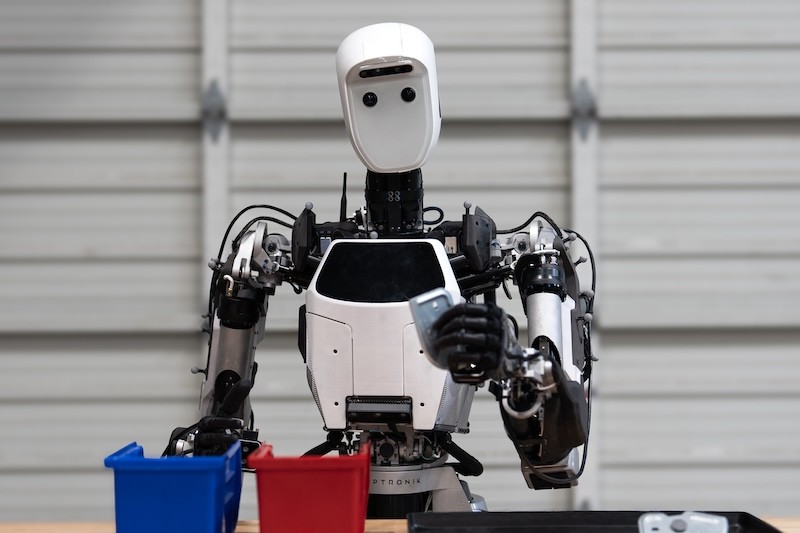
According to roboticsandautomationnews.com, Jabil — a global manufacturing and supply chain partner operating across more than 25 countries — is helping scale humanoid robots from prototype to production, notably collaborating with Apptronik on the Apollo humanoid robot. While AI and robotics capabilities dominate headlines, Jabil’s leadership emphasizes that industrialization, not intelligence alone, determines real-world adoption.

The Industrialization Imperative

Robert Gutridge, vice president of global business units for digital commerce at Jabil, states that humanoids are still in the “crawl phase” of industrial development. Success hinges less on algorithmic sophistication and more on manufacturing discipline, supply chain maturity, and unit economics. As Gutridge explains:

“What will ultimately determine adoption isn’t just how smart these systems are, but whether they can be built safely, reliably, and affordably at scale.” — Robert Gutridge, VP of global business units, digital commerce at Jabil

Operational Realities in Warehouses and Factories

Warehouses and factories serve as critical proving grounds because their teams already operate alongside automation. However, success depends on strict adherence to operational constraints:

  • Clear safety and operational boundaries, with humanoids confined to controlled zones and predictable interactions
  • Non-negotiable reliability and uptime, requiring consistent performance and safe fault recovery
  • Repeatable, multipurpose value — moving beyond single-task demos to flexible deployment across workflows without constant reprogramming
  • Minimal infrastructure disruption, enabling integration into existing human-centric facilities without costly redesigns
  • Fundamentals like battery life, mechanical durability, ease of maintenance, and secure operational controls

Supply Chain Complexity vs. Mature Automation Systems

Scaling humanoid robots differs significantly from scaling established systems like AMRs and AGVs. Gutridge notes that AMRs and AGVs benefit from well-established component ecosystems, predictable supply chains, and stable cost models — advantages humanoids lack today. Humanoids combine many complex subsystems into one platform, placing them where AMRs and AGVs were 15 to 20 years ago: facing high component costs due to low volumes and immature supplier networks.

Two key differentiators stand out:

  • Supply chain maturity: Humanoids often rely on lower-volume or customized parts — unlike standardized sensors, drives, and safety components used in mature automation categories
  • Unit economics and learning curves: Costs remain elevated until production scales and designs stabilize. Only then do yields improve, cycle times drop, and pricing reflect steady-state economics rather than early-stage prototyping

From Prototype to Volume Production: The Apollo Case

Jabil’s work with Apptronik on the Apollo humanoid highlights recurring challenges in transitioning from lab to line. Gutridge underscores that the biggest hurdles are not technical invention but disciplined execution: designing for manufacturability from day one, establishing repeatable testing and quality processes, and building supply chains capable of supporting new, non-standardized components. These efforts directly impact reliability, cost, and time-to-market — all decisive factors for supply chain professionals evaluating humanoid integration.

Source: Robotics & Automation News

Compiled from international media by the SCI.AI editorial team.

More on This Topic

  • Hershey’s Tech Strategy Cuts Inventory in 2 Years (Apr 19, 2026)
  • 18 Strategies for Tariff-Resilient Supply Chains (Apr 19, 2026)
  • Wings OBC Expands GSSA Coverage to 8 European Markets (Apr 19, 2026)
  • Data Strategy Is the New Supply Chain Advantage: 3 Key Shifts (Apr 19, 2026)
  • Humanoid Robots Achieve 60 Tote/Hour in Factory Logistics (Apr 19, 2026)
ShareTweet

Related Posts

Hershey’s Tech Strategy Cuts Inventory in 2 Years
Strategy & Planning

Hershey’s Tech Strategy Cuts Inventory in 2 Years

April 19, 2026
1
18 Strategies for Tariff-Resilient Supply Chains
Last Mile

18 Strategies for Tariff-Resilient Supply Chains

April 19, 2026
1
Wings OBC Expands GSSA Coverage to 8 European Markets
Logistics & Transport

Wings OBC Expands GSSA Coverage to 8 European Markets

April 19, 2026
1
Data Strategy Is the New Supply Chain Advantage: 3 Key Shifts
Strategy & Planning

Data Strategy Is the New Supply Chain Advantage: 3 Key Shifts

April 19, 2026
1
Humanoid Robots Achieve 60 Tote/Hour in Factory Logistics
Manufacturing

Humanoid Robots Achieve 60 Tote/Hour in Factory Logistics

April 19, 2026
3
Physical AI in Logistics: Accenture Invests in General Robotics
Manufacturing

Physical AI in Logistics: Accenture Invests in General Robotics

April 19, 2026
1

Leave a Reply Cancel reply

Your email address will not be published. Required fields are marked *

Recommended

7 Warehouse Automation Trends Reshaping Supply Chains in 2026

7 Warehouse Automation Trends Reshaping Supply Chains in 2026

7 Views
April 1, 2026
UPS’s Decade-Defining Pivot: From Volume Champion to High-Margin Healthcare Logistics Platform

UPS’s Decade-Defining Pivot: From Volume Champion to High-Margin Healthcare Logistics Platform

13 Views
March 2, 2026
Blockchain-Powered Supply Chain Finance: Malaysia’s Regulatory Sandbox Innovation

Blockchain-Powered Supply Chain Finance: Malaysia’s Regulatory Sandbox Innovation

6 Views
March 28, 2026
10 EU Logistics Regulations Impacting 3PLs in 2026

10 EU Logistics Regulations Impacting 3PLs in 2026

6 Views
April 1, 2026
Show More

SCI.AI

Global Supply Chain Intelligence. Delivering real-time news, analysis, and insights for supply chain professionals worldwide.

Categories

  • Supply Chain Management
  • Procurement
  • Technology


  • Risk & Resilience
  • Sustainability
  • Research

© 2026 SCI.AI. All rights reserved.

Powered by SCI.AI Intelligence Platform

Welcome Back!

Sign In with Facebook
Sign In with Google
Sign In with Linked In
OR

Login to your account below

Forgotten Password? Sign Up

Create New Account!

Sign Up with Facebook
Sign Up with Google
Sign Up with Linked In
OR

Fill the forms below to register

All fields are required. Log In

Retrieve your password

Please enter your username or email address to reset your password.

Log In

Scan to share via WeChat

Open WeChat and scan the QR code to share

QR Code

Add New Playlist

No Result
View All Result
  • Supply Chain
    • Strategy & Planning
    • Logistics & Transport
    • Manufacturing
    • Inventory & Fulfillment
  • Procurement
    • Strategic Sourcing
    • Supplier Management
    • Supply Chain Finance
  • Technology
    • AI & Automation
    • Robotics
    • Digital Platforms
  • Risk & Resilience
  • Sustainability
  • Research
  • Expert Columns
  • English
    • Chinese
    • English
  • Login
  • Sign Up

© 2026 SCI.AI