According to www.maersk.com, customs, tariffs, and compliance in North America are undergoing structural shifts in 2026 — demanding earlier integration into supply chain design, rigorous data ownership, and cross-functional coordination across sourcing, procurement, and logistics.
Customs Is Moving Upstream
U.S. Customs and Border Protection (CBP) is accelerating modernization, enabling pre-arrival risk assessment and pre-release of goods based on pre-validated data — not assumed trust. As Lars Karlsson, Global Head of Trade and Customs Consulting at Maersk, explains:
“customs is an age-old idea: you draw a line on the ground, and you can’t pass without paying.”
That construct no longer holds. Customs now intersects with security, sanctions, ESG, forced labour enforcement, technical standards, and upstream risk management. Janet Labuda, former CBP executive and current Trade and Customs Affairs Manager at Maersk, states:
“business likes transparency, business likes predictability, and both are being stretched to the max right now.”
Companies like Altana are adopting multi-tier value-chain visibility to simulate risks before issuing purchase orders. Amy Morgan, VP of Trade Compliance at Altana, notes:
“They are not just illuminating their value chains and then watching them; they are shaping decisions before any risk occurs.”
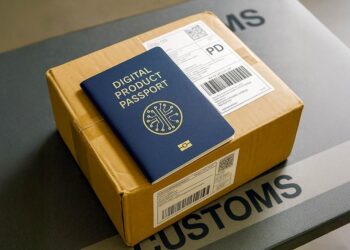
This has driven adoption of “Product Passports” — digital records of verified supplier data shared proactively with regulators to reduce detentions and avoid forced labour holds.
Tariffs Are Now Structural, Not Temporary
Tariffs will remain a persistent feature of landed cost calculations in 2026. Even if the U.S. Supreme Court issues a ruling on IEEPA tariffs, the administration continues using Sections 301, 232, and 338 to adjust duty rates, target sectors, and respond to geopolitical conditions. The upcoming United States-Mexico-Canada Agreement (USMCA) review adds uncertainty — and opportunity — for preferential treatment rules and border facilitation. Many free trade agreements remain underused, not due to ineligibility, but because documentation burdens deter claims. According to the report, better data and AI-enabled validation can help importers substantiate preference claims with greater confidence and unlock tariff savings they are already entitled to.
Enforcement Now Covers the Entire Value Chain
CBP’s enforcement scope has broadened beyond tariff classification to include forced labour compliance, sanctions, environmental rules, and transshipment. Regulators expect importers to know how products are made, what inputs are used, and where those inputs originate. Reliance on one-time supplier questionnaires no longer meets expectations. Mark Zeitlin, Maersk’s Head of Customs Innovation, highlights growing concerns around “origin washing”, where goods transit third countries with minimal transformation to obscure true origin. Labuda warns:
“That information becomes obsolete almost immediately.”
Real-time tracing and verification across multiple tiers is now the baseline expectation. She cautions that resilience means keeping goods moving legally — not just physically — as regulators monitor document fraud, double-invoicing, corporate identity theft, and illegal transshipment.
Data Ownership Is a Core Competency
As Karlsson emphasizes:
“you need to own your data… it is literally a currency.”
Importers must manage customs and supply chain data as a continuous information chain — spanning product catalogues, bills of materials, supplier networks, origin evidence, and historical compliance decisions. Fragmented data across suppliers, brokers, and partners reduces speed and accuracy. Centralized, validated data enables earlier risk identification, tariff scenario modeling, routing optimization, and rapid response to agency inquiries. Maersk’s Trade and Tariff Studio is cited as a platform that connects product classification, origin determination, supplier documentation, and tariff exposure into a single system.
Source: www.maersk.com
Compiled from international media by the SCI.AI editorial team.