According to qubitpage.com, the warehouse automation market is expected to grow to $27 billion by 2025, with a compound annual growth rate (CAGR) of 12% — a projection cited from a McKinsey report.
Core Distinctions Between AMR and AGV
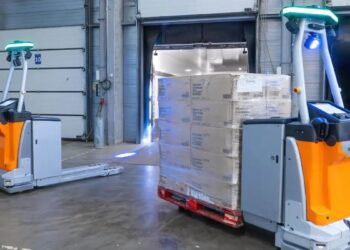
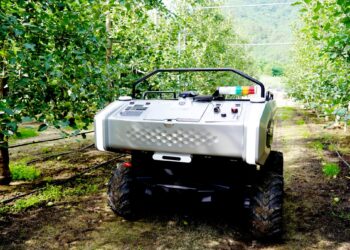
Autonomous Mobile Robots (AMR) and Automated Guided Vehicles (AGV) represent two distinct approaches to material movement in modern warehouses. AMR rely on sensors, mapping technologies, and artificial intelligence to navigate dynamically — adapting in real time to obstacles and layout changes. In contrast, AGV follow fixed paths using magnetic tapes, optical sensors, or inertial navigation systems, prioritizing repeatability over flexibility.
- Navigation: AMR use autonomous navigation with AI; AGV use guided navigation via physical infrastructure
- Adaptability: AMR are highly adaptable to changing environments; AGV have limited adaptability
- Precision: Both deliver a high level of precision and accuracy
- Integration: Both can be easily integrated with warehouse management systems (WMS) and enterprise resource planning (ERP) systems
Practical Selection Criteria for Supply Chain Professionals
Decision-making hinges on operational realities. Task requirements dictate suitability: AGV excel in high-precision, repetitive workflows such as assembly-line material transfer or pallet handling on fixed routes. AMR are better suited for dynamic order-picking, cross-dock repositioning, or facilities undergoing frequent layout reconfiguration — common in e-commerce fulfillment centers. Warehouse layout complexity directly influences choice: complex or evolving footprints favor AMR; stable, linear layouts may justify AGV investment. Integration readiness matters equally — both types support WMS/ERP connectivity, but AMR often offer more plug-and-play compatibility with cloud-native logistics platforms. Cost considerations must include total cost of ownership, not just upfront price — especially maintenance and infrastructure retrofitting (e.g., installing magnetic tape for AGV).
Real-World Validation
A leading e-commerce company deployed AMR in a complex warehouse layout and achieved 30% faster order processing. A leading manufacturer implemented AGV in a high-precision environment and reduced errors by 25%.
CarphaCom Robotised — an AMR solution developed by QubitPage and powered by NVIDIA Isaac Sim — is highlighted as a flexible, scalable option for warehouses of all sizes, supporting inventory management, logistics optimization, and productivity gains.
Source: qubitpage.com
Compiled from international media by the SCI.AI editorial team.