According to en.sedaily.com, Daedong Robotics has raised 5 billion won in Series A funding to accelerate the commercialization of its artificial intelligence–powered field robots.
Funding Round and Investor Consortium
The investment round closed on July 6, 2026, with participation from three institutional investors: Explo Investment — the corporate venture capital (CVC) arm of GS Engineering & Construction; POSCO Technology Investment, an affiliate of POSCO Holdings; and NAU IB Capital. This marks Daedong Robotics’ first major external financing since its spin-off from Daedong Group, a South Korean conglomerate with deep roots in agricultural machinery.
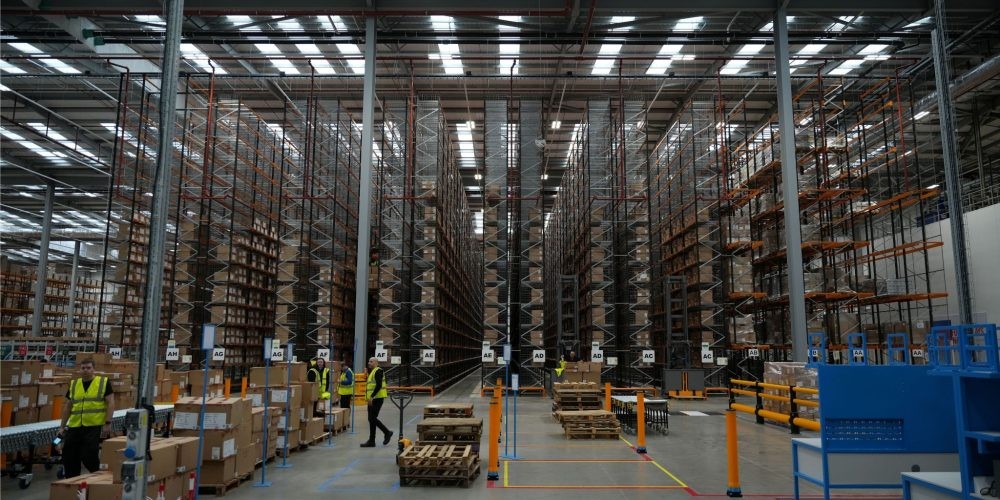
The company confirmed it will allocate the 5 billion won toward three core objectives: advancing AI field robot technology, scaling mass production of new robotic platforms, and expanding field demonstrations across non-agricultural industrial sites. According to the report, Daedong Robotics has already deployed prototype units at construction and manufacturing facilities in South Korea, with pilot programs underway in logistics hubs near Seoul and Incheon.
Technology Expansion Beyond Agriculture
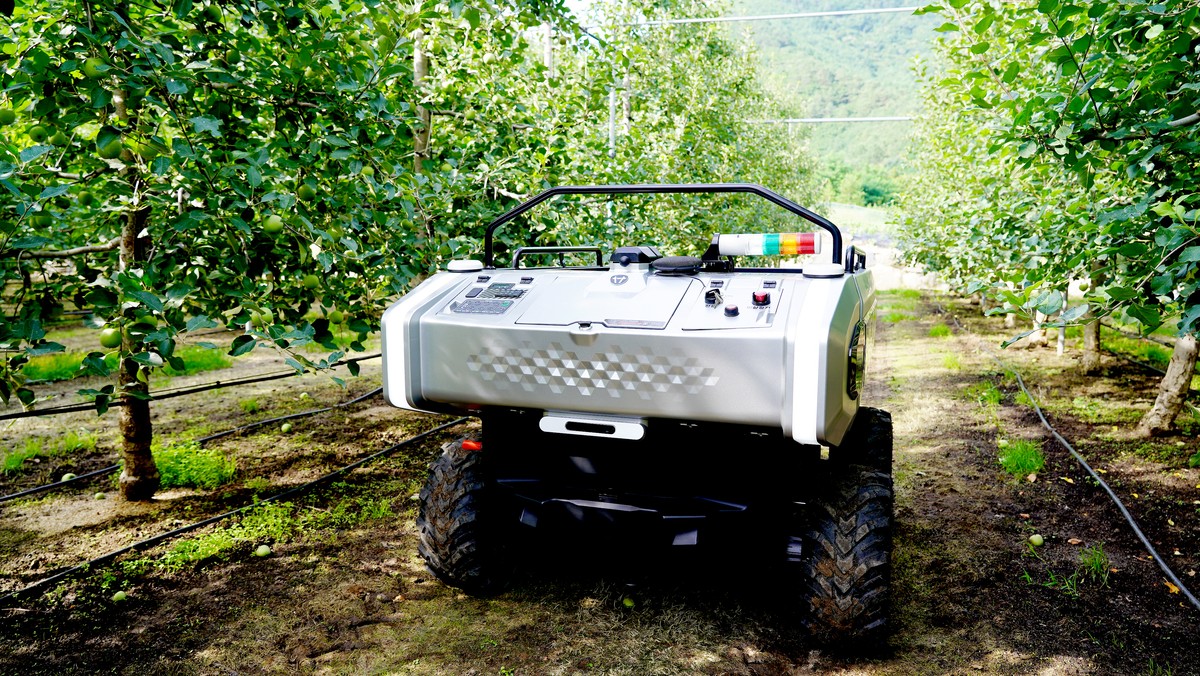
Daedong Robotics leverages autonomous driving, spatial recognition, and control technologies initially validated in agricultural environments — including rice paddies and orchards — to develop robots suited for unstructured, non-standard workspaces. Its proprietary platform supports combined indoor and outdoor navigation, vision AI–based recognition of dynamic terrain, and off-road mobility. The company has secured patents covering its off-road autonomous driving platform, which forms the foundation for both current agricultural models — such as autonomous mowing and pest control robots — and next-generation industrial variants.
Notably, Daedong Robotics became the first company in Korea to obtain official certification for an agricultural autonomous transport robot — a regulatory milestone achieved in Q2 2025. That certification enabled rapid deployment across over 120 farms nationwide, generating more than 4.2 million kilometers of real-world operational data used to refine perception algorithms and path-planning logic.
Strategic Shift Toward Robot-as-a-Service
Over the medium to long term, Daedong Robotics plans to transition from one-time hardware sales to a recurring revenue model centered on Robot-as-a-Service (RaaS). The RaaS platform will integrate autonomous driving, real-time control, and operational analytics drawn from aggregated field data — including task completion rates, terrain adaptability metrics, and maintenance cycle histories.
The company aims to generate continuous service revenue by offering subscription-based fleet management, predictive maintenance alerts, and performance benchmarking tools tailored to construction site managers and factory operations directors. As part of this strategy, Daedong Robotics is building a modular robot platform designed to support interoperable payloads — from material-handling arms to thermal imaging sensors — across sectors including construction, manufacturing, and logistics.
Leadership Vision and Integration Advantage
Kang Sung-chul, CEO of Daedong Robotics, emphasized the company’s dual focus on safety and scalability in a statement released alongside the funding announcement.
“With AI field robots based on an off-road autonomous driving platform proven in real-world environments, we will contribute to creating safer working conditions by replacing dangerous and repetitive tasks in agriculture, construction, and manufacturing sites.” — Kang Sung-chul, CEO of Daedong Robotics
He added that the company intends to accelerate commercialization using Daedong Group’s full-stack capabilities — spanning physical AI development, robot hardware design, prototyping, field demonstration, and mass production — a vertically integrated advantage uncommon among robotics startups in Korea. According to the source, Daedong Group operates 7 manufacturing plants across South Korea and maintains partnerships with 23 academic research institutes, enabling rapid iteration between lab validation and field testing.
Source: en.sedaily.com
Compiled from international media by the SCI.AI editorial team.