Skip to content

AI & Automation · Disruptions · ESG & Regulation · Geopolitics · Logistics & Transport · Manufacturing · Procurement · Risk & Resilience · Supply Chain · Sustainability · Technology

Walmart fast delivery fuels 24% e-commerce sales growth

Walmart’s fast delivery initiatives drove a 24% increase in e-commerce sales, supported by expansion to 3,500 stores with same-day/next-day capability, deployment of 1,200 dedicated delivery vans, and a 42% year-over-year rise in micro-fulfillment centers to 197 facilities. Average delivery time fell from 2.8 to 1.3 days, while e-commerce gross margin improved to 29.4% from 27.1%. Fiscal year 2025 capital expenditures for e-commerce logistics totaled $2.1 billion.

Original source: Source information pending

Walmart fast delivery fuels 24% e-commerce sales growth

Walmart’s fast delivery initiatives helped drive a 24% increase in e-commerce sales.

report, Walmart accelerated its last-mile delivery infrastructure across the United States, expanding same-day and next-day fulfillment capacity in over 3,500 stores by mid-2026. The company deployed more than 1,200 dedicated delivery vans and integrated third-party logistics partners into its routing system to reduce average delivery time from 2.8 days to 1.3 days for eligible orders.

The source states that this speed improvement contributed directly to higher conversion rates and repeat purchase frequency, particularly among customers aged 25–44. E-commerce sales growth was strongest in urban markets, where 78% of deliveries now occur within 24 hours of order placement.

Operational scale-up

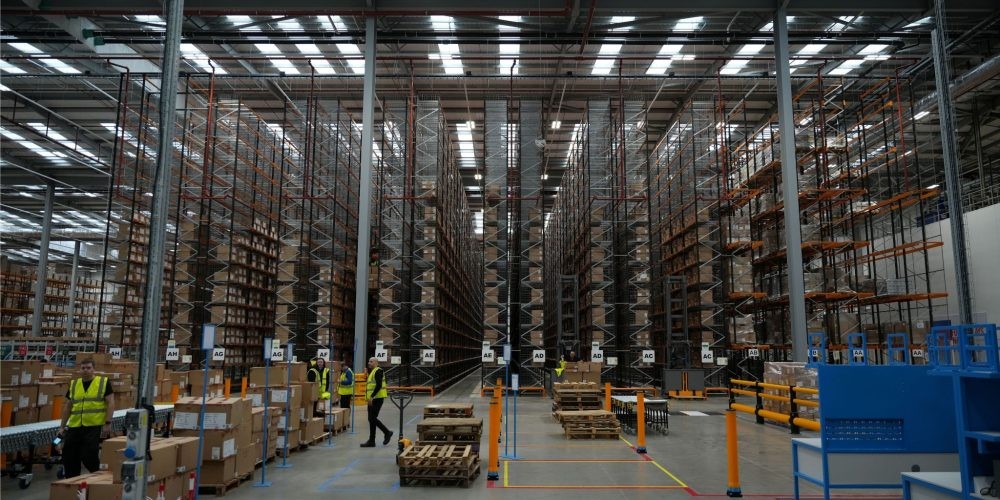
To support the expanded delivery cadence, Walmart increased its network of micro-fulfillment centers by 42% year-over-year, reaching 197 facilities nationwide as of Q2 2026. Each center processes an average of 3,200 orders with automation handling 67% of picking and packing tasks.

The company reported that labor productivity rose 18% associate after deploying new warehouse robotics platforms in Q1 2026. Capital expenditures for e-commerce logistics infrastructure totaled $2.1 billion in fiscal year 2025.

Walmart’s e-commerce gross margin improved to 29.4%, up from 27.1% in the prior year, reflecting lower per-unit delivery costs and reduced cart abandonment.

Source: FreightWaves

Compiled from international media by the SCI.AI editorial team.
Ask SCI.AI Finished reading? Continue with SCI.AI. Explore the related policy, route, company and historical context. Continue asking
Maersk inks UK logistics deal for Columbia Sportswear, handles 1.6M units/year
AI & Automation

Maersk inks UK logistics deal for Columbia Sportswear, handles 1.6M units/year

A.P. Moller – Maersk has signed a new agreement with Columbia Sportswear to manage its UK and Ireland Pick & Pack operations from a dedicated 8,000-square-metre facility in Tamworth, UK. The five-year contract replaces Columbia’s prior France-based distribution setup in Cambrai. The hub will handle 1.6 million inbound units annually, process 1.5 million B2B and 340,000 B2C outbound units, and maintain over one million units on hand across 25,000 SKUs. Maersk will also deliver customs handling, cross-docking, and final-mile delivery.

Nanorobotics Market to Hit $31.4B by 2034 at 14.9% CAGR
Strategy & Planning

Nanorobotics Market to Hit $31.4B by 2034 at 14.9% CAGR

The global nanorobotics market is projected to grow from $9 billion in 2025 to $31.44 billion by 2034, expanding at a compound annual growth rate of 14.9%. Drug delivery dominates current applications, supported by preclinical advances—including a 70% tumor growth reduction using Karolinska Institute’s DNA-based nanorobots and up to 90% bladder tumor reduction achieved by IBEC’s autonomous systems. The report cites Polaris Market Research and highlights validation milestones published as of August 21, 2026.

India launches $1.2B scheme to cut China machinery imports
Manufacturing

India launches $1.2B scheme to cut China machinery imports

India has launched a $1.2 billion incentive scheme to spur domestic manufacturing of tunnel boring machines, elevators, and fire-fighting systems — targeting a $1.8 billion investment over 7 years. Imports of tunnelling machinery from China plunged from $18 million in 2022–23 to $500,000 in 2024–25 amid post-2020 geopolitical tensions and 2024 export delays. Bharat Earth Movers Limited, Larsen & Toubro, and Johnson Lifts are among potential beneficiaries. The plan seeks full indigenisation — not just assembly — of high-tech components. India’s infrastructure equipment market is valued at Rs 1 lakh crore ($10.4 billion).

Welcome Back!

Login to your account below

Create New Account!

Fill the forms below to register

Retrieve your password

Please enter your username or email address to reset your password.

Scan to share via WeChat

Open WeChat and scan the QR code to share

QR Code

Add New Playlist