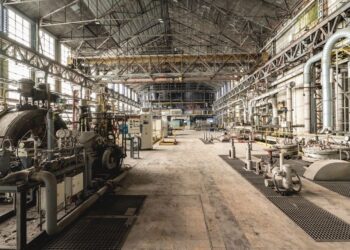
In recent years, global supply chains have undergone one of the most significant restructurings in modern economic history. The pandemic, geopolitical tensions, and escalating trade conflicts have exposed the risks of excessive concentration in certain regions. For decades, China was widely regarded as the “world’s factory,” but disruptions have forced global corporations to reassess that model and prioritize resilience alongside efficiency.
India Moves from Periphery to Center of Global Manufacturing Conversations
In this reassessment, India has moved from the periphery to the center of global manufacturing conversations. What began as a diversification strategy under the “China-plus-one” framework has now evolved into something far more structural. Multinationals are no longer merely looking at India as a fallback or a second option, but as a destination for manufacturing in the long term, with very attractive cost economics, a huge talent pool, and a massive domestic market. India is now positioning itself as a destination of choice for companies looking for stability, scale, and supply chain optimization.
“India is no longer just an alternative in global supply chains, but is becoming a core destination for multinationals’ long-term manufacturing strategies.” — Industry analyst comment
From Cost Competition to Comprehensive Capability Assessment
At the same time, global buyers are no longer evaluating Indian suppliers merely on cost competitiveness, but increasingly on traceability, regulatory compliance, ESG metrics, and digital integration. This shift is accelerating process maturity and operational sophistication across the manufacturing sector, pushing Indian companies to align with global quality, governance, and transparency benchmarks.
Structural Factors Driving the Transformation
Multiple structural factors suggest that this transformation is well underway. India continues to stand out as one of the fastest-growing large economies globally, maintaining GDP growth of around 6-7% even amid uncertain global conditions. Government-led policy measures have played a strong role in supporting this trajectory. The Production-Linked Incentive (PLI) schemes, with an overall outlay of nearly ₹2 lakh crore across sectors such as electronics, pharmaceuticals, automobiles and specialty steel, have encouraged significant investments and boosted manufacturing capacity.
Strong Investment and Export Performance
India has consistently attracted over $60 billion in annual FDI inflows in recent years, reflecting sustained global investor confidence. These investments are not merely financial—they are contributing to the development of domestic supplier ecosystems and stronger backward integration. India’s export performance further reinforces this transformation. The country’s merchandise exports have crossed $450 billion in FY23, while total exports of goods and services have approached the $750 billion mark in recent years.
Infrastructure Expansion Enhancing Competitiveness
Infrastructure expansion has further strengthened India’s manufacturing competitiveness. The Union government’s capital expenditure has risen sharply, crossing ₹10 lakh crore annually in recent budgets. Investments in freight corridors, port development, industrial corridors and multimodal logistics parks are shrinking distances and improving connectivity. The integration of markets through GST and the digitization of regulatory systems have further enhanced ease of doing business.
Demographic Advantage and Domestic Market
Demographics are one of India’s most significant competitive strengths. With a median age of 28, India has one of the youngest populations among major economies. This demographic dividend is translating into a growing pool of skilled and semi-skilled workers, particularly in engineering and technical fields. The country produces over 1.5 million engineering graduates annually, providing a robust talent pipeline for advanced manufacturing.
2026: A Critical Turning Point
As global companies continue to diversify their supply chains away from over-concentration in any single region, India stands to benefit significantly. The combination of policy support, demographic advantages, growing domestic market, and improving infrastructure creates a compelling case for India as a manufacturing destination. 2026 may well be remembered as the point when India’s manufacturing sector came of age, moving beyond being just an alternative to becoming a central pillar of global supply chains.
Source: Dainik Jagran English
This article is compiled by SCI.AI from overseas media reports, aiming to provide industry insights for supply chain professionals. Content is based on publicly available information and is for reference only.