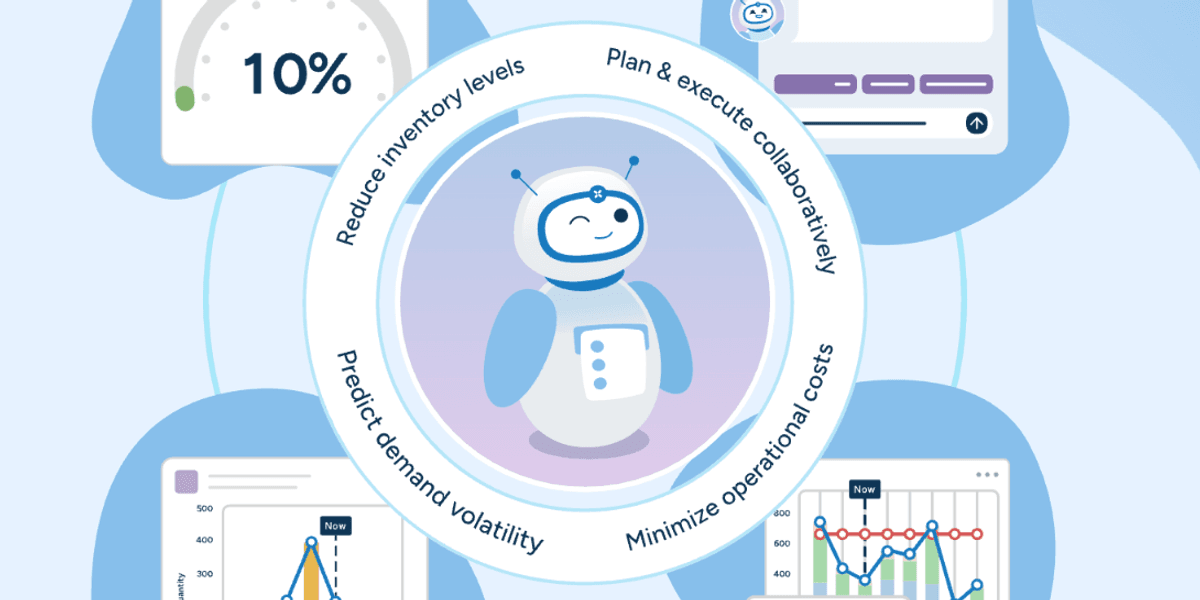
According to www.dcvelocity.com, only 10% of retail and manufacturing leaders say they would trust artificial intelligence to make fully independent supply chain decisions — a finding from Relex Solutions’ “State of Supply Chain 2026: Volatility, Trade-Offs & the Rise of AI” report.
Human-in-the-Loop Dominates Current AI Adoption
The January 2026 survey, conducted by Researchscape with 514 retail, manufacturing, wholesale, and supply chain leaders, reveals that 54% prefer AI to generate recommendations while humans retain final decision authority. This human-in-the-loop model reflects widespread caution despite growing operational reliance on AI tools.
Confidence in AI is rising: 67% of respondents reported increased confidence in using AI for supply chain decision-making compared with the prior year. Application is accelerating across key functions: 47% are using or planning AI-driven inventory and supply optimization, and 41% are applying AI to logistics and routing.
Strategic Investment Trajectory
Looking ahead, 71% plan to invest in generative and agentic AI, and 60% in predictive AI over the next three to five years. These investments are driven primarily by volatility: 44% cite consumer demand volatility as their top challenge over the next three years. Retailers report 30% face major difficulty adapting to sudden shifts in consumer demand — underscoring the need for enhanced demand visibility and responsive planning.
Manufacturers identify different pressure points: 57% say raw material procurement disruption is the most impacted area, while 34% name regulatory and compliance pressures as a growing operational concern.
Industry Context and Practical Implications
This cautious trust pattern aligns with broader industry behavior. PMMI’s 2026 report on AI in packaging equipment confirms similar adoption dynamics: companies are moving beyond pilots into scaled deployment, particularly in predictive maintenance, machine vision, and regulation/compliance support. However, persistent barriers include data hallucinations, accountability for AI-generated errors, cybersecurity, legacy data infrastructure, and workforce readiness — concerns echoed across both Relex’s and PMMI’s findings.
For supply chain professionals, this means AI integration must prioritize explainability, audit trails, and role-specific upskilling — not just algorithmic capability. Procurement strategies should emphasize vendor accountability (e.g., SaaS models that shift liability), interoperability with existing WMS/TMS platforms, and phased rollout plans that preserve human oversight at critical handoff points such as safety-critical routing changes or high-value inventory reallocations.
“AI is becoming part of everyday supply chain decision-making. As volatility persists, companies are investing in AI-driven forecasting, optimization, and decision support to respond faster and operate with greater confidence, even when conditions change quickly.” — Madhav Durbha, group vice president of manufacturing industry strategy at Relex Solutions
Source: DC Velocity
This article was AI-assisted and reviewed by the SCI.AI editorial team.