Skip to content

Coverage desk

Supply Chain

1502 published stories

PepsiCo cuts 184 jobs in Tulsa, Okla. warehouse
Supply Chain

PepsiCo cuts 184 jobs in Tulsa, Okla. warehouse

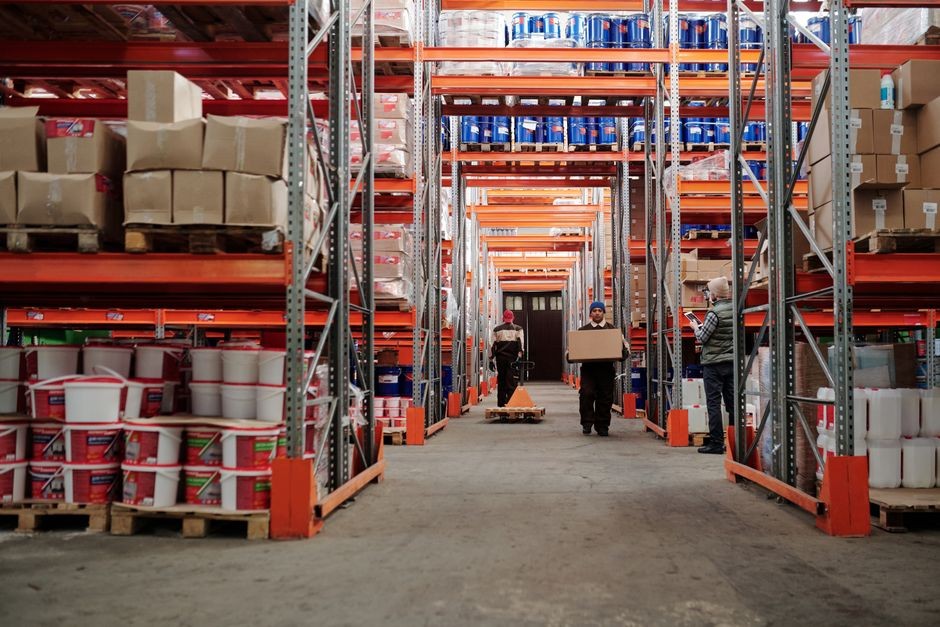
PepsiCo is discontinuing its warehousing activities at its Pepsi Beverages Company facility in Tulsa, Oklahoma. The company plans to relocate these logistics duties to a new site in the immediate Tulsa region. While the manufacturing processes will remain in the current building, the company is shutting down the warehousing division. The facility houses 184 employees in its warehousing division. All of these workers will be permanently laid off. The final day of employment is scheduled for November 15, 2026. PepsiCo filed a Worker Adjustment and Retraining Notification (WARN) Act notice on July 14, 2026. The notice lists the number of impacted employees as of July 6, 2026. The layoffs affect various roles within the warehouse. Forklift operators make up the largest group with 57 employees. Warehouse personnel account for 63 jobs. General laborers include 41 positions. Inventory control specialists number 13. Lead persons account for 12 roles. Other impacted positions include training coordinators with 3 employees. Manufacturing senior coordinators include 2 staff. SC operations associate supervisors number 6. Truck jockeys account for 5 jobs. Manufacturing leaders include 1 position. SC operations associate leaders number 1. SC operations senior resources include 1 position. PepsiCo is actively working to place these employees in other roles. The company is looking at positions at the current Tulsa site. They are also exploring opportunities at nearby facilities. A spokesperson stated that the company is committed to treating impacted employees with care. Production processes will continue at the current facility. The company is shifting duties to a new site in the Tulsa area. The spokesperson confirmed that all employees have been notified. They are being provided information about other job openings.

JD Logistics H1 adjusted profit rises 40%
Supply Chain

JD Logistics H1 adjusted profit rises 40%

JD Logistics reported strong financial performance for the first half of 2026, highlighting significant growth in integrated supply chain revenue and expanded overseas logistics capabilities. Total revenue for the period reached 124.7 billion yuan, equivalent to approximately $18.5 billion. This figure represents a year-on-year increase of 26.5%. The company's adjusted operating profit surged by 39.9%, totaling 3.6 billion yuan, indicating that cost reduction measures, efficiency gains, and business mix optimization are yielding substantial results. The integrated supply chain segment generated 59.4 billion yuan in revenue, up 18.5% year-on-year. The company serves nearly 80,000 external integrated supply chain customers. The average revenue per customer reached 254,000 yuan, indicating a shift from volume-driven expansion to deep engagement with high-value clients. JD Logistics' overseas operations emerged as a primary growth engine, characterized by the rapid scaling of warehouse infrastructure and express delivery networks. The company currently operates more than 200 overseas warehouses, bonded warehouses, and direct-mail warehouses across 26 countries and regions worldwide. The total overseas warehouse management area has exceeded 2 million square meters. JoyExpress, the company's proprietary express delivery brand, has densified its network in multiple European countries, including the United Kingdom, Germany, the Netherlands, and France. In the United States, the company expanded its roster of consumer electronics clients by offering integrated warehousing and omnichannel fulfillment services. In Europe, service coverage was broadened to include multiple leading home appliance and drone brands. Additionally, the company partnered with a top consumer electronics client in the Middle East to jointly build a high-standard smart warehouse, exporting its automation capabilities to the region. JD Logistics is accelerating the deployment of artificial intelligence and automation technologies across its warehousing, sorting, and delivery operations. The company deployed the fully upgraded Super Brain LLM 2.0 at scale during the JD 618 shopping festival. The system is capable of calculating the fastest routes for hundreds of millions of parcels within three minutes. An AI-powered map-based inventory diagnostic assistant enables differentiated smart replenishment across tens of millions of SKUs, driving merchant inventory turnover efficiency improvements of 30% to 40%. In warehousing, the self-developed "ZhiLang" goods-to-person solution has entered a phase of large-scale replication. It has been deployed in more than 60 warehouses globally, with new installations in the United Kingdom and Germany. In sorting, the "YiLang" embodied intelligent robotic arm has been upgraded from a single-arm to a dual-arm configuration. Driven by the Super Brain LLM, the system fuses visual, force, and tactile sensor data to complete a full cycle of recognition, suction, grasping, and palletizing in just 10 seconds. On the delivery side, over 1,000 autonomous vehicles are now in regular operation across more than 20 provinces in China. Shenzhen launched the first nighttime autonomous vehicle delivery routes to enable 24-hour uninterrupted operations. In drone delivery, the company operates over 100 domestic routes. In June, the company launched China's largest drone-to-village delivery network in Zizhong County, Sichuan Province, covering 78 administrative villages with delivery times as fast as 7 minutes. JD Logistics introduced multiple new service offerings and deepened its penetration in specific industries during the first half of the year. Revenue from other customers, including express delivery, freight, and on-demand delivery, reached 65.3 billion yuan, up 34.8% year-on-year. JD Airlines now operates 13 all-cargo aircraft, with next-day delivery capabilities for air freight continuing to improve. Express delivery services have achieved full coverage of all county-level regions in China, reaching essentially every administrative village, with nearly 100,000 service stations established across rural townships and villages nationwide. The company introduced the "JingChongDa" pet delivery service in June, featuring proprietary dedicated delivery, pre-screening quarantine, and full-chain traceability. The service has expanded to more than 40 core cities across China with a 100% positive review rate. The express delivery division also rolled out integrated pickup-and-delivery services and two new time-definite products, including cross-city express delivery that is as fast as 4 hours.

Ex Williams-Sonoma VP Pleads Guilty in $16M Fraud
Supply Chain

Ex Williams-Sonoma VP Pleads Guilty in $16M Fraud

Former Williams-Sonoma VP Eric Marsiglia pleaded guilty to a $16 million fraud scheme involving kickbacks from warehouse vendors in New Jersey and the theft of $4.1 million in real estate broker commissions. Marsiglia, who served as VP of engineering and facilities, used a shell company called REM Group to conceal illicit transactions over a four-year period ending in 2022. He faces up to 20 years in prison and fines totaling over $1 million upon his sentencing in California on Nov. 3.

Freight rates double as Hormuz closure hits container market
Supply Chain

Freight rates double as Hormuz closure hits container market

According to Seatrade Maritime, the global container shipping market has experienced a volatile surge in the first half of 2026, driven by geopolitical disruptions in the Middle East that have effectively doubled freight rates on major trade lanes. Market impact of geopolitical disruption In a mid-year analysis, Seatrade Maritime Podcast spoke with Daniel Richards, an […]

NRF: Early peak shipping season to subside in September
Supply Chain

NRF: Early peak shipping season to subside in September

The National Retail Federation (NRF) and Hackett Associates report that the early peak shipping season is ending, with U.S. port imports expected to decline for the rest of 2026. May was the busiest month at 2.24 million TEU. Tariff changes and supply chain disruptions drove retailers to pull forward orders. Consumer spending remains resilient. Full-year 2026 imports are projected at 25.5 million TEU, up 0.1% from 2025.

China’s exports rise 14%, imports up 22% amid trade war resilience
Supply Chain

China’s exports rise 14%, imports up 22% amid trade war resilience

China’s foreign trade rose 17.3% to ¥30.13 trillion in the first seven months of 2026, with exports up 14% and imports surging 22%. High-tech exports jumped over 50% in July, accounting for nearly 60% of monthly export growth. U.S.-China trade fell 1.6%, while ties with over 180 countries—including ASEAN and the EU—expanded. Green exports like EVs and lithium batteries posted double-digit growth for the 17th straight month. China also applies zero tariffs to imports from 63 countries.

TSMC revenue up 33.7%, ASML ships 86 lithography machines
Supply Chain

TSMC revenue up 33.7%, ASML ships 86 lithography machines

TSMC reported $40.2 billion in Q2 2026 revenue — up 33.7% year-on-year — with 2-nm process contributing 3% of sales. ASML shipped 86 new lithography machines in the same quarter, boosting revenue to €9.32 billion ($10.69 billion). TSMC holds 73% of the global foundry market, while ASML’s EUV tools remain essential for sub-3-nm chip production. Both companies’ five-year net income grew over 90% (ASML) and 251% (TSMC). TSMC’s $100 billion Arizona expansion will support 2-nm manufacturing and advanced packaging.

BlueGrace acquires Idaho 3PL Truk TMS to expand Pacific Northwest LTL
Supply Chain

BlueGrace acquires Idaho 3PL Truk TMS to expand Pacific Northwest LTL

BlueGrace Logistics has acquired Idaho-based third-party logistics provider Truk TMS to strengthen its presence in the Pacific Northwest. The deal brings Truk TMS—previously a BlueGrace partner—fully into the company’s ecosystem, granting its customers access to BlueGrace’s Managed Logistics platform and BlueShip technology. Financial terms remain undisclosed. BlueGrace, headquartered in Tampa, Florida, serves over 10,000 customers from nine offices across the U.S. and Mexico and operates a carrier network exceeding 250,000. As a Warburg Pincus portfolio company, BlueGrace previously acquired STB Freight Group and FreightCenter in 2025. Truk TMS CEO Mark Barnes emphasized continuity of service backed by expanded capabilities.

India launches PLI scheme for polysilicon to cut China imports
Supply Chain

India launches PLI scheme for polysilicon to cut China imports

India is launching a Production-Linked Incentive (PLI) scheme for domestic polysilicon manufacturing to eliminate its 100% dependence on Chinese imports. Announced by Santosh Kumar Sarangi, Secretary of the Ministry of New and Renewable Energy, the scheme targets over 10 GW of capacity and supports India’s goal of 500 GW of non-fossil power by 2030. It builds on existing PLI investments totaling ₹240 billion ($2.52 billion) and complements current domestic capacity — including 200+ GW of solar panels and 32+ GW of cells — with plans for 80 GW of ingot and wafer capacity by June 2028.

India accelerates water reforms to power AI, manufacturing, agriculture
Supply Chain

India accelerates water reforms to power AI, manufacturing, agriculture

India must accelerate water governance reforms to sustain growth in AI infrastructure, manufacturing, and agriculture. UBS economist Tanvee Gupta Jain warns that despite rising infrastructure investment, policy lags threaten $24 billion in AI projects and $100 billion in PLI manufacturing incentives. A 17% national water deficit — projected to reach 21% by 2030 — already disrupts semiconductor fabs in Chennai and delays cold chain development in Gujarat. Rural economic shifts toward high-water-value agri-businesses further strain outdated allocation systems.

ACS revenues rise 38% to $845M amid cargo charter demand surge
Supply Chain

ACS revenues rise 38% to $845M amid cargo charter demand surge

Air Charter Service (ACS) recorded a 38% year-on-year revenue increase in H1 2026, reaching over $845 million—driven primarily by a 49% rise in cargo charter volumes. Disruptions including the Middle East conflict, Iranian supply chain fallout, Storm Marta’s Moroccan port closures, and Venezuelan relief efforts contributed to demand spikes. ACS operates 43 global offices, added six in 2025 and three more in 2026 (Brussels, Monaco, Stuttgart). EBITDA rose 35–40% across its cargo, group charter, and private jet divisions. Chairman Chris Leach noted growing reliance from governments and multinationals on ACS for complex, time-critical air logistics.

India Needs $1 Trillion Manufacturing Investment to Create 40M Jobs
Supply Chain

India Needs $1 Trillion Manufacturing Investment to Create 40M Jobs

Ashish Dhawan, founder of ChrysCapital, argues India must attract $1 trillion in manufacturing investment over the next decade to generate 40–50 million jobs and lift exports from $450 billion to $2 trillion. He highlights critically low manufacturing FDI — just $20–$22 billion annually — versus headline $90 billion FDI figures skewed by short-term private equity. With improved infrastructure, active industrial policy, and geopolitical tailwinds from EU-China trade tensions and new FTAs with the US, EU, and UK, Dhawan asserts India's 'enabling conditions' are stronger than in the past 10–15 years.

Welcome Back!

Login to your account below

Create New Account!

Fill the forms below to register

Retrieve your password

Please enter your username or email address to reset your password.

Add New Playlist