For 15 consecutive years—since surpassing the United States in 2010—China has held the title of world’s largest manufacturing economy. In 2024 alone, its manufacturing增加值 (value-added) reached RMB 33.6 trillion ($4.7 trillion USD), accounting for nearly 30% of global manufacturing output and contributing over 30% of global manufacturing growth. Yet this scale is no longer the sole metric of dominance. What truly distinguishes China’s position today is not just volume—but velocity, visibility, and viability across end-to-end supply chains. As of September 2025, 79 of the world’s 189 designated ‘Lighthouse Factories’—41.8%, or over two-fifths—are located in China, far outpacing the U.S. (31), Germany (15), and India (11). This isn’t a statistical anomaly; it’s structural evidence of a profound, system-wide transformation in how goods are conceived, made, moved, and delivered.
The Lighthouse Effect: From Benchmarking to Blueprint
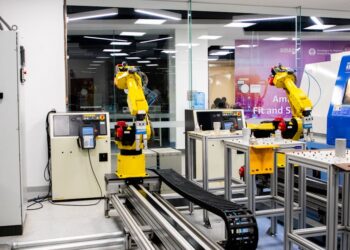
The World Economic Forum’s ‘Lighthouse Factory’ designation—awarded only to facilities demonstrating exceptional integration of Fourth Industrial Revolution technologies—has evolved from an aspirational label into a strategic infrastructure index. China’s 79 Lighthouses span 12 industrial sectors, with concentrated strength in electronics (28% of Chinese Lighthouses), home appliances (19%), equipment manufacturing (13%), and automotive components (8.5%). Crucially, their impact extends far beyond factory gates: each certified site serves as a living R&D lab, generating replicable digital playbooks. For instance, Shougang Cold Rolling—a new entrant in the 13th cohort—deployed 67 Industry 4.0 use cases, 61% of which embed AI for predictive maintenance, real-time quality control, and dynamic energy optimization. The result? A 22% reduction in unplanned downtime and 17% lower energy consumption per ton of steel.
Similarly, Mettler Toledo’s Changzhou plant implemented 49 digital solutions, lifting on-time-in-full (OTIF) delivery to 98.4%—a figure that would be unattainable without AI-driven demand sensing, autonomous material handling, and closed-loop supplier collaboration. Critically, these factories are no longer outliers. Their methodologies are being codified into national standards: China’s Smart Manufacturing Capability Maturity Model (GB/T 39116-2020) now guides over 120,000 enterprises in structured digital adoption. This institutionalization transforms isolated excellence into systemic capability—a defining shift from ‘island automation’ to ‘ecosystem intelligence’.
Supply Chain Resilience: Beyond Geographic Diversification
Resilience is often conflated with redundancy—stockpiling inventory or duplicating capacity. China’s advanced manufacturers have redefined it as adaptive responsiveness: the ability to sense disruption, recalibrate sourcing, and re-route production—all within hours. This is enabled by three converging enablers: hyper-local clustering, real-time data fusion, and multimodal logistics orchestration.
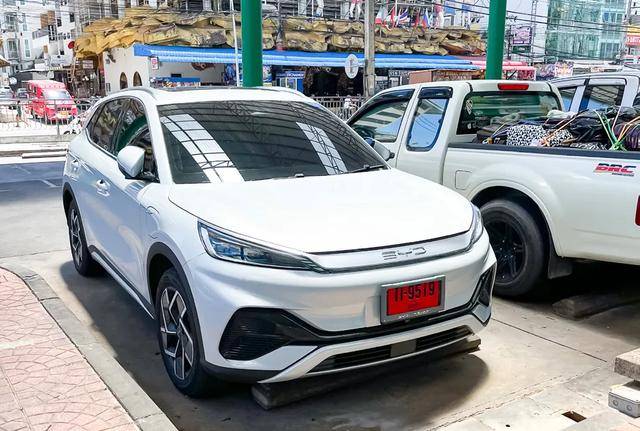
In the Greater Bay Area, over 85% of Tier-2 and Tier-3 suppliers for electric vehicles operate within a 50-kilometer radius of OEMs like BYD and XPeng. This ‘minute economy’ enables just-in-sequence delivery windows under 90 seconds—a quantum leap from traditional ‘just-in-time’. Meanwhile, industrial internet platforms like Alibaba Cloud’s ET Industrial Brain aggregate live data from more than 1.2 million connected machines across 200+ industrial parks, feeding AI models that forecast component shortages up to 14 days in advance with 92% accuracy.
- ‘Factory-Port Synergy’: BYD’s Shen Shan base and Xiao Mo International Logistics Port sit 2.5 km apart; finished vehicles roll onto vessels in under 3 minutes, slashing port dwell time by 76% versus industry averages.
- Multimodal Integration: Over 82% of China’s top 100 exporters now use AI-powered freight marketplaces (e.g., FLEXPORT China, Cainiao Smart Logistics Network) to dynamically optimize rail-sea-air combinations—cutting average transit time from Chengdu to Rotterdam by 3.8 days since 2022.
- Global Node Strategy: Lenovo operates 30+ manufacturing sites across 12 countries, yet maintains centralized digital twin control from its Hefei HQ—enabling synchronized production planning across continents with <2-hour latency.
Logistics Intelligence: Automation as Infrastructure, Not Innovation
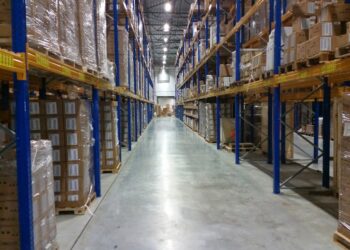
China’s logistics automation rate isn’t merely ‘high’—it’s foundational. As of Q1 2025, industrial enterprises’ digital R&D design tool penetration stands at 83.5%, while automated guided vehicle (AGV) deployment in Tier-1 contract manufacturers exceeds 91%. But the real differentiator lies in integration depth: AGVs don’t just move pallets—they negotiate traffic with overhead cranes, synchronize with conveyor algorithms, and auto-reconfigure routes when line speeds change. At Hisense Hitachi’s Qingdao HVAC plant, a three-tiered material flow system (AGV + overhead crane + belt conveyor) dynamically adapts to 17 distinct production rhythms—reducing internal logistics labor cost by 44% and space utilization inefficiency by 39%.
This infrastructure mindset extends offshore. BYD’s proprietary Ro-Ro fleet—including the 9,200-car-capacity LNG-powered ‘Shenzhen’ vessel—isn’t just transport; it’s a floating extension of its production control system. Each voyage feeds real-time telemetry (vibration, temperature, humidity) back to the factory’s digital twin, enabling predictive cargo damage mitigation. Likewise, COSCO Shipping’s ‘Digital Twin Port’ initiative—live in Shanghai, Ningbo, and Qingdao—uses AI to simulate berth allocation, crane scheduling, and truck queuing, boosting terminal throughput by 28% without adding physical assets.
From National Scale to Global Standards: The Next Frontier
China’s supply chain ascendancy faces four critical headwinds: (1) Data fragmentation—only 34% of cross-enterprise supply chain data exchanges comply with ISO/IEC 20000-1 standards; (2) SME adoption gaps—less than 12% of Chinese SMEs use cloud-based ERP systems despite government subsidies; (3) Green transition costs—the average payback period for solar-integrated smart warehouses remains >5.2 years; and (4) Geopolitical friction—U.S. CHIPS Act export controls have increased lead times for advanced sensors by 217% for some Chinese OEMs.
Yet the trajectory points toward convergence, not divergence. The ‘China + N’ model—exemplified by Midea’s smart factories in Thailand and Mexico—is rapidly maturing into ‘China × N’: leveraging Chinese digital IP (e.g., Huawei’s FusionPlant OS) to upgrade legacy infrastructure abroad. In Saudi Arabia, Lenovo’s new Jeddah facility runs entirely on a localized version of its Beijing-built supply chain AI engine—trained on Arabic-language logistics data and GCC customs regulations. This isn’t offshoring; it’s knowledge franchising. Simultaneously, China’s participation in ISO/TC 184 (Automation Systems and Integration) has surged—from 2 representatives in 2015 to 19 in 2025, co-authoring 7 new international standards on digital twin interoperability.
Ultimately, the ‘world factory’ narrative is obsolete. China is becoming the world’s supply chain operating system: a modular, upgradable, globally deployable architecture where hardware, software, and sustainability protocols co-evolve. Its next test won’t be GDP share—but whether its Lighthouse principles can become universal syntax for resilient, intelligent, and equitable global trade.
Conclusion: The Unfolding Architecture of Industrial Sovereignty
China’s 15-year manufacturing supremacy rests on a triad no competitor currently matches: unparalleled scale density (504 industrial categories, most #1 globally), deepening digital sovereignty (79 Lighthouses, 83.5% R&D tool penetration), and strategic logistics sovereignty (domestic port automation, owned Ro-Ro fleets, multimodal AI orchestration). This isn’t about replacing Western tech—it’s about building parallel stacks: Huawei’s HarmonyOS for industrial devices, Baidu’s PaddlePaddle for edge-AI inference, and JD Logistics’ autonomous last-mile networks.
For global procurement leaders, the implication is clear: engaging China’s supply chain ecosystem is no longer optional—it’s architectural. The question is no longer ‘Can we bypass China?’ but ‘How do we integrate its resilience layers—its Lighthouse-grade visibility, its minute-economy agility, its green logistics infrastructure—into our own value networks?’ As the WEF declares the ‘Fourth Industrial Revolution’ entering its scaling phase, China isn’t just participating—it’s compiling the reference manual. And the first chapter is already written in steel, silicon, and seamless data flows.
Source: Sohu.com, ‘Behind China’s 15-Year Manufacturing Leadership: How Supply Chains and Logistics Fortify the “World Factory” Foundation’, March 5, 2026.