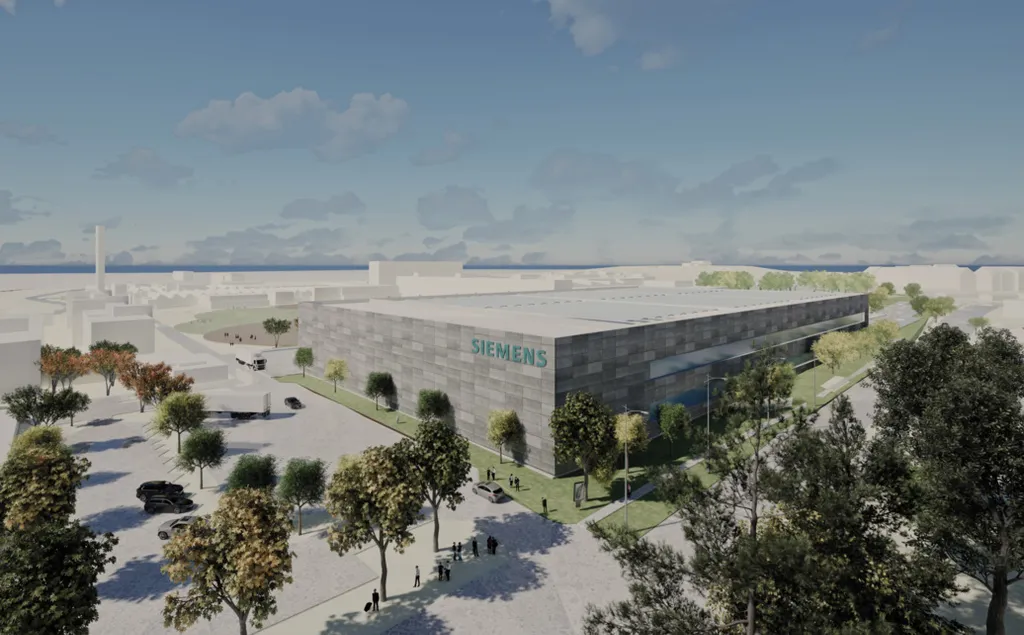
Siemens’ €200M Commitment: Why Germany’s Industrial Giant Is Doubling Down on Domestic Manufacturing
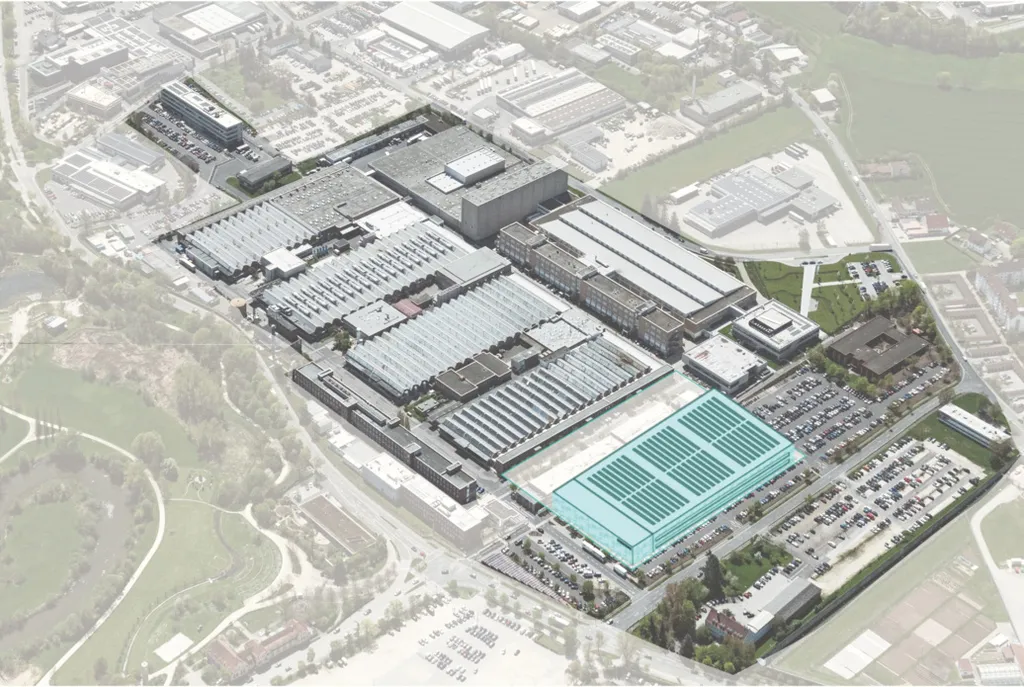
Siemens’ announcement on March 4, 2026 marks a decisive strategic pivot rooted not in rhetoric but in capital allocation: an investment of approximately €200 million (~$232 million) to expand its Amberg manufacturing campus into a fully integrated, AI-driven intelligent hub. This is not a pilot or proof-of-concept initiative; it is a long-term infrastructure commitment with completion targeted by 2030. Crucially, this decision unfolds against the backdrop of Siemens’ robust financial standing: fiscal year 2025 (ended September 30, 2025) delivered €78.9 billion in revenue and €10.4 billion in net income, underpinning the company’s capacity to execute large-scale, capital-intensive industrial modernization. With approximately 318,000 employees globally, Siemens possesses both the scale and operational discipline to synchronize such a transformation across engineering, procurement, logistics, and workforce development functions within a single national ecosystem.
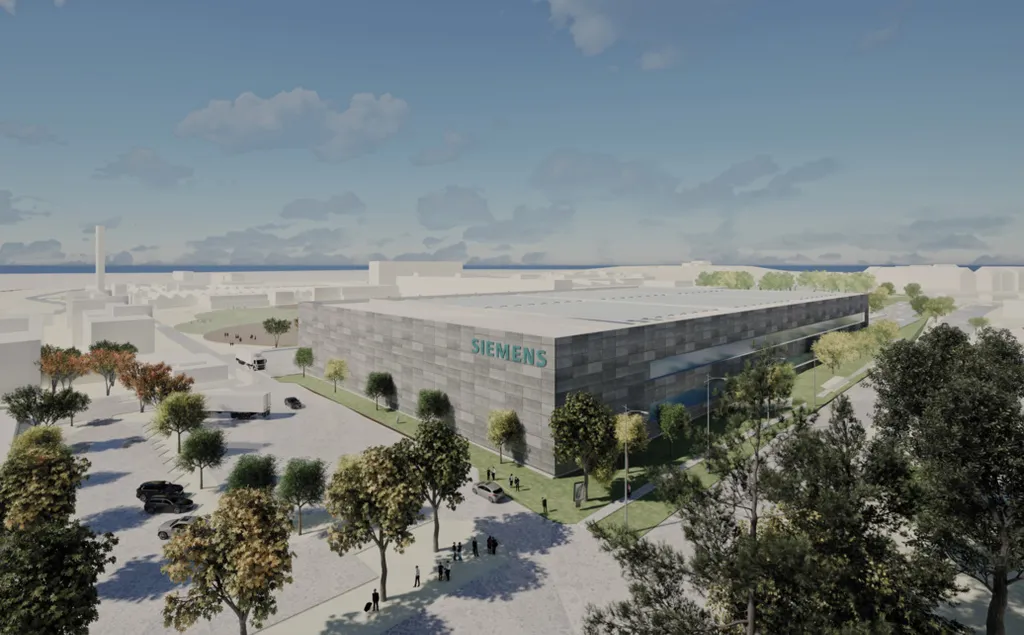
The choice of Amberg — a site already housing approximately 4,500 employees across two factories — reflects deliberate continuity rather than greenfield disruption. Unlike nearshoring or offshoring strategies pursued by peers in response to cost pressures, Siemens’ move signals a calculated reinforcement of domestic capability. This is evident in CEO Roland Busch’s explicit framing: “This investment is a clear commitment to the location.” It also reinforces the fact that the expansion serves Siemens’ Smart Infrastructure Business — a segment tied to energy transition, building automation, and urban resilience systems where supply chain traceability and certification rigor are non-negotiable. In an era where geopolitical volatility has elevated supply chain diversification to strategic imperative, Siemens’ €200 million bet affirms that resilience is increasingly built by deepening sovereign capability within trusted industrial ecosystems — a principle validated by the broader “Made for Germany” coalition of 124 companies pledging over €800 billion in domestic investment.
The Technology Blueprint: Self-Learning AI, Humanoid Robots, and Digital Twins as a Unified System
The Amberg expansion transcends incremental automation. Its technological architecture represents a convergence of three mature Industry 4.0 pillars — artificial intelligence, robotics, and digital twin modeling — deployed not as isolated tools but as interdependent layers of a self-optimizing system. At the core lie self-learning AI manufacturing systems that ingest real-time operational data from sensors and production systems to dynamically adjust production planning, material replenishment cycles, and machine scheduling. According to the official Siemens press release, these systems are designed to continuously analyze real-time operational data in order to optimize planning, production processes, material flows and system control. The AI layer does not replace human oversight; it elevates engineers from reactive troubleshooting to strategic model refinement and exception management — a shift confirmed by Siemens’ parallel commitment to train approximately 2,400 Smart Infrastructure employees at Amberg in new digital skills.
“This investment is a clear commitment to the location. It will also provide additional stimulus for Siemens’ growth in Germany. These plans even go beyond the investment commitments we made as part of the ‘Made for Germany’ initiative. By using industrial artificial intelligence, digital twins and state-of-the-art automation, we’re enhancing competitiveness and creating jobs that have a future. We’re also helping to strengthen Germany’s status as a country with a powerful industrial sector.” — Roland Busch, President and CEO of Siemens AG
The intelligence is physically embodied through fully automated logistics, deploying driverless transport systems (DTS) and humanoid robotics for material handling across production areas. These systems interface with Siemens’ proprietary Digital Twin Composer platform, which integrates discrete simulation models into a unified virtual replica of the entire production line. The Digital Twin Composer brings together various simulation models to inform the development process, allowing engineers to simulate production workflows, machine interactions, and logistics processes before construction and operations begin. This means the factory can be tested, optimized, and refined virtually before a single piece of equipment is installed — reducing implementation risk and enabling faster iteration on process design. Such integration transforms the factory from a linear value chain into a responsive, anticipatory production system.
Cleanroom Meets Automation: Infrastructure Revolution for Next-Generation Electronics Manufacturing
The inclusion of a dedicated cleanroom for electronics production within the Amberg expansion is a direct response to tightening performance requirements across Siemens’ Smart Infrastructure portfolio. Modern building management systems, grid-edge controllers, and industrial gateways demand precision electronics whose production requires controlled environmental conditions. Siemens has chosen to integrate this cleanroom capability directly within its Amberg campus — co-located with R&D, software development, and final system integration — collapsing the innovation-to-manufacturing cycle and strengthening IP protection and quality traceability. The cleanroom is engineered as a seamlessly integrated node: driverless transport systems handle material flows in and out, humanoid robots perform high-precision assembly tasks, and AI vision systems support quality inspection, feeding defect data back into the digital twin to refine process parameters for subsequent batches.
Bringing electronics manufacturing in-house alongside the Smart Infrastructure division also supports sustainability goals. Localized production reduces transportation-related emissions compared to long-distance supply chains. More strategically, co-location enables rapid prototyping iterations for customer-specific variants without waiting for offshore tooling changes or customs delays. The cleanroom is designed to accommodate electronics production requirements specific to Siemens’ Smart Infrastructure product lines, including switching, protection, and monitoring devices used in industrial applications globally. This convergence of cleanroom precision, automated logistics, and AI-driven quality control defines a new infrastructure archetype for electronics-intensive smart manufacturing — one that prioritizes product reliability, process traceability, and organizational agility simultaneously.
Reskilling 2,400 Workers: Siemens’ Model for Human-AI Collaboration in Smart Factories
Siemens’ pledge to train approximately 2,400 Smart Infrastructure employees at Amberg is arguably the most consequential element of the €200 million investment. According to the official announcement, the company plans to “actively involve employees in the transition to digital manufacturing,” with extensive training programs being prepared to equip workers with the skills required for operating and maintaining AI-enabled production systems. This is not generic digital literacy training; it is a role-specific capability uplift mapped to the operational demands of the new facility. For maintenance technicians, training addresses AI-generated anomaly reports and collaborative robot diagnostics. For production planners, curriculum covers configuring AI optimization parameters and interpreting trade-off visualizations. For quality assurance engineers, instruction focuses on integrating AI-powered inspection data with statistical process control disciplines.
Siemens frames human roles as irreplaceable supervisory and contextual layers operating atop AI execution — not as functions to be displaced by automation. The company stated explicitly that its aim is to “safeguard long-term employment at the site while preparing its workforce for the demands of future industrial environments.” This symbiosis is institutionalized through human-in-the-loop design principles: workers retain decision authority on matters affecting safety, compliance, and customer obligations. The approximately 4,500 employees across Amberg’s two factories are therefore not facing role elimination but functional evolution — with career pathways explicitly redefined from traditional production roles toward AI process stewardship, digital twin validation, and autonomous fleet coordination. This structured progression, backed by Siemens’ workforce commitments, transforms workforce investment from a cost center into a competitive differentiator that sustains institutional knowledge while integrating new technological capability.
The “Made for Germany” Initiative: What 124 Companies and €800 Billion Signal About Europe’s Industrial Future
Siemens’ Amberg project gains profound contextual meaning when viewed as a flagship component of the broader “Made for Germany” initiative — a coordinated industrial effort involving 124 companies that have collectively pledged over €800 billion in domestic investment. Siemens’ CEO noted that the Amberg plans “even go beyond the investment commitments we made as part of the ‘Made for Germany’ initiative” — signaling that corporate strategy is now outpacing even ambitious national frameworks. This reflects growing confidence in Germany’s ability to deliver technological leadership in sectors where physical infrastructure, regulatory expertise, and engineering depth converge, such as smart grids, industrial cybersecurity, and sustainable building technologies.
From a supply chain perspective, the €800 billion figure represents more than aggregate capital; it signifies a structural rebalancing of European industrial geography. The Made for Germany cohort is actively reinforcing domestic electronics, software platforms, and advanced materials capabilities. For Siemens specifically, this means the Amberg expansion contributes to a regional industrial ecosystem in which procurement, manufacturing, R&D, and workforce development are geographically aligned. This ecosystem effect matters: shorter innovation distances between ideation and industrial deployment reduce time-to-market for new Smart Infrastructure products, enable closer alignment with European regulatory frameworks such as the EU Chips Act and the Corporate Sustainability Reporting Directive (CSRD), and strengthen the overall resilience of Germany’s industrial base against external supply disruptions. The initiative thus demonstrates how national industrial strategy, when backed by coordinated corporate capital allocation, can meaningfully reshape supply chain geography at the continental scale.
Lessons for Global Manufacturers: A Three-Layer Framework for Smart Factory Investment Decisions
Siemens’ Amberg blueprint offers a replicable framework for manufacturers navigating Industry 4.0 adoption — structured around three interdependent investment layers: Infrastructure Rebuild, Process Reengineering, and Talent Upskilling. The Infrastructure Rebuild layer — represented by the €200 million capital outlay — encompasses physical assets: AI-ready edge computing nodes, automated material handling systems, dedicated cleanroom facilities, and digital twin infrastructure. Yet as Siemens demonstrates, this layer only delivers ROI when explicitly designed to enable the next two layers. The driverless transport fleet generates operational data that feeds AI training; the cleanroom’s monitoring systems provide inputs to the digital twin; the Digital Twin Composer creates the virtual environment in which process changes are validated before physical implementation. Without this purpose-built infrastructure orientation, AI models lack fidelity and automation lacks contextual awareness.
The Process Reengineering layer is where true differentiation emerges. Siemens did not automate existing Amberg workflows; it fundamentally redesigned them. Production planning is reimagined as a real-time optimization problem that AI solves continuously. Quality assurance shifts from periodic post-production sampling to continuous in-process monitoring augmented by AI vision systems. Logistics transitions from human-directed coordination to autonomous fleet management synchronized with digital twin state updates. Crucially, these changes were co-designed with shop-floor teams using digital twin simulations — allowing workers to test and refine new processes virtually before physical implementation. Finally, the Talent Upskilling layer — encompassing the training of approximately 2,400 Smart Infrastructure employees — ensures sustainability. It transforms workers from task executors into system interpreters and operational stewards, ensuring that the intelligence embedded in AI models is complemented by institutional human judgment. This three-layer model reframes smart manufacturing investment: capital expenditure is the enabler, not the objective. The objective is building a manufacturing system that learns, adapts, and improves continuously — while remaining under meaningful human governance.
Source: news.europawire.eu
This article was AI-assisted and reviewed by our editorial team.