The Agentic Inflection Point: Why 2026 Marks a Structural Break
According to the IndexBox/Gartner Supply Chain Survey, agentic AI has moved beyond experimental pilots and entered a decisive inflection point—fundamentally altering workforce planning across global supply chain organizations. This is not merely an incremental upgrade of existing automation tools but a paradigm shift wherein AI agents operate with increasing autonomy, interpret complex operational contexts, initiate multi-step actions, and negotiate outcomes without constant human oversight. The survey data reveals that supply chain leaders no longer view AI integration as a technology procurement decision but as a strategic catalyst for rethinking organizational design, talent architecture, and value creation logic. What distinguishes this moment from prior waves of digital transformation—such as ERP modernization or early predictive analytics—is the degree to which agentic systems are now influencing core human capital decisions. Leaders report shifting hiring criteria, redefining role boundaries, and recalibrating performance metrics around human-AI collaboration rather than task delegation. Crucially, the timing is precise: respondents identified the next 24 months—not five or ten years—as the critical window during which these structural adaptations must be institutionalized. Delaying workforce redesign beyond 2026 risks creating misalignment between AI capability deployment and human capacity, resulting in operational friction, governance gaps, and diminished ROI on AI investments.
This inflection is further underscored by the survey’s finding that AI advancement ranks as the single most influential factor redefining supply chain strategy over the coming two years—outpacing geopolitical volatility, climate-related disruptions, and even regulatory shifts in perceived strategic weight. That assessment reflects a maturation in executive understanding: AI is no longer treated as a siloed IT initiative but as the central nervous system coordinating demand sensing, inventory optimization, logistics orchestration, and supplier risk monitoring. As such, workforce strategies are being rewritten not in isolation but as integrated components of AI-enabled operating models. For instance, procurement teams are no longer just evaluating AI vendors—they are redesigning sourcing workflows so that AI agents autonomously execute RFx processes, benchmark pricing across dynamic market feeds, and even renegotiate contract terms based on real-time supply-demand imbalances. Such capabilities necessitate a workforce fluent in prompt engineering, AI output validation, and cross-functional escalation protocols—not just spreadsheet proficiency or negotiation experience alone. The implication is clear: the “agentic inflection point” demands that supply chain leadership treat workforce architecture with the same rigor and foresight they apply to network design or technology stack selection.
The Confidence Gap: High Performers Accelerate While Others Stagnate
A defining insight from the Gartner survey is the pronounced confidence gap separating high-performing supply chain organizations from their peers. High performers—defined in the survey by consistent top-quartile metrics in cost-to-serve, order accuracy, and resilience index scores—demonstrate significantly greater confidence in managing AI-driven workforce transitions. This confidence is not rooted in optimism alone but in observable behaviors: they are adopting agentic AI at substantially higher rates, investing more aggressively in structured upskilling pathways, and actively redesigning work rather than layering AI atop legacy roles. Critically, their confidence correlates strongly with measurable outcomes—such as faster time-to-value from AI deployments and lower attrition among mid-career professionals undergoing role transitions. In contrast, organizations reporting low confidence often cite ambiguity around accountability, fear of skill obsolescence, and lack of clarity on how to evaluate AI-augmented performance. These concerns are not unfounded, yet the survey suggests they stem less from technological limitations and more from insufficient investment in change architecture—particularly in translating AI capability maps into revised competency frameworks and career ladders. The confidence gap thus functions as both a diagnostic indicator and a leading predictor of future competitive positioning.
What enables high performers to bridge this gap is their systematic approach to human-AI co-evolution. Rather than treating AI adoption as a binary “on/off” switch, they implement phased enablement cycles—beginning with AI-assisted diagnostics (e.g., root-cause analysis of delivery delays), progressing to AI-recommended actions (e.g., optimal safety stock adjustments), and culminating in AI-executed decisions under human-defined guardrails (e.g., automated replenishment triggers within pre-approved tolerance bands). Each phase includes parallel workforce interventions: scenario-based simulations for frontline staff, peer-coaching cohorts for supervisors, and AI fluency certifications for managers. This deliberate scaffolding builds psychological safety and reinforces that AI augments judgment rather than replaces it. Moreover, high performers explicitly link AI maturity to leadership development—requiring senior supply chain executives to complete AI governance training and participate in quarterly “AI impact reviews” where they assess how algorithmic outputs influence strategic decisions like supplier diversification or warehouse rationalization. By embedding AI literacy into leadership expectations, they transform confidence from a subjective trait into an institutionalized capability—one that cascades downward through the organization and mitigates resistance at every level.
From Entry-Level Reduction to Mid-Career Reinvention
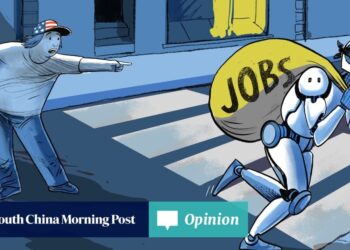
The Gartner survey delivers a sobering yet strategically coherent message: the majority of supply chain leaders anticipate reduced entry-level hiring and potential workforce reductions—not as a cost-cutting measure, but as a structural response to agentic AI’s expanding scope of responsibility. Traditional entry-level roles—such as data entry clerks, junior planners performing manual forecast reconciliation, or procurement coordinators managing PO tracking spreadsheets—are increasingly absorbed by AI agents capable of processing thousands of transactions per second with higher accuracy and contextual awareness. This trend does not signal the end of early-career development but rather its radical reinvention. Organizations are shifting focus from hiring for task execution to recruiting for AI interaction fluency: candidates are evaluated on analytical curiosity, systems thinking, and ethical reasoning—competencies essential for interpreting AI outputs, challenging algorithmic bias, and escalating edge cases. Internship programs are being redesigned to include AI audit simulations and collaborative problem-solving with simulated agents, ensuring new hires enter the workforce already oriented toward human-AI partnership rather than competition. The reduction in volume-based entry roles is thus accompanied by an increase in quality-focused developmental pathways—ones that prioritize cognitive agility over procedural familiarity.
Simultaneously, the survey highlights a pronounced pivot toward mid- and senior-level talent—individuals who possess deep domain expertise, cross-functional influence, and the strategic acumen to manage AI outputs at scale. These professionals are no longer expected to “do the work” but to “orchestrate the work”—validating AI recommendations against business context, integrating insights across silos (e.g., linking logistics AI predictions with finance’s working capital targets), and making judgment calls where data is incomplete or contradictory. Their value lies precisely where AI falters: navigating ambiguity, building stakeholder consensus, and balancing short-term efficiency with long-term resilience. To support this evolution, leading organizations are restructuring career ladders to emphasize “AI stewardship” as a distinct progression track—separate from pure technical specialization or people management. Senior planners may advance not by supervising more analysts but by governing larger AI agent constellations; procurement leaders may earn promotion by designing AI-powered supplier collaboration frameworks that improve joint forecasting accuracy by 30% or more. This reframing transforms workforce reduction rhetoric into strategic reallocation—redirecting investment from transactional headcount to judgment-rich leadership capacity.
Erosion of the Pyramid: Toward a Flatter, AI-Native Organizational Shape
The traditional supply chain organizational pyramid—broad at the base with numerous entry-level roles, tapering upward through layers of middle management, and culminating in a narrow apex of executives—is demonstrably eroding, according to the IndexBox/Gartner findings. In its place emerges a fundamentally different shape: broader in the middle tiers, flatter overall, and anchored by senior stewards of AI governance and strategy. This structural shift is not driven by cost pressures alone but by the functional reality that agentic AI assumes many responsibilities previously distributed across hierarchical layers. For example, AI agents now perform real-time exception management that once required multiple levels of supervisor review; they generate prescriptive analytics that reduce reliance on junior analysts for data synthesis; and they automate compliance checks that previously consumed middle-management bandwidth. Consequently, the “middle management bulge” is thinning—not because those roles are obsolete, but because their purpose is transforming from gatekeepers and coordinators to integrators and interpreters. These professionals now spend less time approving routine decisions and more time synthesizing AI-generated insights across domains—for instance, correlating logistics AI alerts about port congestion with procurement AI signals about raw material shortages to inform executive-level mitigation strategies.
This new organizational shape demands a reimagined operating model where authority flows differently. Decision rights are redistributed along two axes: first, downward to frontline teams empowered to act on AI-recommended actions within defined parameters (e.g., warehouse supervisors authorizing dynamic slotting changes based on AI-driven throughput forecasts); and second, outward to cross-functional pods that co-own AI outcomes (e.g., joint logistics-finance teams jointly responsible for AI-optimized transportation spend). Hierarchical reporting lines give way to matrixed accountability structures, with individuals reporting functionally to domain leaders while maintaining dotted-line responsibility to AI governance councils. Performance management systems evolve accordingly: KPIs shift from individual task completion to collective AI outcome quality—measured via metrics like “AI recommendation adoption rate,” “time-to-resolution for AI-escalated exceptions,” and “cross-functional alignment score on AI-initiated initiatives.” The erosion of the pyramid, therefore, represents not organizational simplification but sophisticated reconfiguration—a move from rigid command-and-control to adaptive, AI-mediated coordination. Success hinges less on title hierarchy and more on network influence, contextual intelligence, and the ability to translate AI outputs into actionable business value.
Procurement’s AI Vanguard: Lessons from Early Adoption
Procurement stands out in the Gartner survey as the supply chain function experiencing the most widespread and mature AI adoption—serving as both a proving ground and a blueprint for other domains. Unlike functions where AI deployment remains fragmented, procurement leaders report deploying agentic AI across end-to-end processes: from autonomous supplier discovery and risk scoring to AI-negotiated contract renewals and real-time spend anomaly detection. This leadership position stems from procurement’s inherent data richness, well-defined process boundaries, and quantifiable ROI levers—factors that make it an ideal candidate for agentic automation. More importantly, procurement’s success reveals a crucial implementation principle: AI adoption accelerates when tied directly to strategic imperatives like ESG compliance, total cost of ownership optimization, and supply chain resilience. For example, AI agents now continuously monitor geopolitical news, weather patterns, and financial filings to dynamically adjust supplier risk ratings—triggering proactive engagement with alternative sources before disruption occurs. Such capabilities transform procurement from a transactional cost center into a strategic intelligence hub, elevating its influence across the enterprise.
The procurement vanguard also offers instructive lessons on workforce transition. Rather than displacing category managers, AI has elevated their strategic mandate—freeing them from tactical negotiations to focus on complex supplier ecosystem design, innovation co-creation, and sustainability roadmap development. Category managers now require new competencies: interpreting AI-generated supplier concentration heatmaps, calibrating AI negotiation parameters against relationship equity objectives, and auditing AI-suggested cost savings for hidden quality or lead-time trade-offs. Training programs have shifted accordingly, emphasizing AI output validation frameworks, ethical sourcing AI guidelines, and scenario-planning workshops using live AI dashboards. Perhaps most significantly, procurement’s experience demonstrates that successful AI integration requires redefining success metrics—not just “cost saved” but “resilience enhanced,” “innovation velocity increased,” and “supplier collaboration deepened.” These expanded KPIs create space for human judgment to flourish alongside AI efficiency, ensuring that procurement’s evolution strengthens—not diminishes—its strategic relevance in the AI era.
Machine Customers and the New Trading Partner Ecosystem
One of the most consequential yet under-discussed implications of agentic AI—highlighted in the Gartner survey—is the emergence of “machine customers”: automated systems that interact directly with trading partners’ AI agents to execute commercial transactions without human intervention. This phenomenon extends far beyond simple EDI replacements; it involves AI agents negotiating pricing tiers in real time based on inventory levels, dynamically adjusting order quantities in response to production line disruptions, and even initiating collaborative forecasting sessions with supplier AI systems. Leaders report implementing these capabilities not as futuristic experiments but as operational necessities—driven by the need for sub-second responsiveness in volatile markets and the scalability demands of omnichannel fulfillment. The machine customer concept reframes B2B relationships from human-to-human interactions to system-to-system collaborations, where trust is established through transparent API contracts, auditable decision logs, and shared performance benchmarks—not personal rapport or historical precedent. This shift demands new governance frameworks, including standardized AI interoperability protocols and cross-enterprise data-sharing agreements that define permissible use cases and liability boundaries for AI-initiated actions.
For supply chain professionals, the rise of machine customers necessitates a profound expansion of their ecosystem management skills. They must now understand not only supplier capabilities and financial health but also their AI maturity—assessing factors like agent reliability scores, data provenance transparency, and anomaly escalation latency. Procurement teams are developing “AI readiness assessments” as part of supplier onboarding, while logistics leaders are negotiating SLAs that specify AI response times for shipment exception resolution. Crucially, this evolution does not eliminate human involvement—it relocates it upstream and downstream: humans design the rules governing machine interactions, intervene in high-stakes or ethically sensitive scenarios, and continuously refine the AI’s contextual understanding based on real-world outcomes. The machine customer era thus represents the ultimate test of supply chain leadership’s ability to architect intelligent, trustworthy, and mutually beneficial ecosystems—where AI agents serve as extensions of human intent rather than autonomous actors. Organizations that master this balance will not only optimize transactions but redefine competitive advantage through unprecedented speed, adaptability, and collaborative intelligence.
Source: IndexBox / Gartner
This article was AI-assisted and reviewed by our editorial team.