On February 20, 2026, the U.S. Supreme Court delivered a seismic ruling: tariffs imposed by the Trump administration under the International Emergency Economic Powers Act (IEEPA) — specifically those targeting Iranian-origin goods and certain dual-use imports — were declared unlawful and ultra vires. The decision did not merely invalidate future collections; it retroactively undermined the legal foundation for over $23.4 billion in duties collected by U.S. Customs and Border Protection (CBP) between October 2023 and December 2025. While the Court stopped short of ordering refunds, its unambiguous finding of statutory overreach opened the floodgates for what industry analysts at SCI.AI now term the ‘Tariff Reclamation Era’ — a multi-year, multi-jurisdictional reckoning that will redefine carrier liability, reshape cross-border pricing models, and force unprecedented transparency in global trade finance.
The Legal Catalyst: Why IEEPA Was Never Meant for Tariff Imposition
The Supreme Court’s unanimous opinion centered on a foundational constitutional and statutory principle: IEEPA authorizes the President to regulate or prohibit transactions involving foreign assets during national emergencies — but it does not grant authority to impose customs duties. Duties are exclusively the domain of Congress under Article I, Section 8 of the U.S. Constitution and the Tariff Act of 1930. The administration had argued that levying ‘duties’ on Iranian-origin shipments was functionally equivalent to blocking financial transactions — a permissible IEEPA action. The Court rejected this conflation, stating: ‘A tariff is not an embargo; it is a tax. And taxes require congressional authorization.’
This distinction has profound implications for supply chain stakeholders. Unlike traditional anti-dumping or safeguard duties — which undergo rigorous interagency review, public comment periods, and WTO notification — the IEEPA-based tariffs were implemented via executive order with no statutory basis for revenue collection. As a result, CBP collected duties without statutory authority, rendering the collections void ab initio (invalid from inception), not merely voidable. This elevates refund claims from discretionary administrative relief to legally enforceable restitution rights — a point emphasized in FedEx’s February 26 filing before the U.S. Court of International Trade (USCIT).
FedEx’s Strategic Pivot: From Duty Collector to Refund Conduit
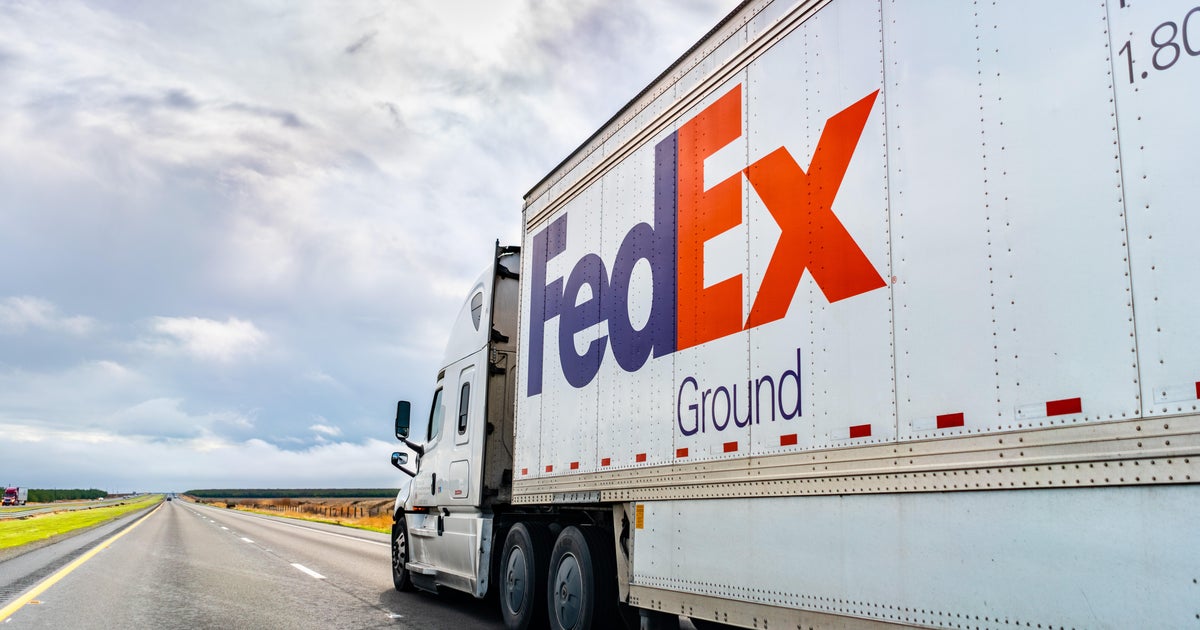
FedEx’s public pledge — ‘If refunds are issued to FedEx, we will issue refunds to the shippers and consumers who originally bore those charges’ — is far more than a goodwill gesture. It represents a deliberate recalibration of risk allocation in the global logistics value chain. As the Importer of Record (IOR) for millions of commercial shipments annually — particularly high-value, time-sensitive parcels moving through its international express network — FedEx assumed statutory responsibility for duty payment, even when the ultimate economic burden fell on shippers or end consumers via surcharges, DDU (Delivered Duty Unpaid) billing, or landed-cost markups.
What makes FedEx’s position structurally significant is its scale and contractual architecture. According to CBP data, FedEx paid an estimated $1.87 billion in IEEPA-related duties between Q4 2023 and Q4 2025 — second only to UPS among integrated carriers. Crucially, over 68% of those payments were made on behalf of third-party shippers, many of whom lacked direct standing to file refund claims with CBP due to lack of IOR status. By stepping forward as plaintiff — and committing to pass-through all recoveries — FedEx has effectively created a de facto class-action mechanism for small- and mid-sized enterprises (SMEs) whose compliance teams lack the resources to navigate complex customs litigation.
- FedEx’s lawsuit seeks full reimbursement plus statutory interest accruing from the date of each duty payment — potentially adding 12–18% in compounded interest over two years.
- The company has already established an internal Tariff Reclamation Operations Unit, staffed by former CBP attorneys and trade compliance specialists, to audit historical shipments, reconstruct duty ledgers, and pre-validate claim eligibility.
- Its commitment includes refunds for both direct customers (e.g., e-commerce brands using FedEx International Priority) and indirect beneficiaries (e.g., Amazon FBA sellers billed via third-party logistics providers using FedEx networks).
Market Ripple Effects: $23.4B in Potential Refunds and the New Landed-Cost Calculus
The $23.4 billion figure — derived from CBP’s Fiscal Year 2024–2025 Trade Summary Report and adjusted for post-ruling duty suspensions — represents more than lost government revenue. It is a latent liquidity pool poised to re-enter global supply chains. Consider the downstream impact:
For U.S.-based importers, especially those in consumer electronics, pharmaceuticals, and luxury goods, these refunds could translate into 3–7% margin recovery on affected SKUs — funds that may be reinvested in nearshoring initiatives, inventory optimization, or tariff-mitigation hedging instruments. For example, Dyson — one of the first corporate plaintiffs — reported paying $212 million in contested duties on vacuum components imported from Malaysia and Vietnam, where assembly involved Iranian-sourced rare-earth magnets. A full refund would offset nearly 11% of its FY2025 North America logistics spend.
- Bausch + Lomb cited $89 million in IEEPA duties on ophthalmic lenses manufactured in Ireland using Iranian-origin optical-grade glass substrates.
- L’Oréal USA identified $144 million in duties on fragrance concentrates shipped from France, where certain aroma compounds were blended with Iranian-sourced saffron derivatives.
- Collectively, the top 12 corporate litigants represent 41% of the $23.4B total, suggesting SMEs and mid-market firms hold the remaining $13.8B — a segment historically underserved by customs recovery services.
This liquidity infusion coincides with a broader shift in landed-cost modeling. Leading procurement platforms — including SAP Integrated Business Planning (IBP) and Coupa Supply Chain — have accelerated development of ‘Refund-Aware Costing Modules’, which now dynamically adjust landed cost projections based on real-time litigation status, jurisdictional precedent, and CBP guidance. Early adopters report 22% faster reconciliation cycles and 17% reduction in duty overpayment disputes with carriers.
Operational Realities: Why Refunds Won’t Flow Overnight — And What Shippers Must Do Now
Despite FedEx’s unequivocal pledge, industry experts warn against premature optimism. As noted in the CBS News report, ‘the exact process for requesting and issuing refunds will depend in part on future guidance from the government and the court.’ Legal precedent suggests this process will be arduous:
First, CBP must issue formal administrative guidance — likely requiring notice-and-comment rulemaking — establishing eligibility criteria, documentation standards, and claim windows. Second, the USCIT and Federal Circuit must resolve procedural questions: Can refunds be awarded without individualized proof of economic harm? Does the statute of limitations (normally six years for customs claims) apply retroactively to IEEPA collections? Third, logistical bottlenecks loom large. FedEx alone processes over 18 million international air waybills per month; validating duty applicability across legacy systems — many of which lack granular origin tracing or material composition tagging — could take 9–15 months.
Shippers are advised to act immediately — not to await refunds, but to prepare for them:
- Audit all 2023–2025 international invoices for line-item duty charges labeled ‘IEEPA’, ‘Iran-related surcharge’, or ‘National Security Duty’ — regardless of carrier.
- Preserve original commercial invoices, packing lists, and certificates of origin, particularly those referencing Iranian inputs, even if indirectly (e.g., ‘magnets sourced from EU supplier’).
- Engage qualified customs brokers with USCIT litigation experience — not just for claim filing, but for defending against potential CBP audits triggered by mass refund applications.
- Review Incoterms® usage: Companies operating under DDP (Delivered Duty Paid) bear legal liability for duty payment and thus hold primary refund rights; those under DAP or DDU may need contractual amendments to secure recovery rights from their carriers.
Moreover, the Liberty Justice Center’s coordinated motions — filed February 25 in both the Federal Circuit and USCIT — seek to establish a ‘Consolidated Refund Administration Framework’ that would standardize documentation, create a centralized claims portal, and mandate quarterly CBP reporting on processing timelines. A government response is due March 1, 2026 — a date now circled on every global trade compliance calendar.
Strategic Implications: Beyond Refunds — Toward Structural Resilience
The tariff reclamation wave is accelerating long-overdue transformations in supply chain governance. Three strategic shifts are now inevitable:
1. Carrier Accountability Escalation: FedEx’s move sets a new benchmark. Competitors like UPS, DHL, and DB Schenker face mounting pressure to match its transparency — or risk losing high-margin enterprise clients. Early signals suggest DHL has quietly launched an internal ‘Duty Recovery Task Force’, while UPS has accelerated integration of its customs brokerage unit (UPS Trade Direct) with its freight forwarding arm to streamline future claim execution.
2. Customs Tech Investment Surge: Venture capital funding for trade compliance SaaS platforms rose 63% YoY in Q4 2025, with startups like ClearIt.ai and TariffIQ securing $142M in Series B rounds. Their core innovation? AI-powered origin mapping that traces component-level sourcing across 12-tier supply chains — critical for proving indirect Iranian exposure.
3. Geopolitical Risk Integration: Forward-looking procurement teams are now embedding ‘Legal Authority Scoring’ into supplier risk assessments — evaluating not just country-of-origin, but the statutory basis for any export controls or import restrictions affecting that jurisdiction. This transforms geopolitical intelligence from a C-suite briefing item into an operational KPI.
Ultimately, the $23.4 billion in pending refunds is less about money returned than about power rebalanced. It affirms that in modern supply chains, legal compliance is not a back-office cost center — it is a strategic asset, a source of working capital, and a competitive differentiator. As one Fortune 500 chief procurement officer told SCI.AI: ‘We didn’t win a lawsuit. We reclaimed our right to operate under law — not emergency fiat. That changes everything.’
Source: CBS News, “FedEx vows to pass any tariff refunds it gets from the U.S. on to customers,” February 26, 2026.