The Legal Earthquake: Supreme Court Invalidates IEEPA-Based Tariffs
On February 20, 2026, the U.S. Supreme Court delivered a landmark decision that reverberated across global trade corridors: it unanimously ruled that tariffs imposed by the Trump administration under the International Emergency Economic Powers Act (IEEPA) were unlawful. The Court held that IEEPA — designed for national security emergencies like wartime sanctions or terrorist financing — lacks statutory authority to impose broad-based, economy-wide import duties on consumer goods and industrial inputs. This ruling did not merely strike down future levies; it retroactively invalidated more than $23.4 billion in tariff payments collected between March 2025 and January 2026, according to U.S. Customs and Border Protection (CBP) fiscal data.
What made the decision especially consequential was its narrow statutory reasoning — not constitutional grounds — meaning Congress could theoretically amend IEEPA or pass new legislation to restore such authority. But as of March 2026, no legislative fix has been introduced. Instead, the ruling triggered an immediate cascade of legal action: over 47 multinational corporations have filed refund claims in the U.S. Court of International Trade (CIT), including household names like Bausch + Lomb, Dyson, L’Oréal, Whirlpool, and Johnson & Johnson. FedEx’s lawsuit — filed just days after the ruling — stands out not only for its scale but for its explicit commitment to downstream cost reallocation.
The legal pathway is complex but increasingly defined. While the Supreme Court voided the tariffs’ legal foundation, it explicitly declined to rule on whether refunds must be issued — leaving that question to lower courts and administrative agencies. As noted by Professor Elena Rodriguez of Georgetown Law, ‘The Court confirmed the injury, but not the remedy. That distinction transforms every refund claim into a procedural battle over standing, timeliness, and importer-of-record liability.’
FedEx’s Strategic Pivot: From Cost Absorber to Cost Conduit
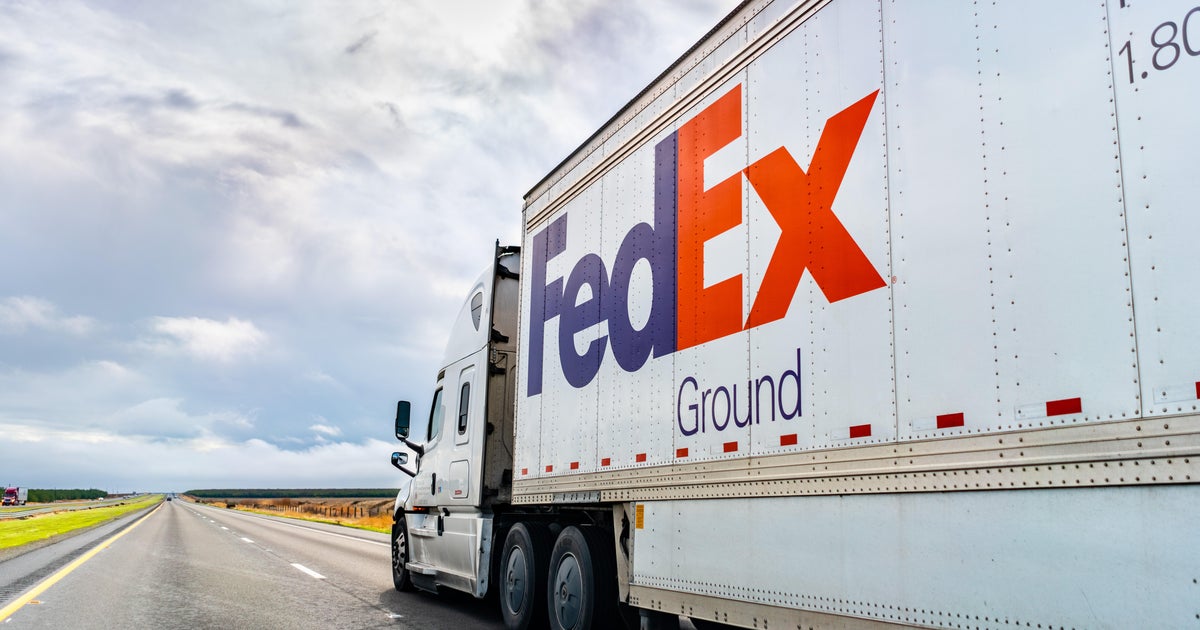
FedEx’s February 26, 2026 statement — promising to ‘issue refunds to the shippers and consumers who originally bore those charges’ — represents far more than corporate goodwill. It signals a deliberate strategic shift in how global logistics providers manage tariff-related financial risk. Historically, carriers like FedEx, UPS, and DHL absorbed certain tariff costs as part of their landed-cost service models, often embedding them into negotiated shipping rates or surcharges without itemized disclosure. But FedEx’s pledge breaks with precedent by committing to full pass-through transparency, contingent only on government disbursement timing and CIT procedural guidance.
This move carries significant operational implications. FedEx processed over 1.8 billion international shipments in FY2025, with an estimated 12.7% subject to IEEPA-based duties — primarily electronics components, medical devices, cosmetics, and automotive parts moving through U.S. ports of entry. Internal CBP audit records cited in FedEx’s CIT filing indicate the company paid approximately $412 million in contested duties during the enforcement period — making it one of the top five largest single-entity payers among private-sector importers.
More critically, FedEx’s refund mechanism will likely set de facto industry standards. Its statement explicitly references ‘shippers and consumers’, suggesting reimbursement may extend beyond contractual customers (e.g., Amazon, Walmart, or Alibaba’s cross-border sellers) to end buyers in some B2C scenarios — particularly where FedEx acted as the formal importer of record under Delivered Duty Paid (DDP) terms. This could force a reevaluation of Incoterms usage across e-commerce platforms, where DDP has surged 39% since 2023 due to consumer demand for predictable landed pricing.
The $23.4 Billion Ripple Effect: Who Stands to Gain — and Lose?
While FedEx’s $412 million claim garners headlines, the broader refund pool dwarfs individual filings. According to CBP’s 2025 Tariff Enforcement Report, total IEEPA-related collections reached $23.4 billion, distributed across three primary categories:
- Consumer Electronics & Components: $9.2 billion (39% of total) — dominated by semiconductors, lithium-ion batteries, and printed circuit boards from Vietnam, Malaysia, and Mexico
- Healthcare & Personal Care: $6.8 billion (29%) — including optical lenses, dermatological actives, and diagnostic kits sourced from Germany, Ireland, and Singapore
- Industrial Inputs & Automotive Parts: $7.4 billion (32%) — notably aluminum extrusions, steel fasteners, and EV powertrain modules from South Korea and Thailand
Crucially, this $23.4 billion does not represent pure profit for the U.S. Treasury. Roughly 63% was remitted by U.S.-based importers acting as agents for foreign manufacturers — meaning the economic burden fell disproportionately on American companies managing global supply chains. A McKinsey analysis estimates that for every $1 of tariff collected, U.S. firms incurred an additional $0.37 in compliance overhead, customs brokerage fees, working capital drag, and inventory holding costs — pushing the true economic cost above $31 billion.
Refunds won’t flow evenly. Companies that maintained meticulous duty payment records, preserved CBP Form 7501 entries, and retained proof of direct liability (e.g., as importer of record) will process faster. Firms relying on third-party customs brokers without audit trails — or those that passed duties through price increases rather than separate line items — face evidentiary hurdles. Legal experts at Crowell & Moring warn that up to 30% of refund claims may be denied or significantly reduced due to documentation gaps or statute-of-limitations challenges.
Supply Chain Finance Implications: Working Capital, Hedging, and Contract Renegotiation
The prospect of multi-billion-dollar refunds is already reshaping supply chain finance practices. Treasury departments at Fortune 500 importers are revising cash flow forecasts: J&J now projects a $187 million duty recovery to improve FY2026 operating cash flow by 4.2%; Whirlpool anticipates $94 million, which it plans to reinvest in nearshoring assembly lines in Monterrey, Mexico.
More structurally, the ruling accelerates adoption of duty drawback modernization and customs bond optimization. Drawback — the CBP program allowing duty refunds on exported goods — saw only 11% utilization among eligible firms in 2024. With renewed focus on duty recovery, adoption is projected to reach 38% by Q4 2026, per Gartner Supply Chain research. Meanwhile, surety bond limits are being renegotiated: FedEx increased its continuous customs bond capacity by 220% in January 2026, anticipating both refund litigation and expanded DDP service offerings.
Contractual frameworks are also evolving rapidly. Major retailers including Target and Home Depot have circulated revised vendor agreements requiring suppliers to indemnify against ‘unlawful tariff exposure’ and share in any recovered duties proportionally — a clause previously deemed unenforceable. Simultaneously, freight forwarders report a 67% surge in demand for ‘tariff contingency clauses’ in long-term logistics contracts, specifying automatic rate adjustments should duty liabilities be invalidated or refunded.
Perhaps most consequential is the impact on trade credit insurance. Euler Hermes reported a 29% year-on-year increase in policy applications covering ‘regulatory duty reversal risk’ in Q1 2026 — a nascent but fast-growing product class that treats tariff invalidation as a discrete insurable peril, akin to currency devaluation or port closure.
Global Repercussions and the Next Frontiers of Trade Litigation
While U.S. courts dominate the current refund narrative, the ripple effects are transnational. The European Commission has launched a preliminary review of whether IEEPA-based tariffs violated WTO Article II (Schedules of Concessions), potentially paving the way for EU countermeasures or parallel refund mechanisms for European exporters. Meanwhile, Canada’s CBSA quietly updated its Memorandum D19-1-1 to clarify that Canadian importers who paid duties on U.S.-origin goods subject to retaliatory tariffs may now file for refunds if those U.S. tariffs are deemed unlawful — a provision invoked in three cases already.
Looking ahead, two legal frontiers loom large. First, the Liberty Justice Center’s coordinated motions — filed February 25 in both the Federal Circuit and CIT — seek to establish a consolidated docket for all IEEPA refund claims, arguing that uniform procedures are essential to avoid contradictory rulings. Government response is due March 4, 2026 — and industry observers expect CBP to propose an expedited administrative refund process by mid-March, potentially cutting litigation timelines from years to months.
Second, plaintiffs are testing whether the Supreme Court’s logic extends beyond IEEPA. Motions filed by Boeing and Caterpillar argue that Section 301 tariffs on Chinese goods — also challenged on statutory grounds — should be similarly invalidated, citing identical flaws in delegation of congressional tariff authority. If successful, this could unlock an additional $128 billion in potential refunds — dwarfing the IEEPA pool and triggering the largest cross-border financial recalibration since the 2001 WTO accession agreements.
For supply chain professionals, the message is unequivocal: tariff risk is no longer a static cost of doing business — it is a dynamic, litigable, and increasingly recoverable financial instrument. As FedEx’s bold pledge demonstrates, the companies best positioned to thrive in this new era will be those that treat customs compliance not as back-office overhead, but as a core component of treasury strategy, contract architecture, and customer value proposition.
Source: CBS News, “FedEx vows to pass any tariff refunds it gets from the U.S. on to customers,” February 26, 2026