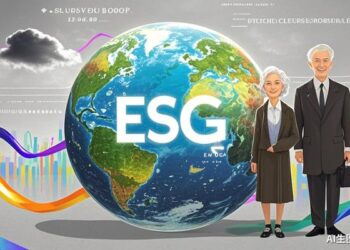
Across global procurement desks, the word green has become both a compass and a camouflage. From sustainability dashboards to supplier scorecards, it signals environmental stewardship, ethical labor practices, and climate-resilient operations. Yet as supply chain leaders at multinational corporations pore over Tier-2 supplier declarations, audit reports, and ESG certifications, a disquieting reality is emerging: the proliferation of ‘green labels’ — self-asserted, unverified, and often decoupled from material action — is undermining trust, inflating compliance risk, and distorting benchmarking across Asia’s most critical manufacturing ecosystems.
The Green Label Mirage: A Symptom of Verification Deficiency
Contrary to widespread perception, ‘green labeling’ in China’s supply chain context rarely denotes third-party validated performance. Instead, it reflects a fragmented landscape where over 78% of SME suppliers (those with fewer than 500 employees) rely on internal sustainability statements or basic ISO 14001 registration — a standard that confirms only the existence of an environmental management system, not its effectiveness or emissions impact. According to the 2025 China Supply Chain Sustainability Index (CSSI), jointly published by the China Academy of Logistics & Purchasing (CALP) and CDP Supply Chain, only 36.8% of surveyed manufacturers possess audited, scope 1–2 GHG inventories verified under ISO 14064-3 or GHG Protocol standards. Even more critically, just 12.4% report scope 3 data covering upstream raw materials, logistics, and downstream use — the very footprint that accounts for 73–89% of total emissions in electronics, apparel, and automotive value chains.
This gap isn’t semantic — it’s structural. Unlike the EU’s Corporate Sustainability Reporting Directive (CSRD), which mandates assurance of ESG disclosures beginning in 2024 for large companies, China’s Green Development Guidelines (2023) remain voluntary for non-state-owned enterprises. While the Ministry of Ecology and Environment (MEE) launched the National Emissions Trading System (NETS) in 2021, coverage remains limited to power generation — excluding steel, cement, aluminum, and chemicals, which collectively contribute over 55% of China’s industrial CO₂ emissions. Without binding verification requirements, ‘green labels’ function less as credentials and more as marketing placeholders — a phenomenon industry analysts now term ‘label-led decoupling.’
Supply Chain Exposure: When Greenwashing Becomes a Procurement Liability
The operational consequences are no longer theoretical. In Q4 2024, three major U.S.- and EU-based retailers suspended procurement from six Guangdong-based textile mills after independent forensic testing revealed discrepancies between declared wastewater treatment capacity (certified under GB/T 24001) and actual effluent discharge volumes — a variance exceeding 220% in two facilities. Similarly, a 2025 investigation by the Responsible Minerals Initiative (RMI) found that 41% of cobalt smelters in China claiming ‘conflict-free’ status could not produce auditable chain-of-custody documentation for ≥70% of their feedstock — exposing downstream battery and EV OEMs to regulatory penalties under the EU Battery Regulation and U.S. Uyghur Forced Labor Prevention Act (UFLPA).
Sign up free to read the full article
Create a free account to unlock full access to all articles.
Sign Up FreeAlready have an account? Sign in