The ‘New Never Normal’: A Fundamental Paradigm Shift in Supply Chain Operations
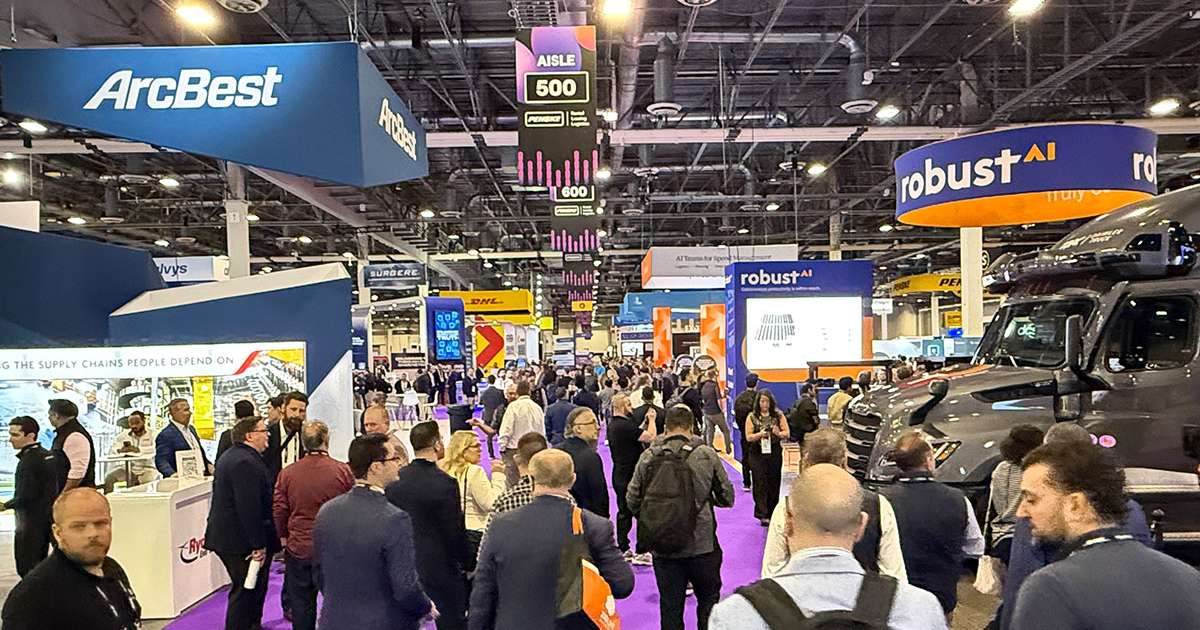
The phrase ‘the new never normal’ echoed throughout Manifest 2026, held February 9-11 in Las Vegas, but this was not mere rhetoric—it represented a precise diagnosis of the underlying logic governing global supply chain operations. Over the past decade, the industry habitually categorized events like pandemics, geopolitical conflicts, and extreme weather as ‘black swans’ or ‘gray rhinos,’ hoping to return to ‘normalcy’ after crises passed. Yet reality tells a different story: the 2023 Red Sea crisis caused a 40% drop in Suez Canal transits, 2024 Gulf of Mexico hurricanes pushed average port dwell times on the U.S. East Coast to 11.2 days, and 2025 saw continuously tightening USMCA enforcement details. These are not occasional disruptions but structural stressors embedded in the fabric of globalization. Supply chain leaders no longer ask ‘when will the next disruption arrive’ but instead design systems presupposing that ‘disruption is the default state.’ This cognitive leap means traditional SCM models centered on cost optimization and linear efficiency are rapidly becoming obsolete: ERP systems relying on rolling forecasts based on historical data falter before dynamic tariff adjustments, JIT inventory strategies trigger chain breaks during sudden border inspections, and multi-tier supplier collaboration platforms expose information silos and response lags when political risks escalate.
This paradigm migration produces disruptive impacts on technology investment logic. Enterprises no longer view AI as a ‘nice-to-have’ tool for improving report KPIs but as an operating system for building ‘antifragility.’ American Eagle Outfitters’ practice is highly representative: its AI models no longer merely predict quarterly sales volumes but integrate real-time U.S. Postal ZIP code-level population flow data, local inflation rates, TikTok trending hashtag geographic heat maps, and the latest customs additional tariff product lists to dynamically generate a four-dimensional decision matrix of ‘demand-capacity-logistics cost-compliance risk.’ This means when a state suddenly raises apparel import surcharges, the system can automatically trigger three contingency plans within 72 hours: switching warehouse transfer routes to neighboring tax-exempt states, activating flexible orders from local quick-response factories, or even adjusting online advertising placement geographic weights to guide consumer flows to low-tax regions. This response speed far exceeds the limits of human operations teams, and its value lies not in how many dollars of freight costs are saved but in transforming ‘policy uncertainty’—an uncontrollable variable—into programmable business logic.
Notably, the ‘never normal’ does not manufacture pessimism but catalyzes new professional capabilities. Multiple consulting firms at Manifest pointed out that leading enterprises are establishing ‘Disruption Intelligence Officer’ positions, whose core responsibility is to deeply couple geopolitical briefings, climate model warnings, and labor strike databases with AI prediction engines. For instance, DHL’s ‘Insight 2030’ report reveals that 62% of North American supply chain leaders expect international tensions to continue impacting operations through 2030, prompting enterprises to incorporate non-traditional parameters like diplomatic relations indices and sovereign credit rating volatility into supply chain risk scorecards. For Chinese outbound enterprises, this paradigm shift is both a challenge and a breakthrough point: when European and American brands avoid certain regions due to political sensitivity, Chinese supply chain service providers with geopolitically neutral technical capabilities can become key partners for multinational clients to avoid ‘compliance chain breaks’ through AI-driven multi-source compliance verification platforms.
The AI Deployment Gap: The Life-or-Death Line from Proof of Concept to Scaled Implementation
One of the most glaring data points at Manifest 2026 was: although 73% of decision makers expect robotics to shape future operations, only 44% have actually deployed them; similarly, 65% plan to increase nearshoring investment, yet few enterprises disclose the integration depth between their nearshore networks and AI systems. This exposes the core contradiction in supply chain AI implementation—severe mismatch between technical feasibility and organizational maturity. Many enterprises fall into the ‘POC trap’ (Proof of Concept trap): spending months developing AI models that can accurately predict sales volumes for certain categories but unable to embed them into procurement approval workflows, warehouse scheduling systems, or carrier selection interfaces. Ryder Supply Chain Solutions’ warning at the conference hit the mark: ‘Agentic AI without a decision framework and correct data is like giving a blind person GPS—the hardware is advanced, but navigation instructions never reach the action end.’ The so-called ‘decision framework’ is essentially translating enterprise strategic objectives (such as ‘compress high-tariff product inventory turnover days to within 28 days’) into computable constraints (such as ‘single warehouse SKU cap ≤1200, cross-warehouse transfer cost increase ≤7%’), then having AI perform multi-objective optimization while satisfying all hard constraints. Without this framework, AI-output ‘optimal solutions’ are often infeasible at financial, legal, or operational levels.
Data quality deficiencies constitute another barrier. Scotts Miracle-Gro’s success in reducing year-end inventory by $600 million through AI was not due to how advanced its algorithms were but rather its integration of the full chain of ‘consumer behavior data’: from real-time sales at Walmart POS terminals, Home Depot store heat maps, Instagram gardening topic engagement volumes, to the lag impact coefficients of meteorological rainfall forecasts on lawn fertilizer demand. However, most enterprises remain trapped in ‘data swamps’—static BOM tables in ERP, discrete operation logs in WMS, and transportation delay records in TMS lacking anomaly reason annotations, with no semantic connections among the three. More severely, when enterprises attempt to integrate external data (such as port congestion indices, fuel price futures curves, labor market skill gap reports), they encounter data sovereignty barriers: shipping companies refuse to open raw AIS trajectory data, meteorological agency API call frequencies are limited, and union databases are not externally licensed. This forces leaders to turn to ‘federated learning + trusted execution environment’ (TEE) architectures: each participant’s data stays within its domain, only encrypted gradient parameters are exchanged, enabling joint model training while protecting privacy. For Chinese logistics enterprises, this suggests a key direction: rather than chasing general large models, it’s better to focus on vertical scenario ‘small and refined’ data governance capabilities—for example, a full-cycle data annotation system for China-Europe Railway Express covering ‘customs-transshipment-gauge adaptation-destination clearance’ will become a differentiated moat for serving outbound customers.
The deployment gap also reflects talent structure fractures. Manifest booth data showed that among the main causes of supply chain AI project failures, ‘lack of composite talents who understand both operations research and customs compliance’ accounted for 38%, far exceeding ‘insufficient algorithm accuracy’ (19%) and ‘insufficient computing power’ (12%). Traditional supply chain practitioners are familiar with VMI agreement terms but cannot read LSTM neural network loss functions, while AI engineers are proficient in PyTorch but do not know the legal differences in risk transfer nodes between FOB and DDP. This disconnect leads to severe decoupling between technical solutions and business pain points. Solutions are emerging: Maersk collaborates with MIT to offer a ‘Digital Supply Chain Officer’ micro-degree with courses including ‘Tariff Game Theory Modeling’ and ‘Blockchain Bill of Lading Legal Effect Analysis’; domestic leading freight forwarders have begun recruiting law school graduates with WTO dispute settlement mechanism internship experience, deploying them as ‘Intelligent Fulfillment Coordinators’ at overseas warehouses after six months of AI toolchain training. This indicates that future supply chain competitiveness will increasingly depend on the quantity and quality of ‘translators’—those who can transform geopolitical risks into constraints, encode customs new policies into algorithm parameters, making AI truly a neural synapse connecting strategy and execution.
Nearshoring 2.0: Not Geographic Displacement but Intelligent Collaborative Network Reconstruction
At Manifest 2026, 65% of supply chain leaders explicitly stated they would increase nearshoring investment, but this trend is absolutely not simply shifting Chinese orders to Mexico or Vietnam. The deeper logic revealed in DHL’s report is: nearshoring is evolving from ‘geographic proximity’ to ‘intelligent proximity’—that is, achieving real-time collaborative capabilities across time zones and jurisdictions through AI, making the compression of decision distance supersede the shortening of physical distance. Taking American Eagle Outfitters as an example, it moved some jeans production from Bangladesh to Mexico, but the real transformation lies in deploying a ‘nearshore digital twin’: MES systems from Mexican factories, EDI customs declaration data from U.S. West Coast ports, RFID inventory scans from Los Angeles distribution centers, and even fashion trend data from TikTok’s U.S. region hot videos are all connected to a unified AI platform. When the algorithm detects a 230% weekly increase in search volume for wide-leg jeans among California teenagers, the system immediately triggers a triple response: issuing urgent additional orders to Mexican factories (utilizing local flexible production lines for 72-hour delivery), synchronously adjusting picking path priorities at the Los Angeles warehouse, and automatically generating AR try-on advertising creative for the product on Snapchat. This ‘perception-decision-execution’ closed loop makes the value of nearshore networks far exceed reducing transportation time, instead building ‘demand signal zero attenuation’ agile response bandwidth.
Another dimension of Nearshoring 2.0 is intelligent risk hedging. Traditional nearshoring is often criticized as ‘putting eggs in another basket,’ but after AI empowerment, it evolves into dynamic risk pool management. Scotts Miracle-Gro’s case is highly enlightening: it disperses lawn seed production across Ontario, Canada; Kentucky, USA; and Guanajuato, Mexico. The AI system not only monitors output at each base but also analyzes in real-time Canadian cold wave warnings, Kentucky agricultural subsidy policy changes, and Mexican minimum wage adjustment magnitudes, dynamically allocating order proportions accordingly. When early 2025 Mexican union negotiations led to an expected 12% increase in labor costs, the system automatically rerouted 35% of next quarter’s orders to the Canadian base while simultaneously initiating equipment commissioning processes at the new Kentucky production line. This dynamic capacity allocation based on multi-dimensional risk factors frees enterprises from the vulnerability of ‘static nearshoring,’ forming true ‘elastic geography.’ For Chinese outbound manufacturing enterprises, this is both a warning and an opportunity: if still participating in international bidding based on single-country low-cost advantages, they will be eliminated by AI-driven intelligent nearshore networks; but if positioning themselves as ‘AI-ready manufacturing nodes’—providing standardized IoT device interfaces, supporting API direct connections to customer prediction systems, possessing multi-lingual digital document compliance capabilities—they have the potential to become indispensable ‘intelligent slots’ in multinational brands’ nearshore networks.
Notably, Nearshoring 2.0 is catalyzing new infrastructure competition. During Manifest, multiple logistics companies announced investments in ‘nearshore cloud warehouses’: building smart warehouses equipped with autonomous mobile robots (AMR), AI visual quality inspection, and blockchain traceability in Monterrey, Mexico; Winnipeg, Canada, and other locations, but the core innovation lies in the ‘Warehouse-as-a-Service’ model—customers need not build systems themselves, only inputting demand parameters through standard APIs (such as ‘must deliver to 3 retail stores in Dallas within 24 hours after U.S.-Mexico border clearance’), and AI automatically matches optimal warehouse clusters, generates compliance documents, and plans AGV handling paths. This model converts fixed asset investments into on-demand paid services, significantly lowering nearshoring thresholds. For Chinese third-party logistics service providers, this suggests a key path: rather than building heavy assets overseas, it’s better to focus on R&D and output of ‘AI warehouse control operating systems,’ helping domestic manufacturing enterprises access global intelligent nearshore networks in a lightweight manner—this may become a new blue ocean for Chinese supply chain service outbound expansion.
Robotics Technology: From ‘Replacing Human Labor’ to ‘Extending Human Decision Bandwidth’
Robotics technology showcased at Manifest 2026 has surpassed the primary form of ‘warehouse porters’ and is evolving into ‘brain extensions’ for supply chain decision-makers. DHL’s report points out that 73% of decision makers believe robots will shape operations, but only 44% have deployed, and this huge gap precisely indicates the industry is at a critical point—enterprises have realized robots are not tools for replacing forklift drivers but strategic facilities for solving ‘human cognitive bandwidth bottlenecks.’ A typical example is Ryder’s ‘Decision-Enhanced AMR’: these robots not only move cargo boxes according to instructions but also analyze shelf images, temperature and humidity sensor data, and order wave timing requirements in real-time through onboard edge computing units, autonomously judging during transport ‘whether this batch of vaccine orders should be prioritized’ (due to higher temperature control requirements) or ‘whether to detour around waterlogged areas’ (to avoid delays). Their value lies not in moving 10 more boxes per hour but in transforming thousands of micro-decisions originally requiring supervisors’ experiential judgment into millisecond-level automated responses, thereby releasing managers’ energy to handle higher-order issues—such as redesigning entire regional distribution networks to respond to sudden community group buying outbreaks.
The paradigm upgrade of robotics technology is also reflected in the depth of ‘virtual-real fusion.’ Traditional digital twins were only used for fault prediction, while next-generation systems exhibited at Manifest have achieved ‘decision twins’: in virtual space, AI can simultaneously simulate the impact of 100 different robot deployment scenarios on order fulfillment rates, with parameters including probability of truck delays caused by Mexico’s rainy season, local union strike history frequency, and even the drag of new employee training cycles on picking accuracy. When simulation shows that ‘adding 12 AMRs + 2 collaborative robots at the Monterrey warehouse’ can increase the ‘within 2-hour delivery’ order satisfaction rate from 68% to 92%, with an investment payback period of only 11 months, decisions truly become quantifiable. This capability completely changes capital expenditure logic—robot procurement is no longer ‘buying equipment’ but ‘purchasing certainty.’ For Chinese industrial robot manufacturers, this means breaking through hardware thinking: simply improving AGV navigation accuracy is no longer enough; it’s necessary to build ‘industry knowledge graphs’—for example, pre-configuring FDA compliance checkpoints for cold chain scenarios, embedding IATF16949 quality traceability logic in automotive parts warehouses, making robots physical carriers of industry standards.
More profound impacts lie in the reconstruction of human-machine collaboration relationships. During Manifest roundtable discussions, Scotts Miracle-Gro’s CIO admitted: ‘We laid off 3 inventory planners but added 5 robot trainers.’ The latter’s work involves annotating anomaly scenarios (such as a batch of fertilizer packaging deformation due to rain soaking), defining robot response rules (‘automatically trigger quality inspection review processes upon encountering deformed packaging’), and continuously optimizing AI decision trees. This reveals a key trend: the bottleneck of robot deployment has shifted from technology to ‘human knowledge explicitation’ capabilities. Future supply chain core competitiveness will depend on the speed at which enterprises transform old masters’ ‘tactile experience,’ customs experts’ ‘gray rules,’ and procurement directors’ ‘supplier temperament files’ into machine-executable logic. For Chinese outbound enterprises, this suggests a pragmatic path: when building factories in Southeast Asia, there’s no need to rush to introduce the most expensive robots; instead, first establish ‘local knowledge digitalization groups’ to systematically collect Vietnamese worker operating habits, Thai customs inspection preferences, Malaysian port night operation taboos, and other tacit knowledge, encoding them into robot behavior rule libraries—this ‘soft localization’ capability may determine smart factory success more than hardware advancement.
Data Infrastructure: The New ‘Utilities’ Infrastructure of the AI Era
Perhaps the deepest consensus at Manifest 2026 was: the essence of the supply chain AI race has shifted from algorithm arms races to data infrastructure races. Ryder’s emphasis on ‘first establish decision frameworks and collect correct data’ points directly to industry pain points—currently, 80% of enterprise AI project time is consumed in data cleaning, format conversion, and permission coordination, not model training. Behind this is the ‘four-fold fragmentation’ of supply chain data: system fragmentation (ERP/WMS/TMS each acting independently), subject fragmentation (supplier/carrier/customs data silos), spatiotemporal fragmentation (historical data and real-time stream data severed), and semantic fragmentation (the same ‘delay’ corresponds to different fields like ‘ETD change,’ ‘clearance anomaly,’ ‘weather factors’ in different systems). In DHL’s ‘Insight 2030’ report, 62% of leaders predict international tensions will continue impacting operations, and the countermeasure is precisely building ‘resilient data pipelines’: when U.S.-China trade friction escalates, data sources can be instantly switched—using Vietnam port AIS data to replace Shanghai port congestion indices, Mexican Labor Statistics Bureau data to replace Dongguan manufacturing PMI, and RCEP rules of origin engines to replace old HS code mapping tables.
New generation data infrastructure is breaking through traditional ETL (Extract-Transform-Load) paradigms, turning toward ‘Data Fabric’ architecture. Cases displayed at Manifest booths show that leading enterprises no longer concentrate data into data lakes but use knowledge graph technology to establish dynamic semantic links among distributed data sources. For example, when American Eagle Outfitters’ AI detects a ‘surge in teenage athletic shoe sales’ in a certain ZIP code area, the system automatically correlates that area’s school physical education class schedules (Education Bureau public data), local Nike store promotion activities (crawler scraping), and even nearby gymnasium construction progress (municipal engineering API), comprehensively judging whether growth is a short-term event or long-term trend. This capability relies on ‘Data Contract’ mechanisms: each data provider commits to metadata quality (such as ‘port congestion index update frequency ≥ once per hour, delay ≤90 seconds’), and violations automatically trigger backup data sources. For Chinese outbound enterprises, this reveals data strategy must be front-loaded—when exploring emerging markets, local data partnerships should be established synchronously: co-building freight price indices with Brazil Logistics Associations, jointly releasing category heat reports with Indonesia E-commerce Associations, even investing in IoT sensor networks at African ports. These seemingly non-core investments are actually ‘fuel reserves’ for future AI decisions.
Data infrastructure competition has extended to the sovereignty level. During Manifest, EU representatives revealed that Data Governance Act (DGA) implementation rules will mandate cross-border supply chain data flows must pass through ‘European Data Space’ certified nodes. This means if Chinese enterprises want to provide end-to-end AI optimization services for European clients, they cannot merely deploy servers in Frankfurt but must obtain data intermediary qualifications, legally aggregating German factory energy consumption data, Dutch port operation data, French retailer sales data for joint analysis. This regulatory arbitrage capability is becoming a new moat. For Chinese SaaS service providers, the opportunity lies in creating ‘Compliance-as-a-Service’ platforms: pre-configuring multi-jurisdiction data processing rule engines for GDPR, CCPA, China’s ‘Personal Information Protection Law,’ etc., so customer AI systems automatically complete compliance verification and anonymization processing before calling any data. When data sovereignty becomes new infrastructure, whoever can provide ‘seamless compliant data highways’ will dominate the next-generation supply chain intelligence ecosystem.
Conclusion: Forging a New Paradigm of ‘Intelligent Resilience’ in Perpetual Disturbance
Manifest 2026 ultimately conveyed not technological optimism but a clear-headed pragmatism: the future of supply chains lies not in eliminating disruption but in transforming disruption into fuel for competitive advantage. When ‘never normal’ becomes the norm, true resilience no longer manifests as ‘withstanding shocks’ but as the ability to ‘evolve within shocks’—American Eagle Outfitters turning tariff changes into logistics path optimization opportunities, Scotts Miracle-Gro converting consumer behavior volatility into inventory structure upgrade momentum, DHL leveraging geopolitical risks to force forward-looking research frameworks like ‘Insight 2030.’ The foundation of this capability is a ‘trinity’ intelligent base composed of AI, robotics, and data infrastructure, but its soul remains human strategic intent: technology merely transforms the ancient proposition of ‘how to create certainty within uncertainty’ into executable, measurable, and iterable modern methodology.
For Chinese supply chain participants, this transformation is both a stress test and a window for paradigm leap. When European and American enterprises contract global networks due to political concerns, Chinese service providers with neutral technical capabilities can become key connectors in the globalization 2.0 era through AI-driven multilateral compliance verification, cross-cultural data governance, and ‘intelligent nearshore’ infrastructure output. But beware of falling into ‘technological omnipotence fallacy’—the most successful cases at Manifest were without exception deeply embedding AI into specific business pain point penetration: tariff response, inventory turnover, nearshore collaboration, risk hedging. Therefore, the breakthrough point for Chinese enterprises lies not in chasing the flashiest algorithms but in rooting into a niche scenario (such as China-Europe Railway Express customs prediction, Southeast Asia quick-response supply chain collaboration, Latin America agricultural product cold chain traceability), creating verifiable intelligent resilience samples through ‘small incisions, deep needles, fast closed loops.’ After all, in a ‘never normal’ world, the survival rule has never been ‘the strongest survive’ but ‘the most agile learners thrive.’
Source: ttnews.com