Porto Itapoá is set to commence the fourth phase of its expansion, a project that may cost up to 500 million Brazilian Reais over the next twelve months. As part of the port’s ongoing growth, this expansion will solidify Porto Itapoá’s position among Brazil’s top four ports and aims to become South America’s largest and most efficient port by 2033.
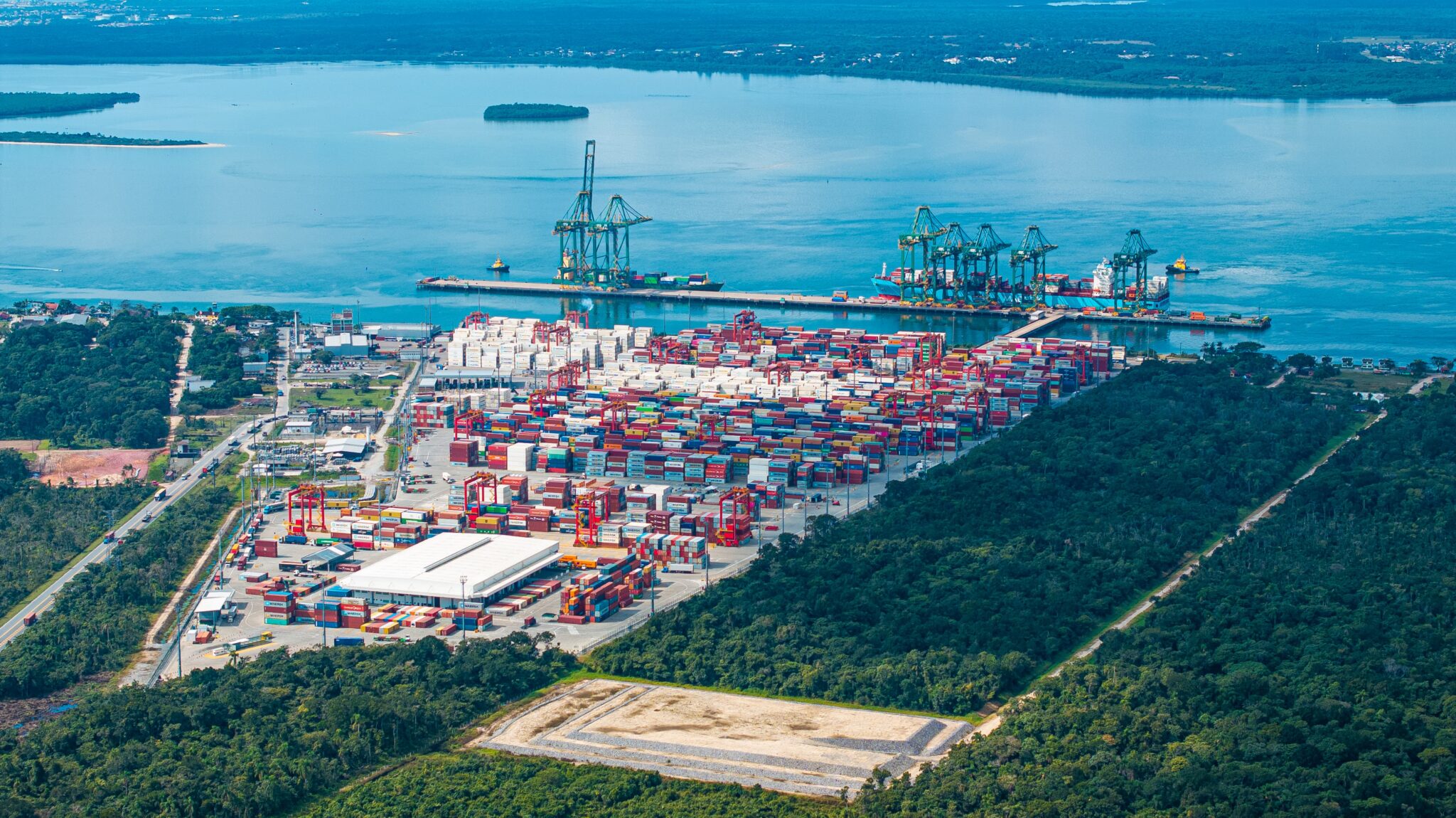
Located in Babitonga Bay, Santa Catarina State, southern Brazil, Porto Itapoá boasts a yard area of 455,000 square meters capable of storing 31,000 TEUs and handling 1.8 million TEUs annually. Felipe Fioravanti Kaufmann, Director of Business Development & Customer Experience at Porto Itapoá, explained that the next phase will further expand infrastructure to meet growing domestic and international demand. “This expansion will add an additional 120,000 square meters to our yard area. We also plan to purchase additional high-tech equipment with the aim of enhancing port efficiency and sustainability,” he said.
Among these new investments is the acquisition of an extra container crane, critical for handling containers on large vessels. This will be Itapoá’s eighth crane. Kaufmann noted, “Our seventh container crane became fully operational in August this year, significantly boosting productivity by 15%.”
The plans also include extending the quay by 400 meters to a total length of 800 meters soon. This will allow three large vessels to berth simultaneously. Felipe Kaufmann further explained that this expansion has been approved by Brazil’s Environmental and Renewable Natural Resources Institute (IBAMA), with construction following a strategic timeline.
Modernization plans also involve purchasing 12 remote-controlled Rubber-Tired Gantry Cranes (RTGs). Porto Itapoá already owns ten remote RTGs, making it the first port in South America to have this technology. “These are hybrid cranes that not only reduce fuel consumption but also lower carbon emissions,” Kaufmann added. The terminal also has 17 conventional RTGs.
The expansion plans include purchasing nine Terminal Tractors (TTs) for transporting containers between the yard and the quay. Currently, the terminal operates 49 TTs, with 20 of them being electric, forming Brazil’s largest fleet of electric TTs. “These TTs are powered entirely by renewable energy sources, aligning with Porto Itapoá’s sustainability policies,” Kaufmann emphasized.
The expansion also includes adding 1,080 sockets for refrigerated containers, bringing the total number of sockets at this terminal to 4,038. This firmly establishes Itapoá as the terminal with the most refrigerated sockets in Santa Catarina and second in Brazil.
They have also announced the acquisition of a new state-of-the-art scanner. Porto Itapoá already has two scanners, which are crucial for ensuring safe cargo transportation.
#### Phase Three Expansion Completed
On April 25th, Porto Itapoá officially opened its third phase of expansion, with attendance from Santa Catarina State Governor Jorginho Mello, former Secretary of Ports, Airports and Railways Beto Martins, officials from various departments, institutions, regulators, organizations, customers, employees, and media. Phase three added 200,000 square meters to the yard area, including an 8,000-square-meter warehouse, with a total investment of 815 million Brazilian Reais.
Due to this expansion, Porto Itapoá now has one of Brazil’s largest container yards (455,000 square meters). This investment also includes purchasing some large equipment.
#### Babitonga Bay Import and Export Channels
In September, IBAMA issued an installation license for the dredging project in Babitonga Bay waterway.
The dredging project will increase the depth of the outer channel from 14 meters to 16 meters, allowing vessels up to 366 meters long to navigate within the bay. This will make the port a hub option capable of integrating cargo from these large vessels.
With the license now issued (this week), Porto São Francisco do Sul can begin the bidding process to select the construction company for this project with an estimated budget of around 300 million Brazilian Reais.
—
Source Website: Logistics Business