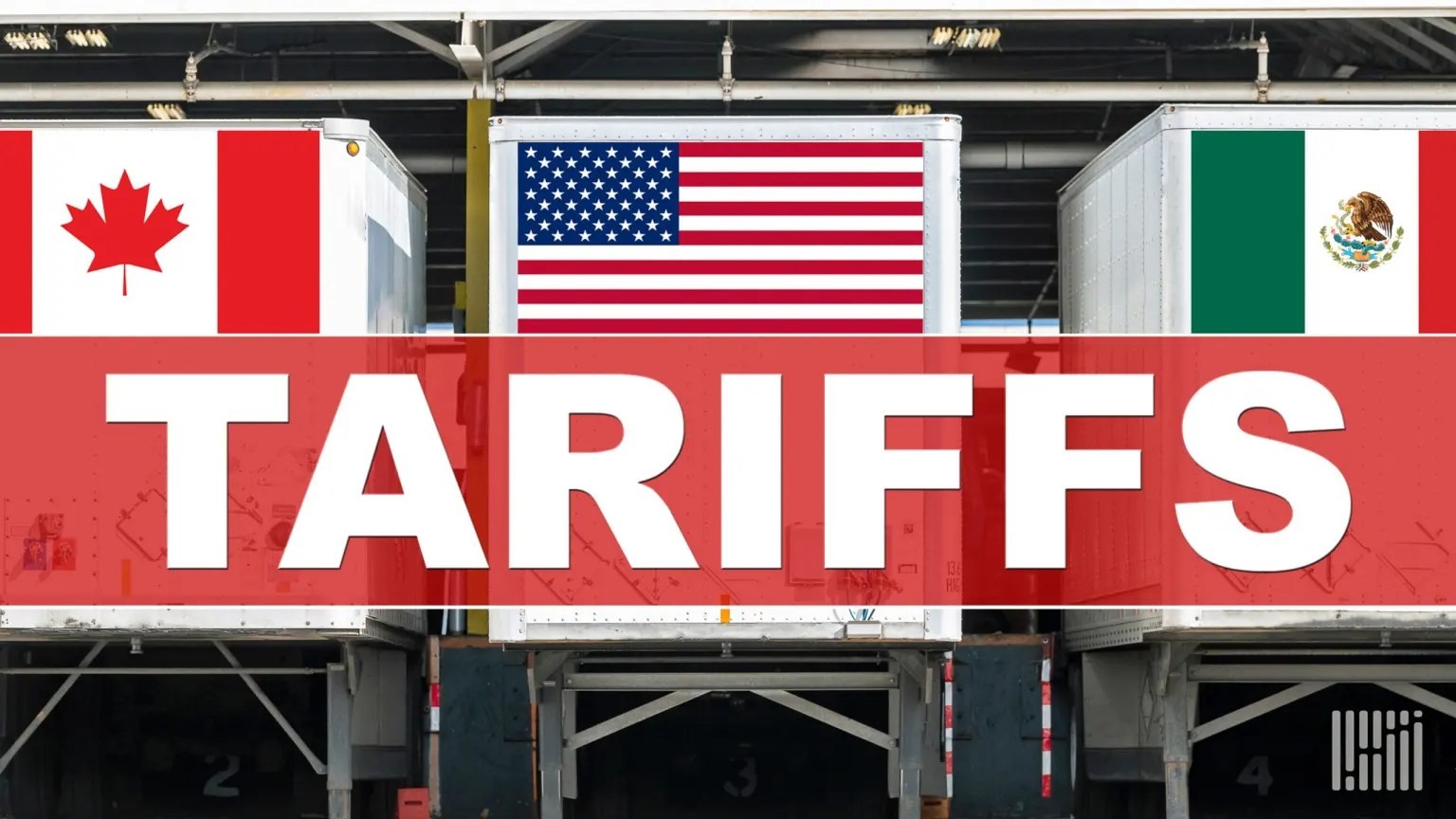
The National Association of Foreign-Trade Zones is urging Congress to fix a USMCA duty disadvantage that can force U.S. zone manufacturers to pay duties on imported components used in finished goods exported to Mexico or Canada, even when those goods qualify for preferential treatment. NAFTZ backs two companion bills — H.R. 6792 and S. 4793 — that would grant duty relief for qualifying merchandise. Federal data show FTZ operations received $963.8 billion in merchandise in 2024, up 1.6%, while exports fell 10.3% to $133.5 billion; Texas ranked first nationally. Along the border, companies are weighing sourcing and relocation decisions, and Mexico plans to deploy 826 National Guard officers to highways after an Oct. 26 trucking strike.
According to FreightWaves, the National Association of Foreign-Trade Zones is pressing Congress to eliminate longstanding duty disadvantages that hit American manufacturers exporting goods to Mexico and Canada under the United States-Mexico-Canada Agreement, even as businesses across North America reassess sourcing, manufacturing investments and distribution strategies amid tariff uncertainty and the ongoing USMCA review.
Duty gap leaves U.S. manufacturers at a disadvantage
Under current rules, manufacturers operating in U.S. foreign-trade zones can be required to pay duties on imported components used to produce finished goods later exported to Mexico or Canada, even when those products qualify for preferential treatment under USMCA, according to the report.
Competing manufacturers in Mexico and Canada have access to duty-relief programs that can eliminate comparable costs, NAFTZ president Jeff Tafel told FreightWaves. He said the disparity creates an uneven playing field for companies that chose to manufacture in the United States.
“A U.S. manufacturer can face costs that its North American competitors avoid simply because it chose to manufacture in the United States.” — Jeff Tafel, president of the National Association of Foreign-Trade Zones
Foreign-trade zones are designated areas under U.S. Customs and Border Protection supervision where companies can store, assemble, manufacture and distribute merchandise under special customs procedures. The program allows businesses to defer duties on imported goods until they enter U.S. commerce, while certain goods exported from FTZs can qualify for duty exemptions.
Two bills target relief for zone exporters
NAFTZ is backing two companion measures aimed at closing the gap: the Foreign-Trade Zone Export Enhancement Act of 2025 (H.R. 6792), introduced by Rep. Lance Gooden, and the Foreign-Trade Zone Export Enhancement Act of 2026 (S. 4793), introduced by Sen. Tim Scott.
The bills would provide duty relief for qualifying merchandise manufactured or altered within U.S. foreign-trade zones and subsequently exported to Mexico or Canada. Tafel said Congress should act without waiting for the USMCA review to conclude, describing the legislation as a targeted solution to support U.S. manufacturing and improve export competitiveness.
Tafel also noted that some recent tariff actions require imported merchandise to enter FTZs under “privileged foreign” status, which can limit traditional duty advantages. Despite those restrictions, he said FTZs continue to deliver benefits through duty deferral, streamlined customs procedures and inventory management efficiencies.
FTZ merchandise received rises to $963.8B
The economic weight of the program is reflected in federal statistics. According to the U.S. Foreign-Trade Zones Board’s 2024 Annual Report to Congress, released in November 2025, FTZ operations nationwide received $963.8 billion in merchandise during 2024, up from $948.8 billion in 2023 — a gain of 1.6%.
Exports from FTZ operations totaled $133.5 billion, down 10.3% from $148.8 billion the previous year, the report states. The program supported nearly 543,000 jobs across approximately 1,300 active operations, including 381 production operations.
Production operations accounted for approximately 61% of merchandise received by FTZs nationwide in 2024, with automotive manufacturing, oil refining, machinery and pharmaceuticals among the largest industries. Production merchandise received rose 0.8% to $589.8 billion, while warehouse and distribution merchandise received grew 2.8% to $374.0 billion.
Texas leads national FTZ rankings
Texas ranked first nationally in both merchandise received and exports from FTZ operations in 2024, according to the report. The state’s FTZ network includes major trade gateways such as Houston, Laredo, El Paso, McAllen and Brownsville.
El Paso’s FTZ Nos. 68 and 150 ranked third and fourth nationally, respectively, among warehouse and distribution zones for exports, while McAllen’s FTZ No. 12 ranked seventh and Brownsville’s FTZ No. 62 ranked eighth. Laredo’s FTZ No. 94 ranked 14th in the same category, underscoring the importance of foreign-trade zones to Texas’ cross-border distribution network.
Border operators weigh relocation as uncertainty bites
The tariff challenges are particularly significant along the U.S.–Mexico border, where manufacturers, logistics providers and distribution operators rely on closely integrated cross-border supply chains. Tafel said FTZ operators are hearing from companies evaluating changes to sourcing, freight volumes, warehousing requirements and transportation networks.
“What we’re hearing from FTZ grantees along the border is that companies continue to struggle with how to plan for that uncertainty. They’re evaluating a range of considerations, including sourcing decisions, freight volumes, warehousing needs, inventory management, transportation patterns, and even whether to relocate manufacturing or distribution operations across the border.” — Jeff Tafel, president of the National Association of Foreign-Trade Zones
Tafel cautioned that those discussions do not necessarily mean companies have already changed operations, but he said uncertainty is becoming a significant factor in decisions involving major capital investments, since relocating a plant or opening a new distribution center requires substantial financial commitments that are difficult to reverse.
Mexico deploys 826 National Guard officers to highways
Separately, Mexico’s National Guard plans to deploy 826 additional officers to strengthen highway surveillance following nationwide protests by truck drivers demanding greater protection from cargo theft, violence and extortion, according to Mexican transportation publication T21.
The deployment was announced during a Nov. 5 meeting between federal authorities and trucking industry representatives. Lauro Rincón Hernández, president of the Mexican-American Federation of Transporters (FEMATRAC), said the officers are completing training at the San Luis Potosí Police Academy and are expected to begin deploying in the coming days, with no specific date announced.
The meeting followed an Oct. 26 nationwide trucking strike in which transportation groups demanded stronger government action against cargo theft, highway insecurity and alleged abuses by authorities. Trucking representatives identified nine states as particularly problematic: the State of Mexico, Puebla, Nuevo León, Jalisco, Veracruz, Querétaro, Guanajuato, Tlaxcala and Tabasco.
Industry groups also requested permanent National Guard patrols and changes to security strategies in high-crime areas. Authorities discussed continuing Operation Enjambre, or Operation Swarm, in municipalities and states experiencing elevated criminal activity, with additional meetings planned with security officials and federal prosecutors as trucking organizations seek measurable improvements before the end of the year.
Source: FreightWaves
Compiled from international media by the SCI.AI editorial team.