Peru's Optimization Protocol to its Free Trade Agreement with China entered into force on November 1, 2026, modernizing a 16-year-old pact across 12 chapters covering digital commerce, customs procedures, supply chains, and environmental commitments. The deal governs a corridor that generated $32.6 billion in Peruvian exports to China in 2025, a 30.1% increase over 2024, but it does not deliver broad new tariff cuts. Mining accounts for more than 90% of Peru's shipments to China, with copper concentrates leading the mix. Trade Minister Rogers Valencia pointed to agriculture and fishing as beneficiaries, while customs provisions aim to cut compliance costs for SMEs.
Peru’s Optimization Protocol to its Free Trade Agreement with China entered into force on November 1, 2026, modernizing a pact first implemented in 2010 and covering a bilateral corridor that carried $32.6 billion in Peruvian exports to China in 2025, according to Latin Times.
The measure was formalized through Supreme Decree N° 012-2026-MINCETUR, published October 27 in the official gazette El Peruano, after Lima and Beijing completed all required diplomatic notification procedures. The protocol updates 7 existing chapters of the original agreement and adds 5 entirely new ones, for a total of 12 updated chapters.
The new sections cover digital commerce, supply chain cooperation, competition policy, standards compliance, and environmental trade commitments. The revised chapters address rules of origin, customs procedures, sanitary and phytosanitary standards, intellectual property, services, temporary business entry, and investment.
No blanket tariff cuts under the protocol
The upgrade does not automatically trigger sweeping new tariff reductions on either side. Exporters who anticipated broad duty reductions as of November 1 will need to recalibrate: the deal delivers better-defined rules, cleaner procedures, and a new legal architecture for digital transactions and environmental commitments rather than cheaper border access in blanket terms.
Real-world impact will depend on how companies navigate the new procedural landscape for customs, origin certification, and e-commerce transactions. The Peruvian-Chinese Chamber of Commerce noted in announcing the entry into force that economic impact will depend heavily on implementation quality and corporate uptake on both sides of the Pacific.
Among the most commercially consequential changes are the updated rules of origin, which determine whether a product qualifies as Peruvian or Chinese for preferential tariff access. The new supply chain chapter creates a cooperation and data-sharing framework around transport documentation and logistics performance metrics, according to the full protocol text published by Mincetur.
Export corridor posts record growth
The revamped deal governs a corridor that generated $32.6 billion in Peruvian exports to China in 2025 — a 30.1% increase over 2024 and roughly 140% above the level moved in 2019. The partnership now accounts for 35% of Peru’s total commercial exchange, according to the Ministry of Foreign Trade and Tourism.
Mining accounts for more than 90% of what Peru sends to China, with copper concentrates leading the mix, followed by gold, silver, and lead. Through the first eight months of 2026, Peru dispatched $28.3 billion in goods to China, a 39% year-on-year increase.
In the first quarter of 2026 alone, Peruvian exports to China reached $10.748 billion, growing 42.6% against the same period in 2025, while Chinese imports into Peru climbed to $5.003 billion, up 19.4%, driven by automotive and heavy industry goods.
Agriculture, fishing and manufacturing eyed as winners
While mining will continue to dominate the relationship, the optimization was engineered to open pathways for sectors left largely on the sidelines by the original deal. Trade Minister Rogers Valencia pointed to agriculture and fishing as clear beneficiaries, given Peru’s climatic versatility and China’s growing appetite for imported produce.
The copper manufacturing segment — including processed wire and tubing products with higher added value — was also flagged as having significant untapped potential in the Chinese market, alongside information technology, wood, and paper products, according to Gestión’s reporting on Valencia’s remarks.
“The upgrade was overdue, given the low utilization of the trade framework during its first decade.” — Mercedes Araoz, former Trade Minister who led the original FTA negotiations from 2006 to 2009
Araoz’s comments reflected a view widely shared among Peruvian trade economists that the 2010 agreement delivered far less than its agricultural and value-added export potential warranted.
SME relief and strategic timing
The new customs cooperation provisions were drafted with micro, small, and medium enterprises specifically in mind. The framework enables direct recognition of certificates of origin between the two countries’ customs authorities, cutting compliance costs and accelerating clearance times for exporters who historically bore the heaviest administrative burden when invoking FTA preferences.
Mincetur confirmed that the modernization was designed to serve companies now operating in a global trade environment fundamentally different from the one that existed when the FTA first came into force. The timing is not accidental: the update arrives as new U.S. tariff pressures weigh on certain Peruvian export flows, pushing Lima toward a structural deepening of its most critical trade partnership.
Peru’s trade ministry has framed the November 1 activation as strategically timed ahead of the APEC Economic Leaders’ Meeting in Shenzhen, scheduled for November 18–19, 2026, where Lima intends to present itself as a logistics and services hub for the broader Latin American market.
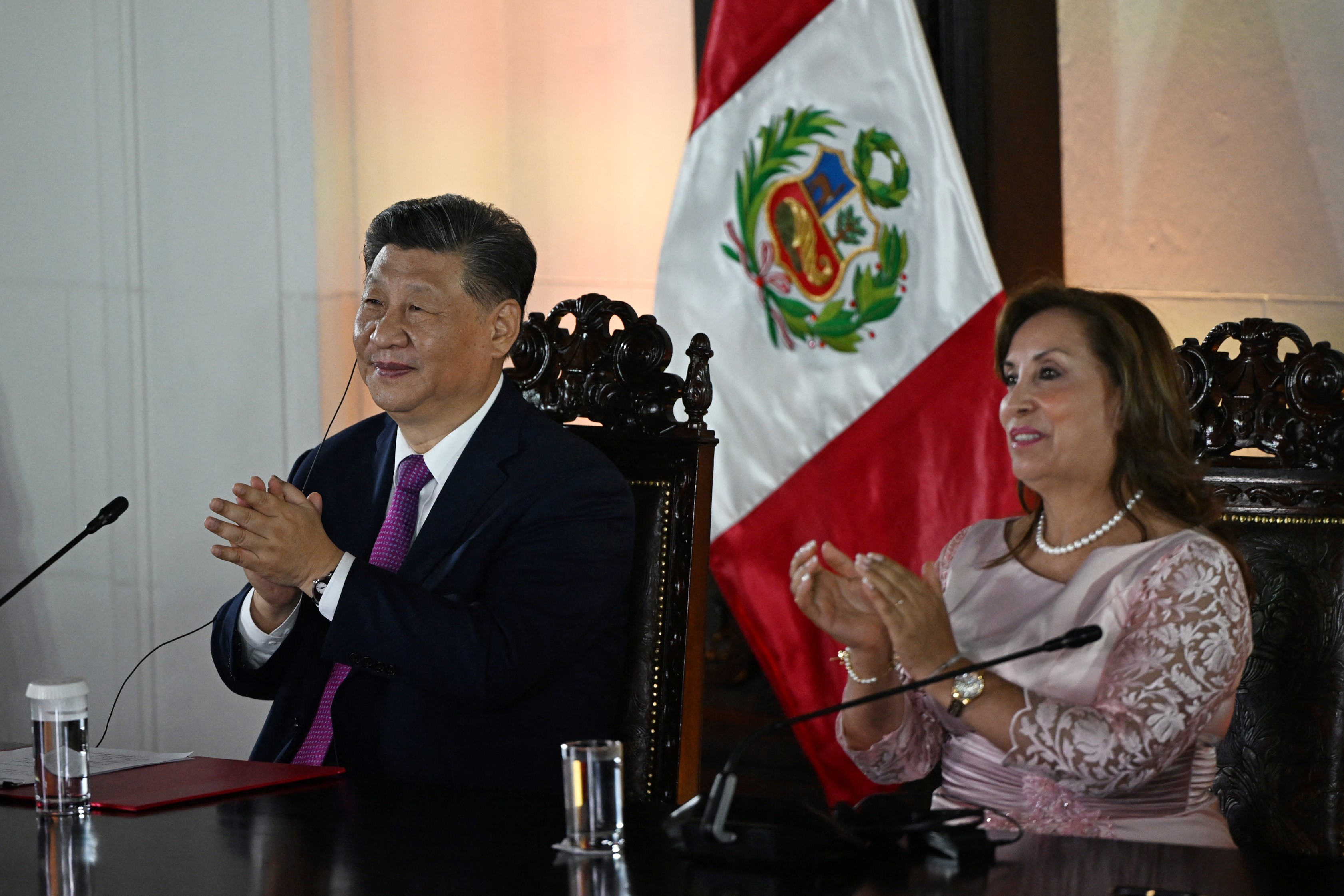
The original Peru-China FTA was signed in Beijing on April 28, 2009, and entered into force on March 1, 2010. The optimization protocol was signed on November 14, 2024, during Chinese President Xi Jinping‘s state visit to Lima for the APEC summit, formally ratified on July 25, 2026, and now goes live with all required diplomatic notifications confirmed as complete.
Source: latintimes.com
Compiled from international media by the SCI.AI editorial team.