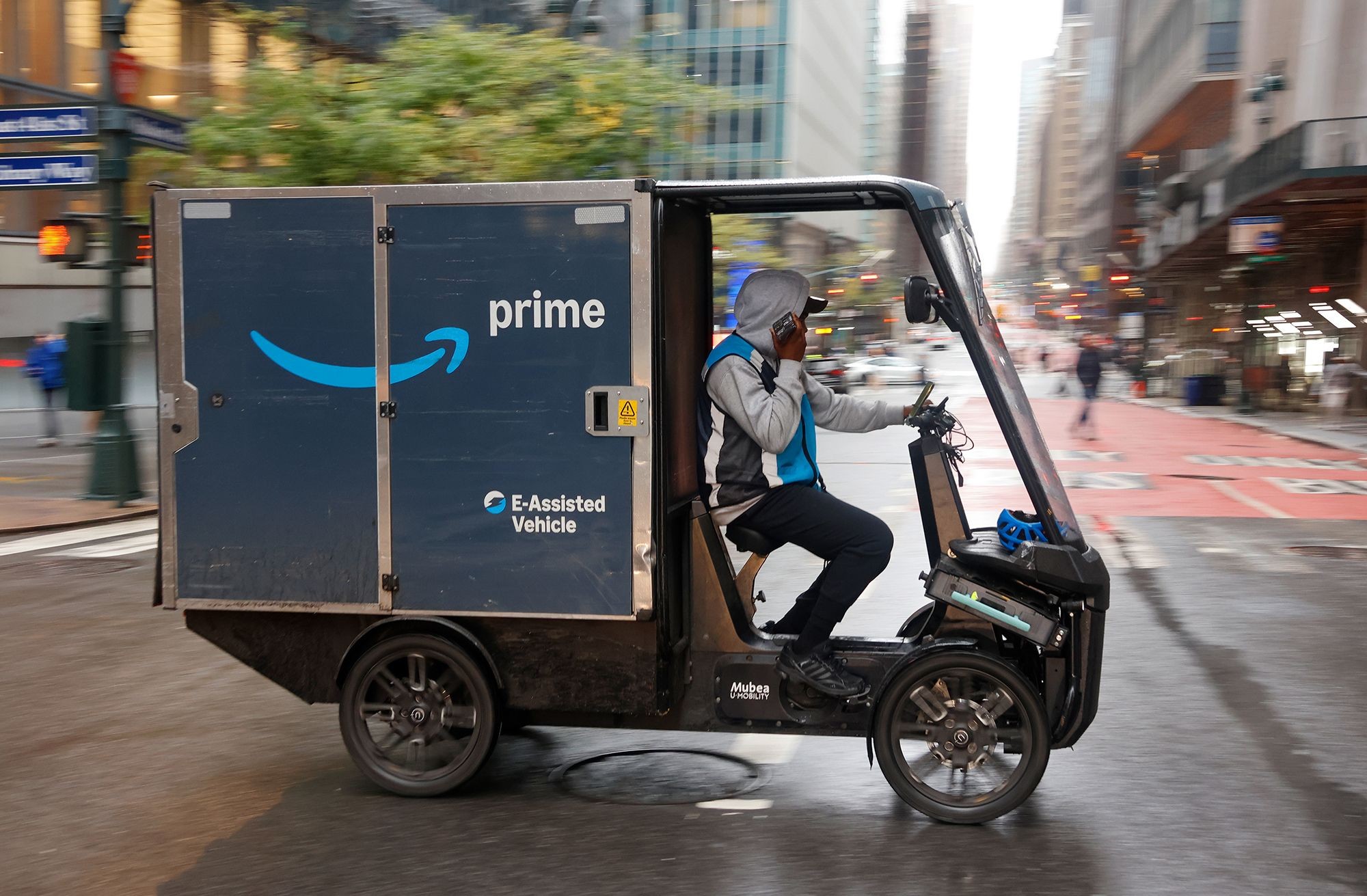
Amazon's preliminary plan to expand same-day delivery to more than 1,000 locations, code-named Project Mercury, is reigniting demand for last-mile and urban infill industrial real estate. E-commerce hit 18.9 percent of U.S. retail sales in the first quarter of 2026, per CompStak, while Walmart reported delivery up 24 percent. Brokers say final-mile space has the tightest vacancy in industrial real estate, and Amazon paid $195 million this summer for a 1.2 million-square-foot Chicago warehouse to support last-mile deliveries.
According to commercialobserver.com, Amazon‘s preliminary plans to expand same-day delivery to more than 1,000 locations are stoking demand for last-mile and urban infill industrial space, as retailers race to match ever-faster fulfillment times.
Project Mercury Sets the Pace
A September report from Business Insider revealed preliminary plans for a “massive blitz in same-day delivery,” with a proposed facilities expansion code-named Project Mercury. The plan called for placing such facilities within 10 miles of 80 percent of U.S. Prime members.
The blueprint also envisioned making roughly 90,000 frequently purchased items — from cough medicine to paper towels — almost instantly available. Amazon cautioned that the preliminary planning documents are “subject to significant revision, and shouldn’t be treated as finalized plans.”
Still, spokesperson Steve Kelly said the company’s focus on speed is no secret. “It’s no secret that we’re focused on delivering faster for customers, and the expansion of our same-day delivery network is playing a big role in that,” Kelly said in a statement.
E-Commerce Share Climbs Past Pandemic Peak
The delivery push comes as online shopping continues to claim a larger slice of U.S. retail. During the first quarter of 2026, e-commerce represented 18.9 percent of all U.S. retail sales, according to CompStak — above the previous 16.3 percent record set during the depth of the pandemic.
E-commerce accounted for 17.1 percent of retail sales in the second quarter, and roughly 20 percent of core retail sales at the end of 2025. On Walmart‘s second-quarter earnings call, executives said delivery rose 24 percent between the first and second quarters of the year.
Walmart also reported that fast delivery in less than 30 minutes — now available in 38 markets — was up 48 percent. The figures underscore how quickly consumer expectations around fulfillment have shifted.
Flight to Speed Tightens Infill Supply
The scramble for proximity is squeezing the tightest segment of industrial real estate. “Final mile has the tightest vacancy of any part of industrial real estate,” said Jason Tolliver, president of logistics and industrial for the Americas at Cushman & Wakefield.
Tolliver said structural market forces keep tightening supply while demand keeps growing. CBRE found that roughly 80 percent of small-bay industrial spaces were built before 2000, a sign of how limited new supply is.
“This is going to have a pretty dramatic effect on certain markets. It’s prompting others to try and catch up.” — Brandon Page, executive vice president at Link Logistics and head of portfolio leasing
Link Logistics, which is backed by Blackstone, sees older infill buildings with superior locations commanding premiums, Page said. Such sites give retailers a reason to overlook less modern facilities.
Retailers Turn Stores Into Staging Areas
Speed is blurring the line between retail and industrial real estate. Home Depot announced Express Delivery in August, using its more than 2,000 retail locations to provide goods in three hours or less.
AutoZone is investing $1.6 billion this year in capital investment, with the majority devoted to opening new megahubs as distribution points. New Tractor Supply stores take nearly triple the footprint of traditional locations to accommodate online orders and last-mile services.
Walmart has been especially aggressive, testing so-called Spark delivery depot locations in former retail spaces that no longer accommodate walk-in shoppers. Much of the shift is unfolding amid Sun Belt population growth, with new layouts chasing areas of rising delivery orders.
Cost Pressure Drives Network Buildout
Last-mile expansion is also about taming transportation costs. Industry analysts estimate more than half of the ultimate cost of delivery comes from solving the last-mile problem, making optimization a key lever for lowering expenses.
Zac Rogers, associate professor of operations and supply chain management at Colorado State University, noted margins are tight, diesel fuel is up 75 percent since the start of the war in Iran, and immigration enforcement is cutting into the driver and delivery labor pool.
Rogers said the industry overbuilt e-commerce real estate during COVID, but that cushion is shrinking. Companies are returning to building capacity for a smaller, more distributed network, he said.
Infill Land Is Finite
This summer, Amazon paid $195 million for a 1.2 million-square-foot warehouse in Chicago to facilitate last-mile deliveries, a concrete sign of the appetite for well-located sites.
“Last-mile delivery should keep expanding, and I expect demand for functional infill distribution space to grow with it,” said Lukas Huberman, vice president and director of acquisitions for BLT Enterprises, a firm focused on industrial real estate.
Huberman said infill land is finite and buildings are hard to replace, since municipalities are often wary of added truck traffic. Ownership of such sites tends to be fragmented and supply is low, with new projects — such as a recent Amazon-backed last-mile hub in Milwaukee — rare. Firms like Bromley Industrial Partners are also expanding their last-mile portfolios.
Source: commercialobserver.com
Compiled from international media by the SCI.AI editorial team.