Skip to content

Technology · Warehousing & Transport

Analysis

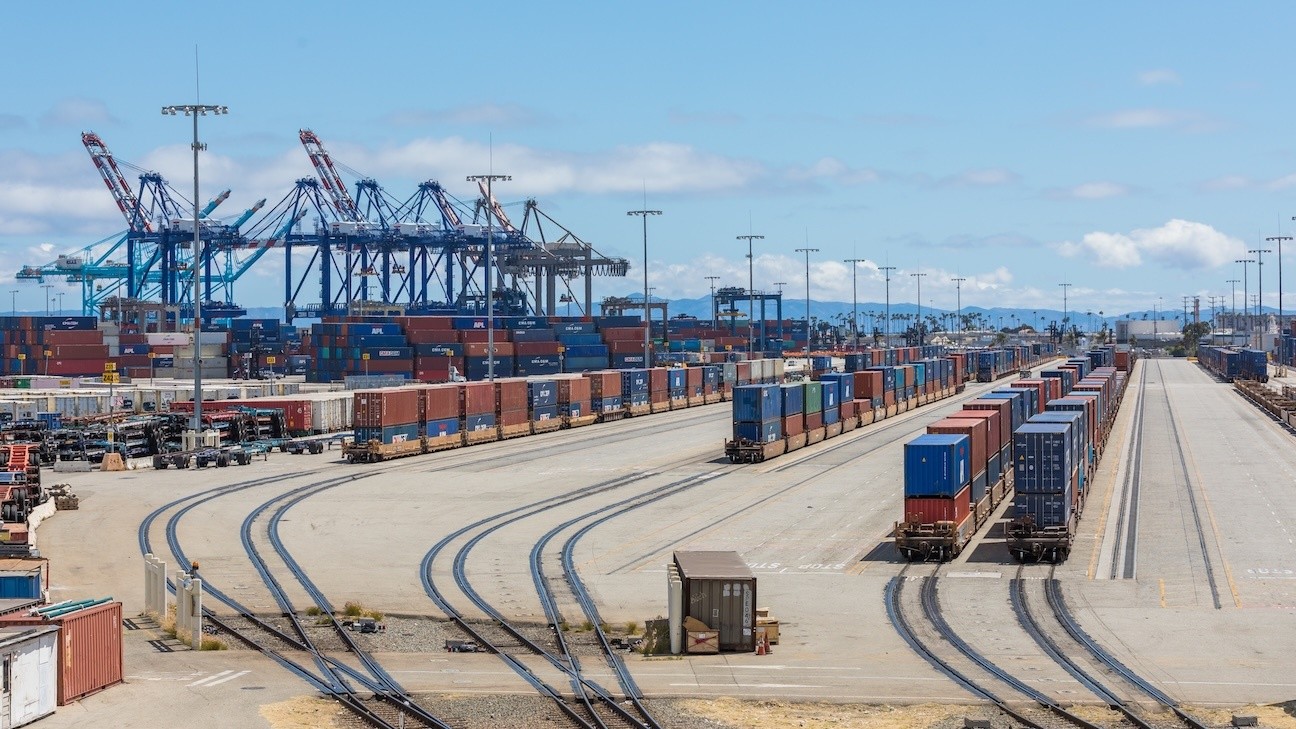
U.S. port rail container delays surge; LA port dwell hits 12 days

Container delays by rail are increasing at the busiest U.S. ports, with Los Angeles port rail dwell reaching 12 days. A new Third-Party Logistics Study shows 88% of shippers rate their 3PL relationships as successful, yet half are consolidating providers. While 81% cite supply chain disruption as driving demand for strategic partnerships, only 57% report satisfaction with 3PL technology capabilities. Advanced analytics and network optimization rank as top IT requirements for 61% of shippers. Shippers outsource 62% of logistics spend on average, though consolidation pressures mount.

Original source: Source information pending

U.S. port rail container delays surge; LA port dwell hits 12 days

Container delays by rail are increasing at the busiest U.S. ports.

Rail congestion intensifies at major gateways

Shippers are demanding far more from their logistics providers as disruption and supply chain complexity increase — but that does not necessarily mean they are ready to make the leap from 3PL to 4PL.

The latest annual Third-Party Logistics Study paints a contradictory picture of the shipper-3PL relationship: 88% of shippers describe their relationships with logistics providers as successful, yet half are consolidating the number of 3PLs they use.

And expectations of the remaining providers are rising. The study noted it was “no longer sufficient” for a logistics provider simply to execute the movement of freight from A to B, with shippers increasingly looking for continuous improvement, technology, expertise and value creation.

Drivers behind escalating rail dwell times

Some 81% of shippers said disruption and supply chain complexity was driving interest in more strategic logistics partnerships, while 76% cited cost optimisation through greater collaboration and 57% digital transformation and technology integration.

This changing relationship prompted Seko Logistics to argue that some companies may have outgrown the traditional 3PL model altogether. Paul Lockwood, Seko’s UK & Ireland group managing director, said the shift towards 4PL typically began when a shipper’s supply chain had become too complex to manage through a collection of individual providers.

He identified fragmented visibility, rapid growth, increasing demands on internal logistics teams and disconnected technology systems as signs that a company might need to move towards a 4PL model. “

3PL is built to execute. 4PL is built to orchestrate,

” he said.

Operational realities and economic constraints

However, Global Shippers Forum director James Hookham questioned whether increasing demands on logistics providers were translating into a significant shift towards 4PL.

He said shippers were certainly asking much more of their existing providers, particularly following successive supply chain disruptions, but he was not seeing a widespread move towards 4PL among the shippers he dealt with. Instead, shippers had become more dependent on their logistics providers for ideas and solutions, rather than simply execution.

The economics could also restrict the 4PL model largely to bigger and more complex supply chains, he suggested. Introducing another management layer is a significant step and requires sufficient volume, scale and complexity to produce a return on the additional cost. For many smaller shippers, that threshold may simply be beyond them.

Technology gaps persist despite high expectations

The study found that 81% of shippers credited their 3PL relationships with improving customer service, 75% with reducing logistics costs and 69% said providers had introduced innovative ways to improve logistics effectiveness.

Technology, however, remains a conspicuous weakness. Some 90% of shippers said technological capability was important when selecting a 3PL, but only 57% were satisfied with the capabilities their providers offered. Advanced analytics and network optimisation were each identified by 61% of shippers as important IT requirements from their 3PLs.

The trend towards using fewer providers could therefore present both an opportunity and a threat for forwarders. Shippers outsource an average 62% of their logistics expenditure, study, but half are now consolidating their 3PL rosters.

Source: FreightWaves

Compiled from international media by the SCI.AI editorial team.
Ask SCI.AI Finished reading? Continue with SCI.AI. Explore the related policy, route, company and historical context. Continue asking
88% of Shippers Call 3PL Ties Successful, Yet Half Consolidate Providers
Technology

88% of Shippers Call 3PL Ties Successful, Yet Half Consolidate Providers

Shippers report high satisfaction with third-party logistics providers—88% deem relationships successful—yet half are consolidating their 3PL rosters amid rising expectations. The Third-Party Logistics Study shows 81% seek strategic partnerships due to disruption, 76% prioritize cost optimization through collaboration, and 57% demand digital transformation. Seko Logistics’ Paul Lockwood notes 4PL adoption begins when supply chains grow too complex for fragmented 3PL management. Global Shippers Forum’s James Hookham cautions that economic thresholds limit 4PL viability for smaller shippers. While 90% consider tech capability critical, only 57% are satisfied—advanced analytics and network optimisation rank top IT needs at 61% each. Shippers outsource 62% of logistics spend on average.

Amazon pauses 21 Air contract after Miami runway overrun
Warehousing & Transport

Amazon pauses 21 Air contract after Miami runway overrun

Amazon has paused its air cargo contract with 21 Air following a fatal September 6, 2026 runway overrun at Miami International Airport that killed five people. The carrier had operated seven Boeing 767-300 freighters for Amazon since mid-2024. National Transportation Safety Board data revealed the aircraft landed a half mile beyond runway markings at 158 knots and exited the pavement at 96 knots. Amazon says the pause is temporary while it supports the investigation and reviews safety protocols. Replacement capacity is expected to come from ABX Air and Air Transport International, though peak season timing and regulatory transfer timelines—up to one year—pose challenges.

Radiant Logistics Q4 revenue up double digits, shares rise 16%
Warehousing & Transport

Radiant Logistics Q4 revenue up double digits, shares rise 16%

Radiant Logistics reported double-digit revenue growth for its fiscal fourth quarter, with shares rising 16% on the earnings announcement date of 2026-09-15. Gross margin improved to 14.2% from 12.7% a year earlier, and operating income rose 22% to $8.4 million. The company now operates 37 distribution centers across the United States. CFO Will O'Donnell affirmed confidence in sustaining double-digit top-line growth while improving profitability.

Welcome Back!

Login to your account below

Create New Account!

Fill the forms below to register

Retrieve your password

Please enter your username or email address to reset your password.

Scan to share via WeChat

Open WeChat and scan the QR code to share

QR Code

Add New Playlist