According to vietnam.vn, Gia Lai province in Vietnam achieved export revenue of $2.65 billion in the first eight months of 2026, a 5% increase year-on-year.
Export growth and agricultural scale
The province’s export performance reflects expanding global market access for key agricultural commodities — but also reveals structural challenges. While processed goods show strong growth, raw agricultural exports have declined significantly. Gia Lai’s farming base includes 108,987 hectares of coffee yielding an estimated 341,022 tons annually; over 86,000 hectares of rubber producing 79,249 tons; and 8,932 hectares of durian generating 50,054 tons. It also maintains 40,226 hectares of cashew and 83,675 hectares of cassava, with cassava output reaching approximately 1.72 million tons.
The province has established 9 key raw-material zones to support processing and export operations. To meet international traceability and quality requirements, Gia Lai has registered 451 planting codes covering more than 13,420 hectares, including 346 codes approved by China’s General Administration of Customs across 11,660 hectares.
Logistics infrastructure expansion
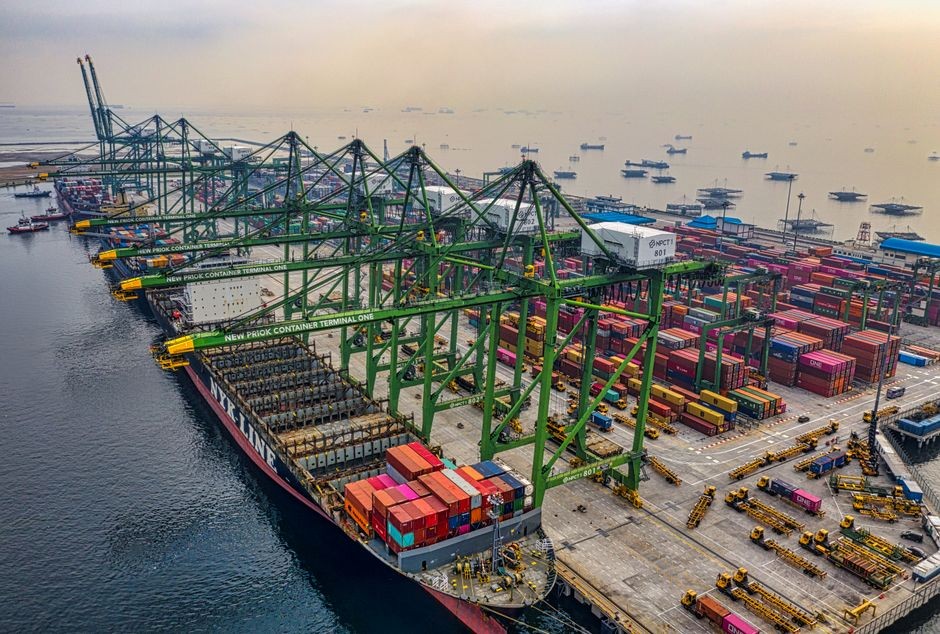
To strengthen its role as a regional logistics node, Gia Lai is advancing integrated infrastructure under its Logistics Development Plan for 2025–2035, with vision extending to 2050. This includes linking raw-material zones to border gates, seaports, inland container depots (ICDs), cold-storage facilities, and distribution centers. The Quy Nhơn Port — a strategic maritime gateway for the Central Highlands — now operates Berth No. 1 and runs direct container services to Europe, the U.S., and Northeast Asia.
According to Huỳnh Văn Cường, Chairman of the Board of Directors of Quy Nhơn Port Joint Stock Company, Gia Lai’s logistics strategy presents a major opportunity for the port to reinforce its function as the Central Highlands’ sea gateway. Regulatory approvals are underway: Vietnam’s Maritime and Inland Waterways Authority is processing procedures to allow Berth No. 4 to accommodate vessels up to 63,550 DWT, while the Ministry of Construction has authorized Berth No. 1 to handle general cargo and container ships up to 85,000 DWT with partial unloading.
Highway connectivity and efficiency gains
The Quy Nhơn–Pleiku expressway project is expected to transform regional logistics efficiency. Upon completion, travel time from Pleiku City to Quy Nhơn Port will shrink to 1.5–2 hours, and transport costs may fall by 40–50%. Beyond freight movement, the expressway will catalyze industrial, urban, and logistics development along the East–West Economic Corridor, enhancing trade links with southern Laos and northeastern Cambodia via international border gates.
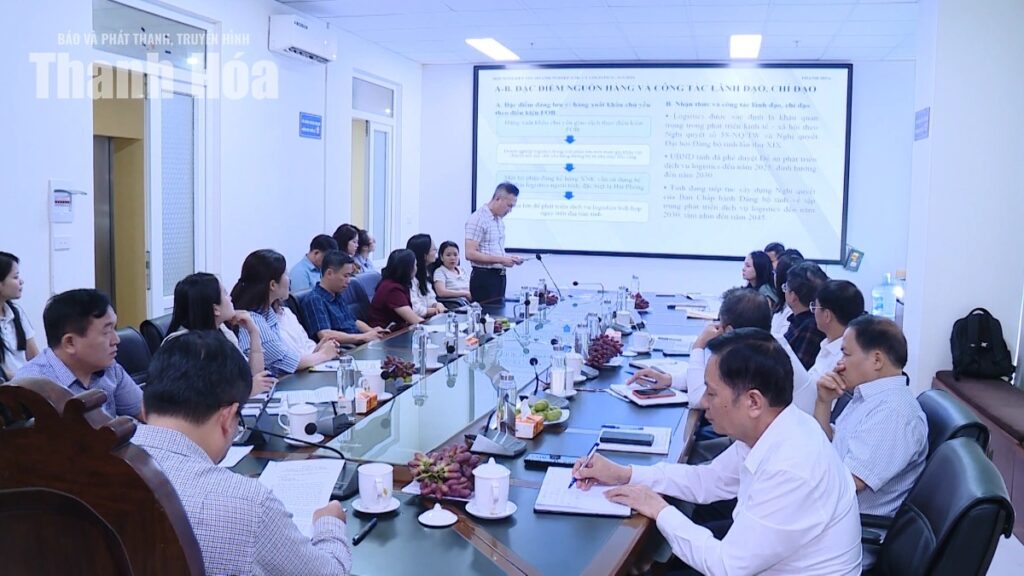
At an investment promotion seminar held on September 12 in Quy Nhơn Dong Ward and co-organized by Gia Lai People’s Committee and the Taiwan Trade Association (China) in Vietnam, provincial leadership emphasized cross-sectoral integration — from raw-material zones and production hubs to transportation, logistics, ports, and export markets. Nguyễn Tuấn Thanh, Deputy Chairperson of Gia Lai People’s Committee, stated that the province’s geographic convergence of Central Highlands and South Central Coast advantages creates ideal conditions for value-chain linkage and local product upgrading.
“This is a condition favorable for forming linked chains, raising the value of local products.” — Nguyễn Tuấn Thanh, Deputy Chairperson of Gia Lai People’s Committee
Gia Lai prioritizes investment in agro-processing, high-tech agriculture, clean energy, logistics, and industrial park infrastructure. Its long-term export target is over $17 billion by 2030. With growing export volume and coordinated infrastructure development, the province aims to shift from an agricultural production advantage to a competitive edge rooted in end-to-end supply chain connectivity.
Source: vietnam.vn
Compiled from international media by the SCI.AI editorial team.