Skip to content

Geopolitics · Trade & Tariffs

Analysis

China accounts for 80%+ of India’s imports across 71 tariff lines

A Koan Advisory Group and Institute of Chinese Studies report finds China supplied at least 80% of India’s imports across 71 eight-digit tariff lines in 2025–26—up from 2018–19 for 46 of them. India’s bilateral trade deficit with China hit $112.1 billion that year. Lithium-ion battery imports from China reached $3.9 billion, representing 83.6% of India’s total, while China supplied 48.9% of semiconductor imports—down from 64% in 2024–25. Experts urge targeted localization over broad trade exposure shifts.

Original source: Source information pending

China accounts for 80%+ of India’s imports across 71 tariff lines

According to thehindubusinessline.com, a report by Koan Advisory Group and the Institute of Chinese Studies (ICS) found that China accounted for at least 80% of India’s imports across 71 eight-digit tariff lines in 2025–26.

Deepening supply chain integration

The study shows this dependence reflects deepening supply chain integration—not just price-driven sourcing of finished goods. Of the 71 tariff lines where China held ≥80% import share, 46 crossed that threshold only after 2018–19, indicating rising concentration over time. India’s trade deficit with China reached $112.1 billion in 2025–26, its largest bilateral deficit.

Core components drive import reliance

India’s import dependence centers on a narrow set of upstream inputs: motors, electrical machinery, cables, and switching equipment—key components used across telecom infrastructure, consumer electronics, industrial machinery, and electrical equipment. As Samira Sarah Abraham, Economics Lead at Koan Advisory Group and co-author of the report, stated:

“The depth of integration that has emerged across these product categories is a reality of the two economies. India’s manufacturing ambitions will be better served by finding ways to work with this integration rather than simply seeking to reverse it.” — Samira Sarah Abraham, Economics Lead, Koan Advisory Group

Lithium-ion batteries illustrate opportunity and challenge

Lithium-ion batteries exemplify both the scale and strategic implications of this integration. In 2025–26, China supplied 83.6% of India’s lithium-ion battery imports—crossing the 80% threshold for the first time that year. India’s imports of these batteries from China surged to $3.9 billion, more than doubling since 2021–22. The report notes this access supports domestic expansion in electric mobility and energy storage—but only if paired with targeted policies to increase local value addition.

Semiconductor sourcing remains highly concentrated

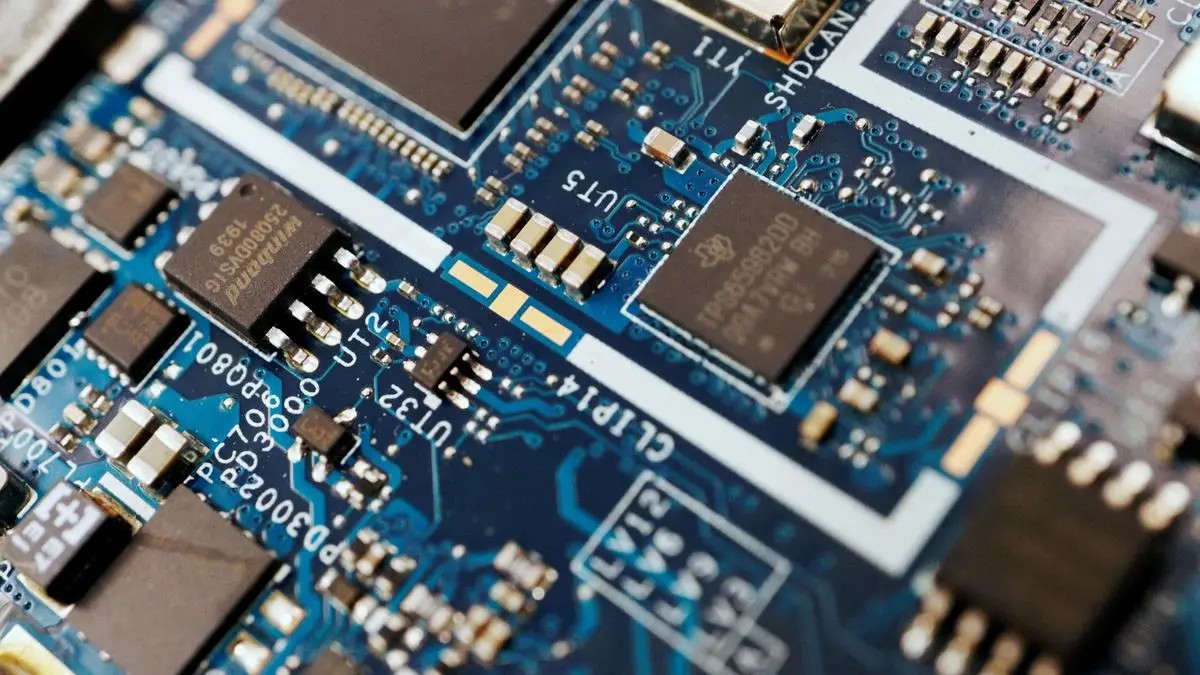
China remained the dominant source of India’s semiconductor (HS 8541) imports in 2025–26, supplying 48.9% of total imports—down from ~64% in 2024–25. Singapore followed with 8.4%, Indonesia with 7.5%, and Vietnam with 6.6%. Santosh Pai, Member of the Governing Council at ICS, emphasized that policy must prioritize “targeted localisation and accelerated value addition in specific high-impact segments,” given the concentration in upstream, component-level manufacturing.

Source: thehindubusinessline.com

Compiled from international media by the SCI.AI editorial team.
Ask SCI.AI Finished reading? Continue with SCI.AI. Explore the related policy, route, company and historical context. Continue asking
Geopolitical Distance Narrows: US, China, EU Drop 12.7%, 11.2%, 9.6% (2017–25)
Geopolitics

Geopolitical Distance Narrows: US, China, EU Drop 12.7%, 11.2%, 9.6% (2017–25)

McKinsey Global Institute’s September 2026 update analyzes 2025 trade data, finding geopolitical distance declined sharply from 2017–25: −12.7% for the US, −11.2% for China, and −9.6% for the EU. Total goods trade surged, with ASEAN up +67.7% and Brazil +68.2%. Every major region imports >25% of at least one critical good; Europe imports >50% of its energy. US price increases reached up to 9% in sectors shifting away from China. The Western bloc — 60% of global GDP — shows smaller modeled economic downside than the Eastern group.

Container Trade Volumes Hit Record High in July
Geopolitics

Container Trade Volumes Hit Record High in July

Global container trade volumes reached a record high in July 2026, according to Seatrade Maritime. The milestone occurred amid persistent maritime disruptions, including the Red Sea Crisis and Strait of Hormuz Conflict. The report was published on Sep 9, 2026, following related coverage dated Sep 7, 2026, and referencing the week ended 6 September. Seatrade Maritime — part of Informa PLC — structured the analysis within its Containers, Ports & Logistics, and Maritime Logistics verticals. No numerical volume data or regional breakdowns were provided beyond the record designation and named strategic waterways.

Imperative Logistics files suit over $5,000 in trade secret theft
Geopolitics

Imperative Logistics files suit over $5,000 in trade secret theft

Imperative Logistics LLC and subsidiary DTH Expeditors LLC filed a lawsuit in Georgia federal court accusing Alabama Motor Express and two former employees of orchestrating a workforce raid and stealing trade secrets. The complaint cites $5,000 in forensic investigation costs, access to 36 confidential files by Mary Evette Jones on April 9 and April 14, and the February 2025 acquisition of DTH Expeditors. Jones worked for the company since 2000; Cochran since 2005. Five employees departed the same office in rapid succession to join AMX, which operates with 234 power units and 234 drivers.

Welcome Back!

Login to your account below

Create New Account!

Fill the forms below to register

Retrieve your password

Please enter your username or email address to reset your password.

Scan to share via WeChat

Open WeChat and scan the QR code to share

QR Code

Add New Playlist