Skip to content

Geopolitics · Trade & Tariffs

Analysis

US Debt Tops $40 Trillion Amid AI Bubble, Sanctions Threats Fade

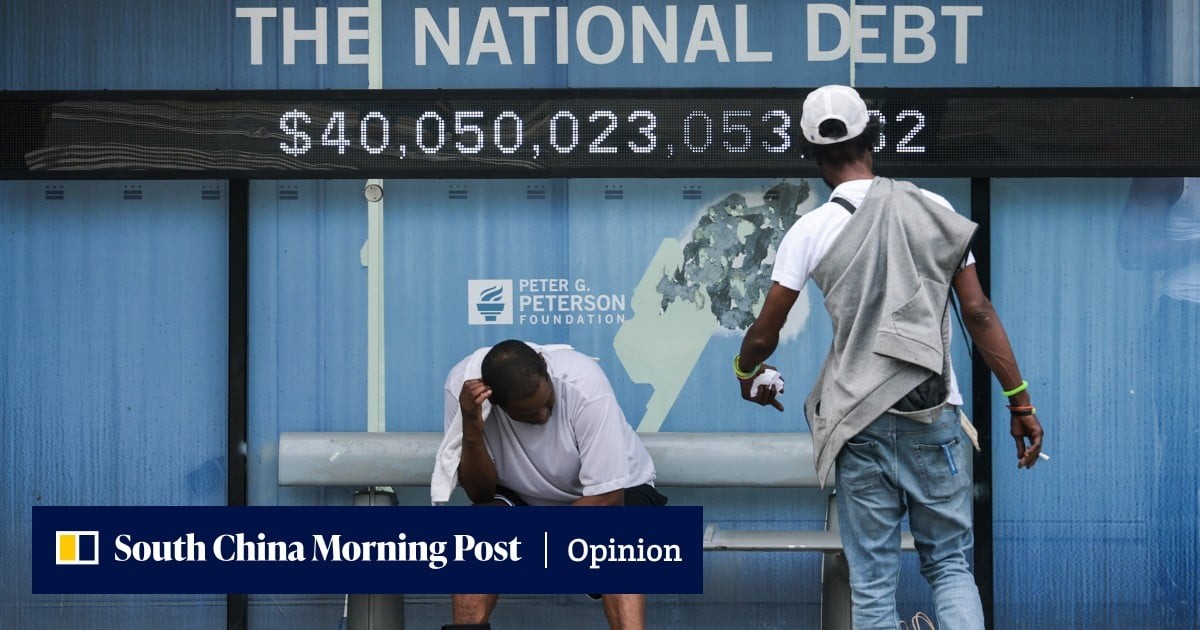
According to SCMP, US threats of sanctions against China over Iran ties lack credibility due to America’s financial fragility: total public debt exceeds $40 trillion, up from $9 trillion in 2007; $9 trillion in bonds require refinancing; $2.1 trillion must be issued to cover the deficit; stock market capitalisation stands at 240% of GDP — higher than in 1987, 2000, and 2007. Meanwhile, China’s economy has absorbed US trade and tech sanctions without recession, aided by its resilient CIPS payment system.

Original source: Source information pending

US Debt Tops $40 Trillion Amid AI Bubble, Sanctions Threats Fade

According to www.scmp.com, the US threat of sanctions against China over Beijing’s ties with Iran lacks credibility due to America’s acute financial vulnerabilities.

US Financial Fragility Undermines Sanction Leverage

The United States’ capacity to impose coercive financial measures is constrained by its own mounting fiscal and market risks. As total US public debt tops US$40 trillion, up from US$9 trillion in 2007, bond yields are surging to 2007 levels. The US must refinance bonds worth US$9 trillion and issue an additional US$2.1 trillion to cover the current fiscal deficit — a precarious position that heightens sensitivity to external shocks.

Stock market capitalisation has reached 240 per cent of gross domestic product — exceeding levels seen in 1987, 2000, and 2007. This artificial intelligence–fueled equity bubble, combined with ballooning deficits, renders the US economy more vulnerable to disruption than China’s, according to the report.

The source states that a financial war with China would trigger precisely the kind of shock needed to precipitate a collapse — making such action strategically self-defeating. In a game of chicken, the US will blink first.

China’s Resilience Contrasts With US Exposure

China has demonstrated structural resilience since President Donald Trump launched the trade and tech war during his first term. At that time, Beijing faced a massive property bubble and a bloated shadow banking system — both of which were successfully deflated without triggering a major economic downturn.

Today, while China’s growth rate is muted, the economy remains robust enough to absorb sustained US pressure. The report notes that China has so far avoided recession despite repeated US sanctions in trade and technology domains.

Moreover, China’s Cross-border Interbank Payment System (CIPS) offers a fully functional alternative to SWIFT. Even if the US were to cut major Chinese institutions off SWIFT — the global messaging system enabling dollar-based cross-border payments — China’s trading partners could easily switch to CIPS, accelerating the yuan’s international adoption.

Iran Sanctions Signal Strategic Exhaustion

The US campaign to impose secondary sanctions on Iran’s trading partners reflects dwindling options for conventional military escalation. Having imposed economic and financial sanctions on Iran for decades, Washington now targets third-party actors — effectively singling out China, Iran’s largest trading partner.

The report underscores that China is already “in the crosshairs of US politicians, with or without Iran.” Consequently, Beijing has no incentive to yield to additional pressure — especially when the US threat carries high risk of massive self-harm.

Source: South China Morning Post

Compiled from international media by the SCI.AI editorial team.

Ask SCI.AI Finished reading? Continue with SCI.AI. Explore the related policy, route, company and historical context. Continue asking
Kohl’s Q2 net income hits $151M on $100M tariff refund
Geopolitics

Kohl’s Q2 net income hits $151M on $100M tariff refund

Kohl’s reported $151 million in net income for Q2 ended 1 August 2026, up sharply from $64 million in adjusted net income a year earlier. A $100 million tariff refund contributed to a 305-basis-point gross margin improvement, lifting it to 43.0%. Net sales fell 0.9% for the quarter and 1.2% year-to-date to $6.3 billion. The retailer revised FY26 guidance upward and reinstated share buybacks under its $3 billion authorization, targeting up to $100 million. CEO Michael Bender emphasized continued operational execution amid ongoing sales challenges.

US-Canada Trade War Raises 50% Tariffs on $20B Goods
Geopolitics

US-Canada Trade War Raises 50% Tariffs on $20B Goods

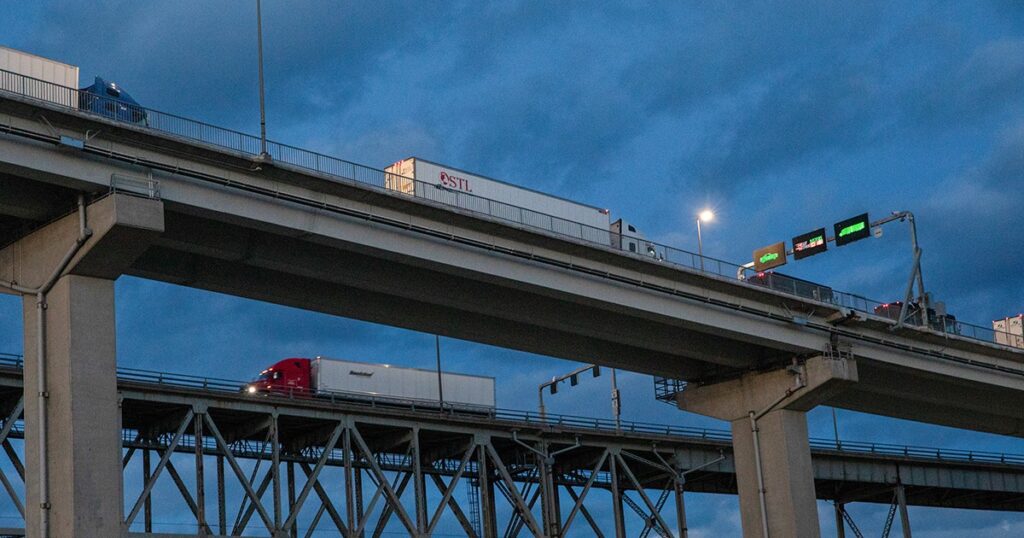
The U.S.-Canada trade war has escalated following failed negotiations to avert 50% tariffs on $20 billion of Canadian goods, announced by President Donald Trump in July 2026. Canada responded with up to 50% retaliatory tariffs on U.S. steel, dairy, appliances, and agricultural equipment. Industry groups warn of rising costs and supply chain disruption for agriculture and consumer goods. The article was published Aug. 27, 2026, and cites a Feb. 4, 2025 photo from the Lewiston-Queenston border crossing as evidence of deteriorating trade relations.

Canada imposes 15%–50% tariffs on $27.5B U.S. goods
Geopolitics

Canada imposes 15%–50% tariffs on $27.5B U.S. goods

Canada will impose 15% to 50% retaliatory tariffs on C$27.5 billion ($19.8 billion) of U.S. goods starting Sept. 8, following U.S. President Donald Trump’s Aug. 22 imposition of 50% tariffs on $20 billion of Canadian exports. Oxford Economics estimates the trade escalation will cut Canada’s 2027 output by 0.3%, raise consumer prices by 0.5 percentage points, and lift Canada’s effective U.S. tariff rate to 5.1%. A C$7.5 billion federal support package will only briefly cushion, not offset, the drag. Ontario and Quebec face the largest regional impacts, while oil-producing provinces see comparatively smaller effects.

Welcome Back!

Login to your account below

Create New Account!

Fill the forms below to register

Retrieve your password

Please enter your username or email address to reset your password.

Scan to share via WeChat

Open WeChat and scan the QR code to share

QR Code

Add New Playlist