According to www.dcvelocity.com, Spanish rice producer Herba Ricemills, a division of Ebro Foods, has deployed an automated storage and retrieval system (AS/RS) at its San José de la Rinconada plant in Seville province—supporting expansion into Africa and the Middle East amid surging demand for ready-to-eat meals.
AUTOMATING FOR EXPANSION
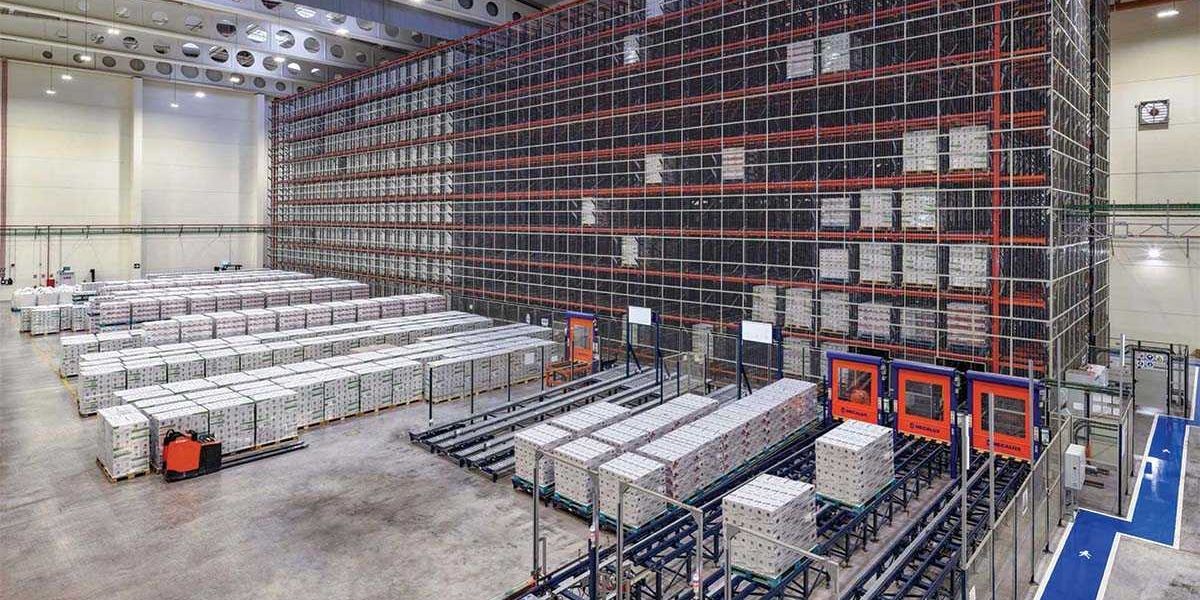
The AS/RS, designed by Mecalux, features racking more than 60 feet high and capacity for up to 5,400 pallets. It includes a stacker crane and electric pallet shuttle to automate movement within designated lanes. Prior to automation, inventory was managed manually via ERP, leading to inefficient space use and increased picking errors. As Juan Pedro Álvarez, director of Ebro Foods’ ready-to-serve division in Andalusia, Spain, explained in a Mecalux case study:
“That setup required greater flow coordination, used space less efficiently, and increased the likelihood of picking mistakes.” — Juan Pedro Álvarez, director of Ebro Foods’ ready-to-serve division in Andalusia, Spain
The facility produces ready-to-serve cooked rice brands including Minute (for North America), Lassie (Netherlands), Cigala (Portugal), and Brillante and Sabroz (domestic). Inbound ingredients enter through three inspection stations; autonomous guided vehicles (AGVs) retrieve bulk materials from racking near intake and deliver them to production lines. After cooking and packaging, finished goods are conveyed to AS/RS infeed stations for automated storage.
Outbound SKUs are sorted by a transfer car into flow channels directed by both the WMS and ERP systems. Pallet-flow racking is used for quarantine and quality control. This integrated architecture minimizes travel distances and forklift maneuvering times while accelerating pallet retrieval.
MEASURABLE IMPACT
The fully automated workflow—managed end-to-end by Mecalux’s warehouse management system (WMS)—delivers real-time tracking of locations, inventory status, and product flows. As Manuel Matías Martínez, head of warehousing and logistics management at the facility, noted:
“[The WMS] provides us with end-to-end, real-time control over our facility.” — Manuel Matías Martínez, head of warehousing and logistics management at the facility
Managers report a 25% increase in productivity and a 95% reduction in picking errors since implementation. The system also supports broader corporate goals tied to market reach and product diversification, aligning with projected prepared-foods market growth of 10% annually between 2025 and 2035.
According to analysts from Core Market Research, this growth stems from rising demand among busy professionals, on-the-go eating trends, and expanding e-commerce access. As Álvarez emphasized in the same case study:
“To remain competitive, implementing the latest technologies is essential. It’s no longer a luxury—it’s an imperative. The time for innovation is now.” — Juan Pedro Álvarez, director of Ebro Foods’ ready-to-serve division in Andalusia, Spain
Source: DC Velocity
Compiled from international media by the SCI.AI editorial team.