Skip to content

South Asia Supply Chain

SkyDrive, Air India, Suzuki ink eVTOL medical logistics MoU

SkyDrive Inc., Air India, and Suzuki signed a Memorandum of Understanding in July 2026 to evaluate eVTOL aircraft for urgent medical logistics in India. The initiative targets emergency transport of radioactive isotopes, emergency medical supplies, and human organs — use cases requiring sub-hour delivery windows. Evaluation of initial operational routes began in August 25, 2026, amid growing urban traffic congestion that impedes ground-based medical supply chains. A joint working group will conduct quarterly reviews through Q4 2026. No funding amounts or fleet sizes are disclosed in the source.

Original source: Source information pending

SkyDrive, Air India, Suzuki ink eVTOL medical logistics MoU

According to www.biospectrumasia.com, SkyDrive Inc., Air India, and Suzuki signed a Memorandum of Understanding in July 2026 to jointly study the feasibility of electric vertical takeoff and landing (eVTOL) aircraft for medical logistics in India.

Operational Route Evaluation Underway

The partnership will evaluate initial operational routes for eVTOL-based medical logistics services across India, beginning in August 2026. This effort follows the MoU signing and targets high-urgency use cases including emergency transport of radioactive isotopes and emergency medical and organ transport. According to the report, rapid economic growth has intensified traffic congestion in major Indian urban areas, undermining timely delivery of critical medical supplies.

The programme aims to identify and prioritize routes delivering the highest social and operational impact. Each candidate route will be assessed against criteria including response time thresholds, infrastructure readiness, regulatory alignment, and population density within service zones. The source states that evaluation will span multiple geographies — though specific cities or states are not named — and focus exclusively on scenarios where ground-based alternatives fail to meet clinical time windows.

No timeline for commercial deployment is specified, but the MoU establishes a joint working group with representatives from all three organizations to oversee technical assessments, airspace integration planning, and stakeholder coordination with Indian health authorities.

Targeted Medical Use Cases

The initiative explicitly prioritizes three urgent applications: Emergency Transport of Radioactive Isotopes, Emergency Medical Transport, and Emergency Organ Transport. These use cases were selected due to their strict time sensitivity — often measured in hours — and documented gaps in current logistics performance. According to the source, delays in isotope delivery directly affect diagnostic imaging capacity at regional hospitals, while organ transport failures contribute to measurable transplant attrition rates.

Each use case requires end-to-end validation of temperature control, payload security, real-time tracking, and handover protocols between eVTOL operators and hospital receiving units. The source states that preliminary route simulations will incorporate data from 2026 urban mobility studies conducted by Indian metropolitan transport authorities.

While no funding figures or fleet size commitments are disclosed, the MoU mandates quarterly progress reviews through Q4 2026 to assess technical viability and regulatory pathway clarity.

Source: biospectrumasia.com

Compiled from international media by the SCI.AI editorial team.
Ask SCI.AI Finished reading? Continue with SCI.AI. Explore the related policy, route, company and historical context. Continue asking
India, Japan Target $150B Semiconductor Demand by 2032
South Asia Supply Chain

India, Japan Target $150B Semiconductor Demand by 2032

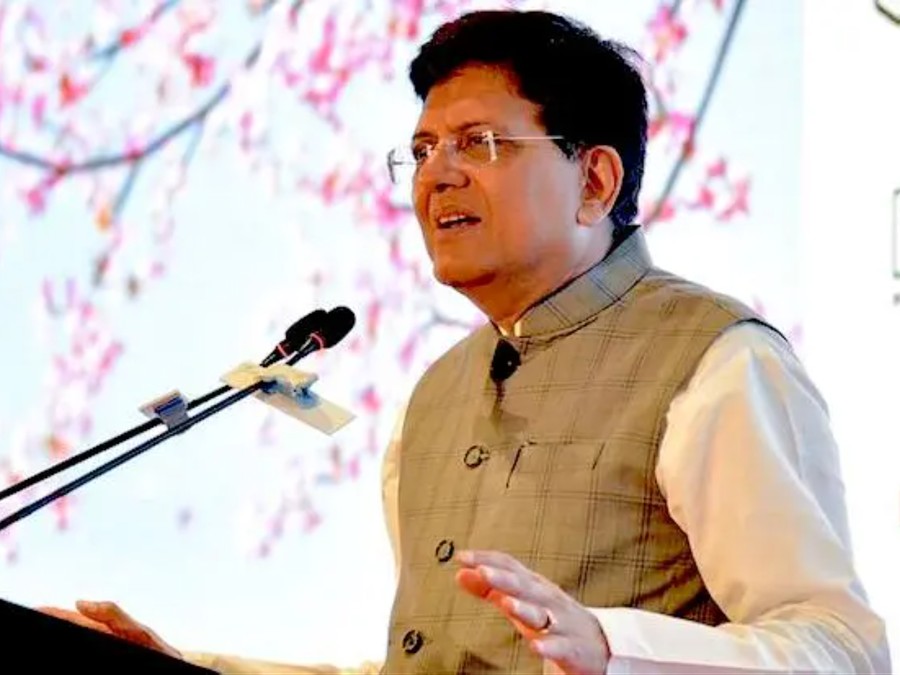
India and Japan advanced strategic economic cooperation during Commerce Minister Piyush Goyal’s visit to Tokyo, Nagoya, and Osaka. Discussions with over 30 Japanese companies and institutions targeted JPY 10 trillion in private investment by 2035, aligned with the 2025 Modi-Akazawa agreement. A key focus was scaling semiconductor collaboration, with India’s demand projected to hit USD 150 billion by 2032. The Minister outlined a six-pillar national strategy and emphasized synergies between India’s young talent pool and Japan’s engineering expertise. India’s 7.7% GDP growth and USD 30 trillion economy vision by 2047 were highlighted to reinforce investor confidence.

35% of Indian Farmers Report Fake Agro-Inputs in Past Year
South Asia Supply Chain

35% of Indian Farmers Report Fake Agro-Inputs in Past Year

A 2025 Crisil Intelligence and ASPA report reveals 35% of Indian farmers encountered counterfeit agro-inputs in the past year, with 82% believing fakes have grown more common. Local retailers enabled 75% of counterfeit purchases, while farmers showed willingness to pay a 14% premium for verified inputs. ASPA documented 276 counterfeit incidents from 2018–2025, including 50 in 2018 and 17 in 2025. Fertilisers made up 40% of reported cases, and detection remains weak: only 58% of farmers feel confident identifying fakes.

India lifts wheat export ban amid 120.657M-tonne record harvest
South Asia Supply Chain

India lifts wheat export ban amid 120.657M-tonne record harvest

India has lifted its three-year wheat export ban effective August 24, 2026, following a record 120.657 million tonnes of wheat production in 2025–26 — up 2.712 million tonnes year-on-year. Total food grain output hit 376.563 million tonnes, a 5.3% increase. The move responds to Black Sea supply disruptions, which pushed Chicago wheat futures up 17% in mid-2026. Egypt sourced 82% of its wheat from Russia and Ukraine in early 2026; Indonesia contracted 600,000 tonnes from alternate origins for July–September shipment.

Welcome Back!

Login to your account below

Create New Account!

Fill the forms below to register

Retrieve your password

Please enter your username or email address to reset your password.

Scan to share via WeChat

Open WeChat and scan the QR code to share

QR Code

Add New Playlist