Skip to content

AI & Automation · Technology

China’s tungsten export controls raise AI chip supply risks through 2028

China’s tungsten export controls—tightened in 2025, 2026, and 2027—are triggering severe supply disruptions for semiconductor manufacturing, particularly for AI-related chips. A July 1, 2026 shutdown of Japan’s Kanto Denka and Central Glass halted 2,200 tons of annual WF6 output—25% of global capacity. With China controlling 80% of supply and shortages expected through at least 2028, companies like Samsung and SK Hynix are diversifying sourcing, while Almonty Industries’ Sangdong mine reached full production in July 2026. New non-Chinese capacity faces multi-year development timelines, underscoring tungsten’s role as a strategic choke point.

Original source: Source information pending

China’s tungsten export controls raise AI chip supply risks through 2028

According to globalsources.com, China’s tungsten export restrictions—introduced in 2025 and tightened for 2026 and 2027—are intensifying supply constraints that threaten semiconductor manufacturing for AI applications, with shortages projected to persist until at least 2028.

Supply shock disrupts key semiconductor inputs

A major disruption occurred on July 1, 2026, when Japan’s Kanto Denka and Central Glass suspended tungsten hexafluoride (WF6) production after exhausting feedstock. Together, the two firms accounted for approximately one-quarter of global WF6 capacity—or about 2,200 tons annually—highlighting how quickly upstream material shortages can halt downstream fabrication.

China controls roughly 80% of global tungsten supply, and its export policies have sharply reduced the number of companies authorized to ship the material overseas. This concentration has amplified vulnerability, especially as demand surges from both defense applications and AI-related semiconductor manufacturing.

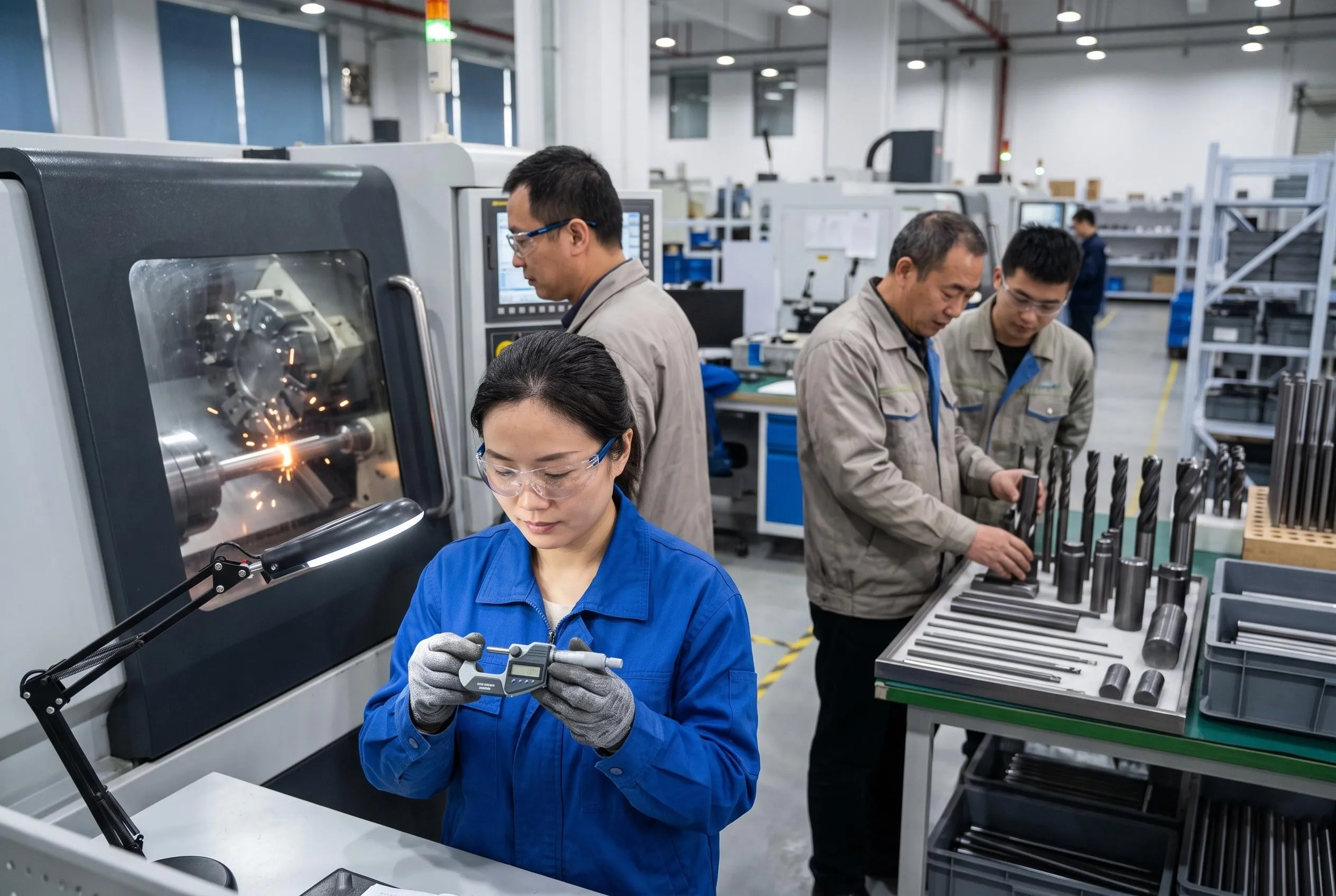
WF6 is essential for chemical vapor deposition—a core process in producing advanced memory and logic chips. Without reliable access, manufacturers risk delays in expansion plans, adjustments to fab schedules, and higher input costs that ripple across enterprise servers, consumer electronics, and mobile devices.

Diversification efforts face long lead times

Almonty Industries has identified its Sangdong mine in South Korea as one of the largest non-Chinese tungsten sources; the company announced the mine reached full production in July 2026 and launched a share buyback on August 17.

Yet new mining and refining capacity outside China remains constrained by multi-year timelines for environmental reviews, permitting, financing, infrastructure development, and semiconductor-grade chemical processing. As a result, projects initiated in response to current shortages are unlikely to deliver meaningful volume before 2028.

Companies including Samsung and SK Hynix are actively qualifying alternative suppliers across regions, but procurement teams must now assess not only price—but upstream mine output, refining capacity, logistics networks, and compliance with semiconductor-grade purity standards.

Strategic implications for AI hardware supply chains

The tungsten shortage underscores that AI’s growth depends as much on physical supply chains as on computational advances. Raw materials like tungsten form part of the upstream foundation supporting chip production—alongside gases, chemicals, and specialized equipment.

For electronics manufacturers, resilience strategies now include multi-regional supplier qualification, enhanced visibility into tier-two and tier-three material sources, and dynamic inventory planning to absorb feedstock volatility. Export policy shifts and processing bottlenecks—rather than just demand spikes—have become decisive factors in lead-time forecasting.

The situation also reshapes investment priorities: capital is flowing toward non-Chinese mining, chemical synthesis, and refining infrastructure, though these initiatives will take years to affect market balance. As one industry assessment notes, “Trade restrictions can alter material availability relatively quickly, while developing alternative sources requires longer lead times.”

Source: globalsources.com

Compiled from international media by the SCI.AI editorial team.
Ask SCI.AI Finished reading? Continue with SCI.AI. Explore the related policy, route, company and historical context. Continue asking
Arrive Logistics pledges 1,000 hires after Mubadala majority investment
AI & Automation

Arrive Logistics pledges 1,000 hires after Mubadala majority investment

Arrive Logistics plans to hire 1,000 employees after securing a majority investment from Mubadala Investment Company. The expansion spans technology, operations, sales, and customer success roles, with hiring to occur over the next 18 months. The company reported $420 million in gross transaction value in 2025 and serves over 12,000 shippers and carriers across the US and Canada. CEO Will O'Donnell confirmed the timeline begins in Q3 2026, targeting 70% completion by end of 2027.

21 Freight Firms File Bankruptcy, July 27–Aug 25
AI & Automation

21 Freight Firms File Bankruptcy, July 27–Aug 25

At least 21 U.S. transportation and logistics firms filed for Chapter 7 or Chapter 11 bankruptcy protection between July 27 and August 25, 2026. Filings spanned single-truck carriers like Anchor South Transport LLC ($1.396M assets, $2.2M liabilities) and national distributors such as BFG Supply Co. LLC ($100M–$500M in both assets and liabilities). Others included Jet-Speed Logistics (assets $50K–$100K, liabilities $1M–$10M), Inclusive Logistics ($1M–$10M), and PLR Transport ($21,520 assets vs. $5.33M liabilities). The wave affected trucking, freight forwarding, warehousing, and cross-border logistics across states including Alabama, Florida, Georgia, Illinois, Indiana, Michigan, New Jersey, Texas, and California.

Gatik raises $200M to scale autonomous trucking across North America
AI & Automation

Gatik raises $200M to scale autonomous trucking across North America

Gatik AI Inc. has raised $200 million in Series D funding to scale autonomous trucking across Fortune 50 supply chains. The Mountain View, Calif.-based company reports $600 million in contracted revenue, 85,000 fully driverless orders, and 99% on-time delivery. Its autonomous trucks operate across Texas, Arizona, and Arkansas for PepsiCo — a partnership launched in 2022. Led by Qatar Investment Authority and Koch Disruptive Technologies, the round includes Millennium Management, ARK Invest, and Intact Private Capital. Gatik’s AI-first AVs serve high-frequency regional routes linking distribution centers and stores across North America.

Welcome Back!

Login to your account below

Create New Account!

Fill the forms below to register

Retrieve your password

Please enter your username or email address to reset your password.

Scan to share via WeChat

Open WeChat and scan the QR code to share

QR Code

Add New Playlist