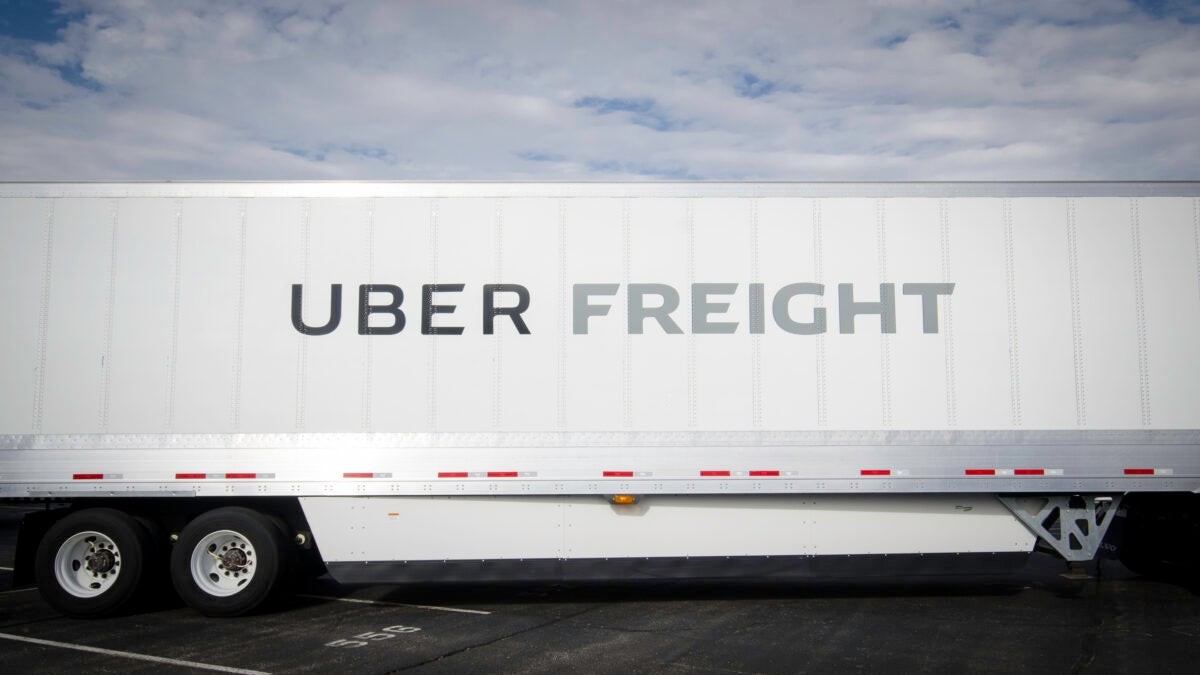
According to FreightWaves, Uber Freight has appointed Amir Pelleg as its new chief product officer to accelerate development of its AI-powered transportation management platform.
Strategic leadership shift for AI-driven freight intelligence
Pelleg brings more than 25 years of experience leading product, engineering, and operations teams across major logistics technology firms. His prior executive roles include positions at Amazon, Convoy, and Dandy. The appointment signals Uber Freight’s intensified focus on transforming fragmented transportation data into unified, actionable intelligence — a core objective outlined in Pelleg’s first public statement following the hire.
San Francisco-based Uber Technologies (NYSE: UBER) operates three primary platforms: Uber (ride-hailing), Uber Freight (digital freight brokerage and TMS), and Uber Eats (food and goods delivery). Pelleg’s mandate centers on strengthening the integration between Uber Freight’s brokerage capabilities, real-time visibility tools, and underlying AI infrastructure — all aimed at enabling faster, more confident decision-making for shippers and carriers.
From fragmentation to proactive network control
Pelleg identified data silos as the industry’s most persistent operational barrier. He emphasized that transportation data remains scattered across disconnected systems and organizational boundaries — hindering end-to-end visibility and delaying response to disruptions. According to Pelleg, the opportunity lies not in deploying more AI models per se, but in synthesizing disparate inputs into a coherent, predictive operational view.
“The opportunity isn’t simply more technology but in the ability to turn fragmented data into a single, proactive network view.” — Amir Pelleg, Chief Product Officer, Uber Freight
This principle aligns with a broader industry trend: logistics providers are shifting from reactive dispatch tools to anticipatory platforms capable of simulating scenarios, recommending optimal lane strategies, and auto-adjusting to capacity shocks. Pelleg’s emphasis on “beginning with customer problems rather than new technology” reflects practitioner feedback increasingly cited in FreightWaves’ SONAR market intelligence reports — particularly among mid-market shippers managing 3–7 carrier relationships and 12+ ERP or WMS integrations.
Context: AI adoption accelerating across digital freight platforms
Uber Freight’s move follows similar executive appointments at peer platforms: C.H. Robinson named a dedicated AI product leader in Q2 2025, while Flexport expanded its machine learning engineering team by 42% year-over-year in 2026. These investments respond to measurable demand — a FreightWaves survey of 287 North American shippers found that 74% now require AI-generated load-matching recommendations and 61% expect automated tender acceptance within 90 seconds.
The timing coincides with rising complexity in U.S. freight networks: average shipment lead times increased by 18% between 2023 and 2026, while carrier turnover rates hit 92% annually — both metrics tracked daily by FreightWaves’ SONAR platform. Pelleg’s background in scaling high-volume, low-latency logistics systems at Amazon positions him to address these pain points directly.
Practitioner implications for supply chain teams
For supply chain professionals, Pelleg’s hiring suggests near-term upgrades to Uber Freight’s TMS will prioritize interoperability and explainable AI outputs — not just speed. Early roadmap indicators include support for API-based integration with SAP S/4HANA, Oracle Transportation Management, and legacy EDI systems used by 83% of Fortune 500 manufacturers. The goal is reducing manual reconciliation time, currently averaging 11.4 hours per week per planner across surveyed enterprises.
Implementation timelines remain tied to regulatory developments: the Federal Motor Carrier Safety Administration’s updated electronic logging device (ELD) data-sharing rules — effective October 26, 2026 — will unlock new streams of real-time telematics data for AI training. This aligns with Uber Freight’s participation in the upcoming F3: Future of Freight Festival in Chattanooga, TN, scheduled for October 27–28, 2026.
Source: FreightWaves
Compiled from international media by the SCI.AI editorial team.