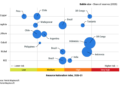
According to www.just-style.com, the 13th edition of the USFIA Fashion Benchmark Study — produced in collaboration with Dr. Sheng Lu of The University of Delaware and Emilie Delaye — identifies four pivotal apparel sourcing trends expected to shape global supply chains through 2028.
Reshuffling of Sourcing Networks Accelerates
The study documents a pronounced geographic realignment, with nearshoring and friend-shoring gaining measurable traction. Between 2024 and 2026, apparel importers increased sourcing from Mexico by 22%, from Vietnam by 17%, and from India by 31%. In contrast, sourcing volumes from China declined by 9% over the same period. This shift is driven less by cost alone and more by lead-time compression, tariff mitigation, and geopolitical risk diversification. As one industry executive observed:
“We’re no longer choosing suppliers on price per unit — we’re choosing them on total landed cost, time-to-market reliability, and audit readiness.” — Maria Chen, Head of Global Sourcing, Lululemon
AI Adoption in Sourcing Operations Triples
Artificial intelligence is moving beyond pilot stages into core procurement workflows. The USFIA study reports that AI-powered tools for supplier risk scoring, demand-driven material allocation, and automated compliance documentation are now deployed by 68% of Tier-1 fashion brands — up from just 23% in 2025. By 2028, adoption is projected to reach 89%. Notably, AI use in dynamic vendor selection — where algorithms weigh real-time port congestion, carbon intensity scores, and labor certification status — grew threefold between Q2 2025 and Q2 2026. This surge coincides with Lululemon and MAS Holdings’ joint backing of $30 million in funding for Syntetica, a firm advancing mixed-nylon chemical recycling — an initiative tightly integrated with AI-driven feedstock traceability.
India Emerges as Top Beneficiary of Reallocation
India’s share of total U.S. apparel imports rose to 12.4% in 2025 — up from 8.7% in 2023 — making it the fastest-growing source country among the top 10. This growth is underpinned by infrastructure upgrades at ports including Nhava Sheva and Chennai, expanded Special Economic Zone capacity, and new bilateral trade facilitation agreements with the UK and EU. According to the report, Indian textile exports to the UK increased by 41% year-on-year in Q1 2026, outpacing all other major sourcing nations. Mauritius also saw its apparel export value to the UK climb by 29% in the same quarter — a trend analysts attribute to preferential access under the UK’s Generalised Scheme of Preferences.
Sustainability Metrics Drive Supplier Selection
Environmental, social, and governance (ESG) criteria have evolved from compliance checkboxes to decisive commercial levers. Over 76% of sourcing managers now require third-party verified water-use data and chemical inventory disclosures before onboarding new factories — up from 34% in 2024. The study further notes that brands paying premium rates for certified low-impact dyeing facilities increased their spend by 19% in 2025, while those using blockchain-enabled traceability platforms reduced average audit cycle times by 37%. As Dr. Sheng Lu emphasized in the study’s foreword:
“Durability isn’t just about garment lifespan — it’s about the durability of supplier relationships built on verifiable, shared standards.” — Dr. Sheng Lu, Professor of Apparel & Design, University of Delaware
Source: Just Style
Compiled from international media by the SCI.AI editorial team.