According to www.seatrade-maritime.com, surging artificial intelligence infrastructure investment is offsetting softening consumer demand in the container shipping sector — boosting container utilisation and helping sustain freight rates above historical averages despite record vessel capacity additions.
Market softening amid AI-driven cargo surge
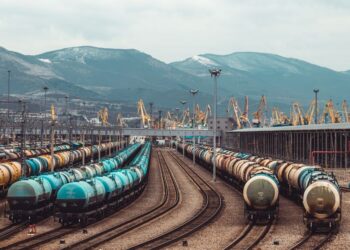
Consultant Jon Monroe observed that while spot rates and demand are softening overall, capacity deployment is increasing — a pattern mirroring the second half of 2025. Current spot rates from Shanghai to Los Angeles have declined 6% to $5,878 per FEU, and Shanghai-to-New York rates fell 4% to $7,598 per FEU, driven by expanded capacity and easing demand, per the latest World Container Index from Drewry Shipping.
Monroe noted that five of the top 10 carriers — MSC, ONE, CMA CGM, Evergreen, and Cosco — collectively added 475,000 TEU to Pacific trade lanes in the first half of this year alone. Yet he argues this influx does not preclude rate stability: “There are, however, compelling reasons to believe that freight rates could stabilize at levels above historical averages, even as significant new vessel capacity enters the market,” wrote Monroe.
Consumer weakness vs. AI infrastructure demand
Monroe cited weakening U.S. import forecasts from the National Retail Federation and underscored growing uncertainty, declaring, “The consumer is no longer king.” He attributed market volatility to cyclical front-loading followed by demand lulls — a defining feature of the Transpacific trade — which complicates forecasting for shippers, NVOCCs, and carriers alike.
Tariffs and geopolitical disruption further strain logistics: tariffs inflate consumer prices, while conflict raises logistical costs. Monroe criticized current U.S. policy, stating, “This administration does not seem to get that tariffs impact the US consumer, not the factory.” Despite these headwinds, manufacturing outsourcing continues evolving — shifting production toward U.S. East Coast and Gulf ports, thereby lengthening transits and increasing reliance on regional hubs such as Singapore and Colombo.
AI hardware reshapes supply chain flows
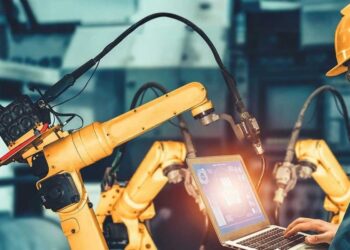
One of the fastest-growing sources of cargo demand is the rapid expansion of AI infrastructure, Monroe emphasized. As technology companies invest billions in new data centers and compute facilities, manufacturers across China and Asia are experiencing a surge in orders to build supporting hardware — including liquid-cooled systems requiring specialized components.
A Chinese auto-industry hose manufacturer, for example, pivoted to produce similar parts for AI cooling systems. “He expects this business to surge for the next three years,” said Monroe. This shift illustrates how AI’s physical supply chain — spanning semiconductors, power delivery, thermal management, and structural modules — is generating measurable container volume, counteracting broader retail softness.
The extended distances from the Far East to the U.S. East Coast also help absorb excess capacity. While total TEU growth remains substantial, the geographic reconfiguration of manufacturing and distribution adds natural constraints — tightening effective capacity utilization even as nominal fleet size expands.
Strategic implications for shippers and carriers
For supply chain professionals, the AI-driven cargo wave presents both opportunity and complexity. Unlike traditional consumer goods, AI infrastructure shipments tend to be high-value, time-sensitive, and require precise environmental controls — elevating demand for premium services, visibility, and contingency planning. Carriers must balance deploying new tonnage against route profitability, especially as Maersk recently introduced a $1,000 per container surcharge for transits through the Strait of Hormuz — a direct response to escalating geopolitical risk.
This dynamic underscores a structural shift: container demand is becoming less tied to retail cycles and more anchored in capital-intensive, long-term tech infrastructure buildouts. As Monroe concluded, “One of the fastest growing sources of cargo demand is the rapid expansion of artificial intelligence (AI) infrastructure. As technology companies invest billions of dollars in new facilities, manufacturers in China and throughout Asia are experiencing a surge of orders to build these facilities.”
“There are, however, compelling reasons to believe that freight rates could stabilize at levels above historical averages, even as significant new vessel capacity enters the market.” — Jon Monroe, shipping consultant
Source: Seatrade Maritime
Compiled from international media by the SCI.AI editorial team.