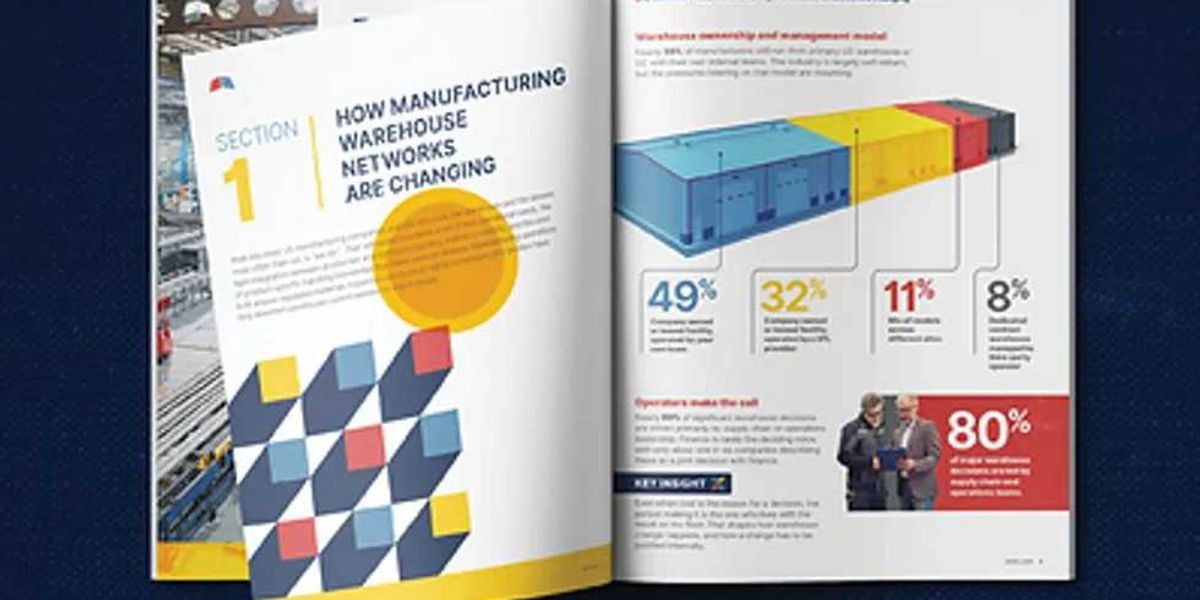
According to www.dcvelocity.com, a survey by Warehouse Specialists LLC (WSI) reveals that 75% of U.S. manufacturers’ warehouse networks evolved organically—not by strategic design—leaving them ill-equipped for modern supply chain demands.
Legacy Infrastructure Constrains Agility
The study, titled “How Manufacturers Are Structuring Warehouse Operations in 2026,” surveyed 306 supply chain, operations, and logistics leaders across U.S. manufacturing sectors—including chemicals, metals, food and beverage, building materials, and electronics. It found that nearly the same proportion—75%—acknowledged their current network was built for an operating environment that no longer exists. This structural mismatch is compounding pressure on manufacturers already managing volatile demand, labor shortages, and regulatory scrutiny.
As Paul Simmons, President at Warehouse Specialists LLC (WSI), explained:
“Companies have responded to a chaotic supply chain in different ways. Some have focused on cost-cutting. But many have learned that a network optimized purely for cost is also optimized to fail under pressure.” — Paul Simmons, President, Warehouse Specialists LLC (WSI)
He added that forward-looking manufacturers are “deliberately redesigning, not just optimizing what they already have.”
Urgent Network Overhaul Underway
88% of respondents expect changes to their U.S. warehouse and distribution footprint within the next 18 months, including expansion, consolidation, or shifts in operating model. These moves reflect growing recognition that incremental optimization cannot resolve deep-rooted inefficiencies. The report attributes this to decades of reactive growth—adding facilities to meet short-term demand spikes or customer mandates without holistic network planning.
Further evidence of systemic strain emerged in compliance and safety performance: 53% reported at least one warehouse-related compliance incident, audit finding, or safety event in the past two years. Such events increase operational risk and elevate insurance, legal, and remediation costs—factors increasingly weighed in 3PL selection decisions.
3PL Relationships Under Pressure
Friction with third-party logistics providers has intensified, with 67% of manufacturers reporting increased likelihood of switching their 3PL provider over the past 12 months. Drivers include misaligned technology roadmaps, inflexible contract terms, and inability of legacy 3PL systems to support real-time inventory visibility or dynamic fulfillment routing—capabilities now table stakes for omnichannel execution.
This shift coincides with broader industry investment in infrastructure modernization. For example, Maersk announced plans in July 2026 to open a $100 million fulfillment hub in Massachusetts—part of a wave of capital deployment targeting integrated warehousing and last-mile readiness. Meanwhile, ATRI reported that the average cost of operating a truck hit a record high in 2025, underscoring how upstream warehouse inefficiencies cascade into transportation cost inflation.
Strategic Implications for Supply Chain Professionals
For supply chain professionals, the findings signal a pivot from tactical cost control to foundational network reengineering. That includes reassessing facility location logic (e.g., nearshoring vs. mega-hub consolidation), adopting modular warehouse automation, and embedding resilience metrics—such as dual-sourcing capacity and buffer-stock thresholds—into network design criteria. Practitioners must also prioritize interoperability standards when selecting WMS, TMS, and labor management platforms, given that 75% of networks lack unified data architecture.
The urgency is reinforced by external pressures: West Coast ports logged record container volumes in July 2026 as shippers rushed orders ahead of anticipated tariff adjustments, further exposing bottlenecks in inland distribution. Without deliberate redesign, manufacturers risk being outpaced not only by competitors but by digitally native entrants leveraging agile, API-driven logistics ecosystems.
Source: DC Velocity
Compiled from international media by the SCI.AI editorial team.