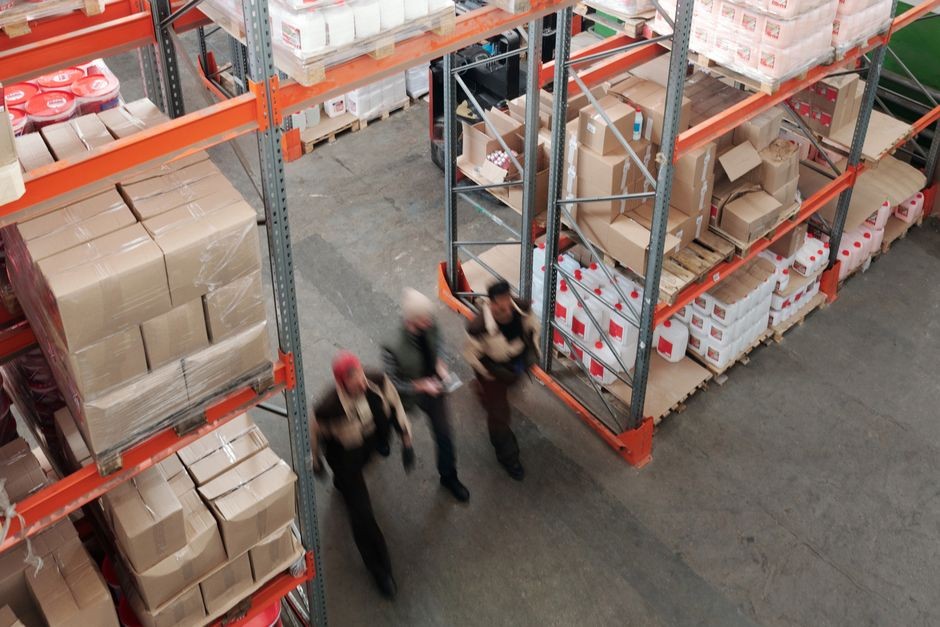
According to www.dcvelocity.com, global supply chain pressures remained elevated in June 2026 despite falling oil prices and lower transportation costs — a trend driven by uncertainty surrounding the US-Iran ceasefire.
Record Safety Stock Levels
A monthly survey of 27,000 businesses conducted by New Jersey–based supply chain technology vendor GEP found that safety stock levels rose again in June 2026, reaching their highest point since January 2023. The analysis is part of GEP’s “Global Supply Chain Volatility Index,” which tracks real-time sentiment and operational behavior across manufacturing, logistics, and procurement functions.
Manufacturers reported rising backlogs due to shortages of critical inputs — the highest incidence observed since late 2022. This signals persistent bottlenecks in material availability, with delays expected to extend into at least the third quarter of 2026. To mitigate risk, companies continued building buffer inventories, prioritizing resilience over lean efficiency.
Geopolitical Uncertainty Drives Preemptive Buying
The US-Iran ceasefire remains unconfirmed and highly volatile, with no formal agreement ratified as of mid-July 2026. That ambiguity has intensified planning for potential disruptions across key maritime corridors — particularly the Middle East region, where shipping reroutes, insurance premium spikes, and port congestion have reemerged as acute concerns. While oil prices declined, freight forwarders noted renewed volatility in Straits of Hormuz-adjacent routing options, prompting shippers to secure inventory ahead of anticipated delays.
“The rise in stockpiling and persistent order backlogs point to one clear conclusion: businesses still don’t trust the global trading environment to remain stable,” said John Piatek, vice president, consulting, GEP. “Despite lower oil prices and easing transportation costs, companies continue buying ahead because they expect further disruption.”
Operational Implications for Supply Chain Professionals
For supply chain practitioners, the data reflects a structural shift: inventory strategy is now being calibrated less around demand forecasts and more around geopolitical scenario planning. Companies are extending lead time assumptions, diversifying sourcing geographies, and increasing allocation to near-term warehousing capacity — especially in North America and EU-based distribution hubs.
This behavior aligns with broader industry trends. For example, Descartes acquired a South American last-mile routing firm for $30 million in early July 2026 — a move analysts link to regional redundancy planning amid Red Sea and Panama Canal instability. Similarly, Element Logic and Lululemon opened a 1 million square foot warehouse in Ontario in July 2026, citing “geopolitical resilience” as a core design principle.
The Port of Long Beach posted its third-busiest June on record in 2026 — underscoring how inventory buildups translate directly into port throughput surges, even amid softer consumer demand indicators.
Source: DC Velocity
Compiled from international media by the SCI.AI editorial team.