According to www.dcvelocity.com, Everstream Analytics forecasts that a developing “Super El Niño” event could trigger severe drought in Panama by late 2026, forcing the Panama Canal Authority to impose vessel draft limits and reduce daily transits — echoing disruptions seen in 1982, 1997, and 2015.
Super El Niño intensifies through summer 2026
Everstream Analytics’ chief meteorologist Jon Davis stated in a June 2026 webcast that the current El Niño event — which began just one month prior — is rapidly strengthening. “This is one of the biggest meteorology events we’ve seen many, many decades,” he said. “And it is going to have major ramifications in supply chains as we go through the remainder of this year.” According to the report, the phenomenon is expected to peak as a “major or super El Niño” through the summer and into the end of 2026.
The firm attributes this escalation to above-average sea surface temperatures across the equatorial Pacific — a hallmark of El Niño — which disrupts global atmospheric circulation. Unlike typical El Niño cycles that alternate with La Niña phases, this year’s pattern is notably more extreme, with forecast models showing sustained intensity over at least six months.
Drought-driven canal constraints threaten global trade flows
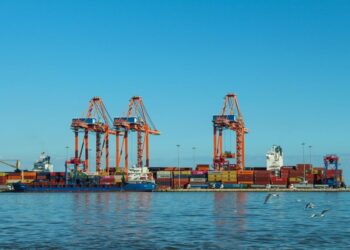
The primary operational risk centers on Lake Gatun, the artificial reservoir that supplies water for the Panama Canal’s lock system. Extended drought in Central America and Panama — predicted by Everstream Analytics for 2026 — reduces lake levels, limiting the maximum draft (depth) at which vessels may safely transit. During past Super El Niño years, authorities imposed mandatory draft restrictions and cut daily transits from ~36 to as few as 24 vessels per day.
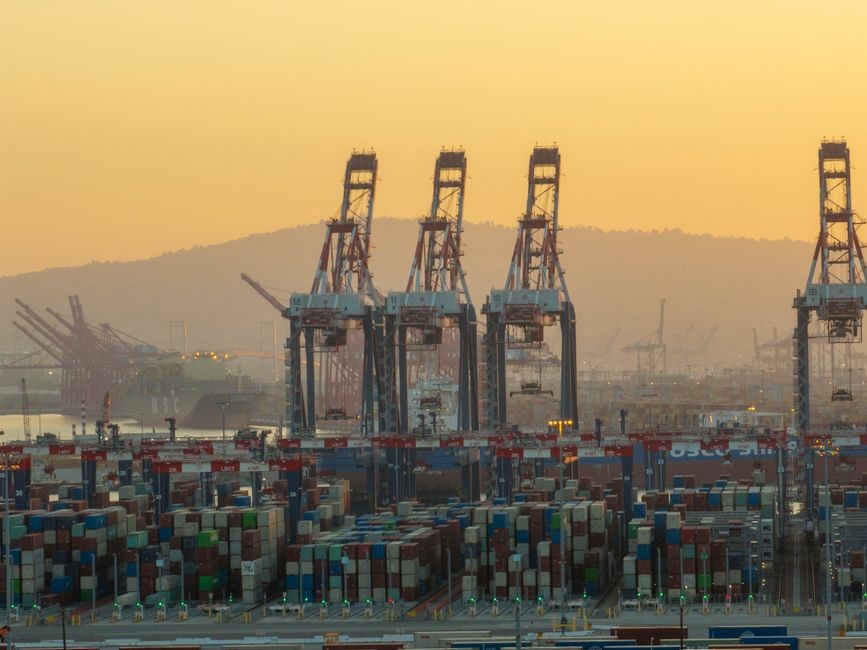
Such restrictions directly impact container ship utilization, increase wait times, and raise freight costs. For example, during the 2015 event, average transit delays exceeded 12 hours, and carriers rerouted up to 15% of Asia–U.S. East Coast volume via the Suez Canal or Cape Horn — adding 7–14 days to voyage duration.
Cascading regional impacts beyond Panama
Beyond Central America, the Super El Niño is projected to drive contrasting hydrological extremes: increased rainfall across North and South America, but intensified drought across India and Southeast Asia. These conditions threaten industrial manufacturing output, agricultural yields, and food & beverage supply chains — sectors highly dependent on consistent water access and stable transportation networks.
Simultaneously, elevated sea surface temperatures heighten the probability of typhoons and tropical cyclones in the Western Pacific. The report warns of heightened risk to critical industrial hubs in China, Korea, Japan, Taiwan, Hong Kong, and Vietnam — all key nodes in global electronics, automotive, and pharmaceutical supply chains. In Vietnam, for instance, prolonged dry spells have previously reduced hydropower generation by up to 30%, triggering factory curtailments.
Supply chain professionals brace for multi-modal recalibration
Logistics planners are advised to reassess routing assumptions, revalidate vessel draft allowances, and stress-test inventory buffers against potential 10–20% capacity reductions on the Panama route. Practitioners should also monitor real-time Lake Gatun level data — publicly reported by the Panama Canal Authority — which fell to 82.3 feet in June 2026, below the historical median of 85.5 feet.
For shippers reliant on just-in-time delivery, the convergence of canal constraints, monsoon-related port congestion in India, and typhoon season in East Asia means contingency planning must now span three geographies and four transport modes — maritime, rail, trucking, and air freight. As noted by Everstream Analytics, the cumulative effect is not isolated to transit time; it compounds working capital pressure, insurance premiums, and carbon compliance tracking due to longer voyages and fuel-intensive detours.
Source: DC Velocity
Compiled from international media by the SCI.AI editorial team.