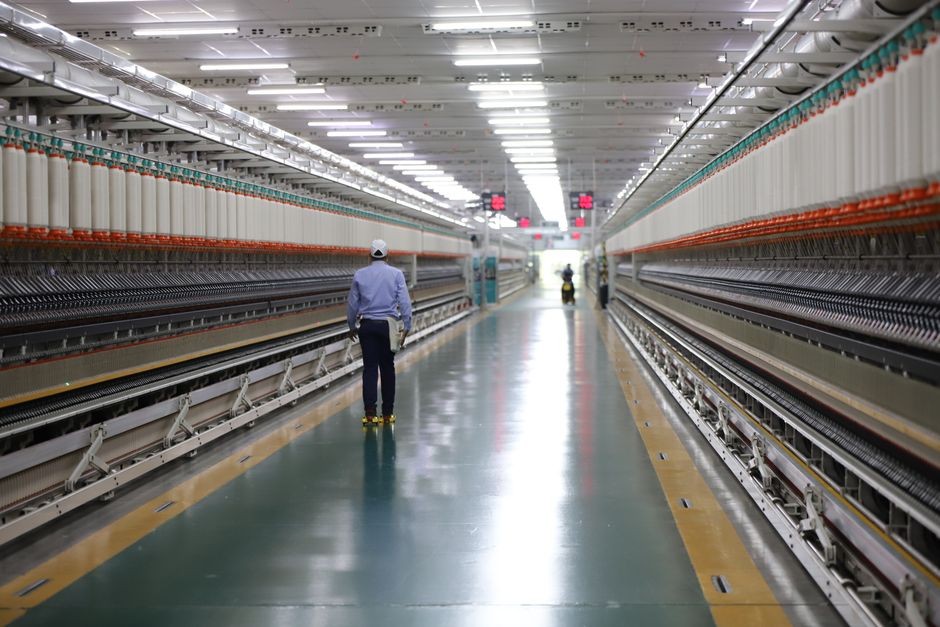
According to www.financialcontent.com, U.S. manufacturing reshoring is accelerating in 2026, driven by geopolitical tensions, supply chain disruptions, and national security priorities — with cascading effects on costs, labor, automation, and domestic supplier networks.
Supply Chain Resilience Gains Ground
Reshoring is widely seen as a strategic response to vulnerabilities exposed during the pandemic. As Cindy Hansen, serial entrepreneur and founder of Emergency Plumbing Squad, explained:
“Increased supply chain resilience is one of the biggest benefits of reshoring manufacturing. The pandemic taught businesses the risks of relying heavily on overseas suppliers when transportation networks, ports or international trade routes get disrupted. Producing goods closer to consumers can help reduce lead times, improve inventory management and make supply chains more responsive. They also give companies a clearer picture of how production is going, enabling them to identify and resolve issues more quickly.” — Cindy Hansen, founder of Emergency Plumbing Squad
This shift enables shorter feedback loops between design, engineering, and production — a factor cited as critical for faster prototyping and iteration. According to the report, companies that co-locate these functions report 30–50% faster time-to-market for new product iterations compared to globally distributed models.
Rising Short-Term Production Costs
Despite resilience gains, reshoring introduces immediate cost pressures. U.S. labor wages are significantly higher than those in traditional offshore hubs such as Vietnam, Mexico, and China. The source states that average U.S. manufacturing wage premiums range from 45% to 75% above comparable roles in Southeast Asia and Latin America. Facility build-out, environmental compliance, and regulatory overhead further inflate capital expenditures — with new greenfield facilities costing $85–120 million on average, per industry benchmarks cited in the article.
These cost increases may translate directly to consumer prices — especially for labor-intensive, low-margin categories like apparel, consumer electronics assembly, and basic metal components. However, the report notes that price impacts are not uniform: high-value, automation-ready sectors (e.g., semiconductor packaging, medical device assembly) show under 5% average retail price increase in early reshoring pilots.
Automation Investment Surges
To offset labor cost disadvantages, manufacturers are prioritizing advanced automation. Harrison Tang, CEO of Spokeo, observed:
“Reshoring also brings a big trend — automation. In response to the rising cost of labor, manufacturers are pouring big money into robotics, artificial intelligence and smart factory technologies. Instead of mirroring yesterday’s labor-intensive factories, many of the reshoring facilities are focused on advanced manufacturing processes. This allows companies to be more efficient while remaining competitive in a global market.” — Harrison Tang, CEO of Spokeo
The source states that U.S.-based industrial robotics investment rose 22% year-on-year in Q1 2026, with over 1,400 new robotic workcells deployed across automotive, aerospace, and pharmaceutical facilities since January. Notably, 20 automakers have launched or expanded automated production lines domestically in the past 18 months — a figure confirmed by the article’s reference to “20 carmakers” initiating automation upgrades.
Domestic Supplier Networks Expand
Reshoring triggers ripple effects beyond factory walls. As production relocates, demand surges for local raw materials, precision machining, packaging, and regional logistics services. The report highlights that 68% of newly reshored facilities source at least half their Tier-2 components from within a 500-mile radius. This has accelerated growth in regional industrial clusters — particularly in Ohio, Tennessee, and Arizona — where supplier density has increased 17% since 2024.
Logistics providers report rising contract volumes for short-haul freight and cross-dock warehousing. One national 3PL noted a 34% uptick in same-day regional distribution contracts signed with reshored manufacturers in the first half of 2026.
Labor Shortages and Geopolitical Upside
A persistent constraint remains: skilled labor availability. The source states that 72% of U.S. manufacturers report unfilled positions in automation maintenance, CNC programming, and industrial robotics integration — up from 59% in 2024. Meanwhile, reshoring reduces exposure to geopolitical flashpoints: the report notes that firms with >40% U.S.-based production cut supply chain disruption incidents tied to trade policy shifts by 61% in 2025.
Strategic sectors — including semiconductors, defense systems, pharmaceuticals, and critical infrastructure — now account for 58% of all federal reshoring incentives awarded through the CHIPS and Science Act and Defense Production Act programs since 2023.
Source: financialcontent.com
Compiled from international media by the SCI.AI editorial team.