According to www.mmh.com, warehouse throughput has emerged as the top operational priority for forklift and pallet-handling buyers in 2026 — surpassing cost control, safety, and labor retention in strategic emphasis. This shift reflects a broader recalibration toward velocity-driven logistics performance, driven by sustained e-commerce demand and tightening delivery windows.
Throughput Dominates KPI Hierarchy
The finding comes from Interact Analysis’ 2026 Voice of Market report, which surveyed decision-makers across e-commerce, retail, manufacturing, third-party logistics (3PL), and parcel operations. Throughput ranked as the most important key performance indicator among warehouse operators this year, with orders and automation following closely as the second- and third-highest priorities. The report explicitly states that market sentiment among forklift buyers is improving in 2026, and that companies are placing greater focus on moving products faster while integrating more automation within warehouse environments.
Capital Spending Confidence Rises Sharply
Confidence in capital expenditure is strengthening: nearly half (49%) of respondents expecting higher capital spending than in 2025 said they anticipate increases of more than 15%. E-commerce businesses were identified as the most optimistic cohort in the study — a trend consistent with their historically higher automation adoption rates and tighter service-level agreements. The report notes that this optimism is not speculative; it aligns with observed order patterns and financing activity tracked through April 2026, when equipment financing slowed month-over-month but remained on pace for a record annual total.
Receiving & Unloading: Automation’s Highest-Impact Target
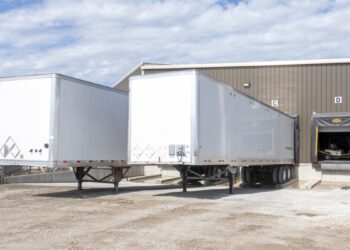
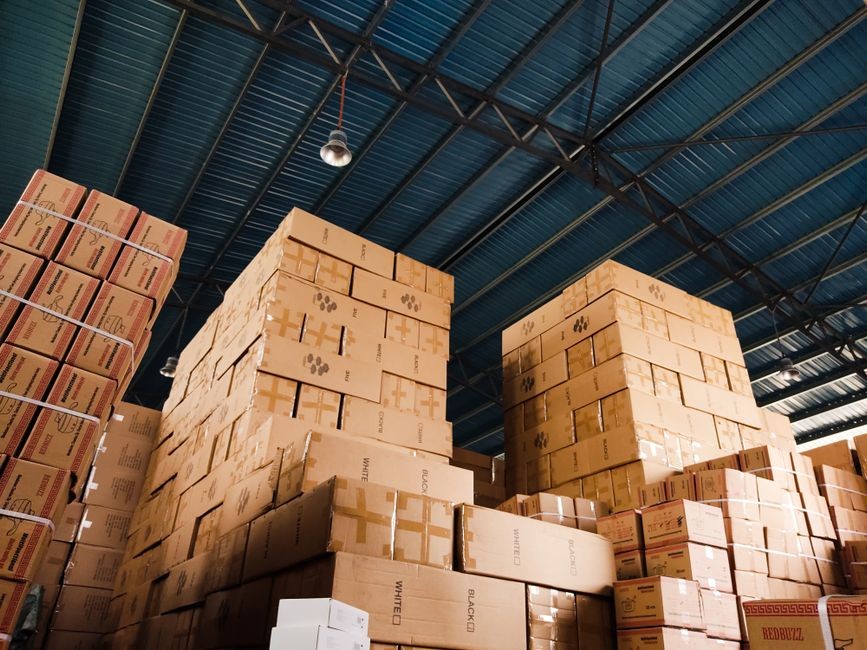
Within automation initiatives, receiving and unloading operations stand out as the most urgent focus area. A clear majority — 54% of respondents — identified this function as their top automation priority. The rationale is operational: accuracy problems and product damage continue to create persistent inefficiencies during inbound handling. According to the source, these issues directly constrain throughput capacity and inflate labor rework costs. This data point reinforces industry-wide observations that inbound logistics remains one of the least automated yet highest-impact segments of warehouse operations — a bottleneck affecting downstream picking, storage, and shipping.
Broader Industry Context
This emphasis on throughput acceleration mirrors parallel developments across the logistics technology sector. Locus Robotics’ acquisition of Nexera in May 2026 — aimed at enhancing robotic picking speed and accuracy — directly supports throughput goals. Similarly, OnePointOne’s deployment of an AutoStore-based AS/RS as the foundation of its vertical farming platform demonstrates how high-density, high-velocity material handling systems are now being adapted beyond traditional warehousing into adjacent industrial applications. Meanwhile, FORT Robotics’ acquisition of Mapless AI signals growing demand for autonomous navigation stacks capable of operating safely and efficiently in dynamic, unstructured receiving zones — where forklifts, AMRs, and human workers converge.
Practitioner Implications
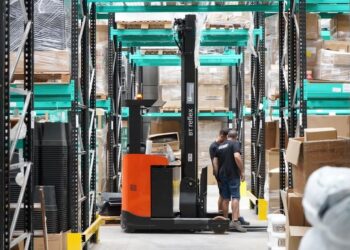
For supply chain professionals, the prioritization of throughput means procurement criteria for lift trucks are evolving. Buyers increasingly evaluate forklifts not only on load capacity or mast height but on integration readiness with WMS/WCS platforms, real-time telematics latency (sub-200ms response times cited in recent benchmarking studies), and compatibility with mixed-fleet orchestration software. Forklift OEMs reporting Q1 2026 order growth — including those named in MMH’s Top 20 Lift Truck Suppliers 2025 list — are responding with models featuring embedded 5G modems and standardized API documentation. These technical upgrades reduce integration timelines from weeks to hours, accelerating time-to-throughput-gain.
Source: www.mmh.com
Compiled from international media by the SCI.AI editorial team.