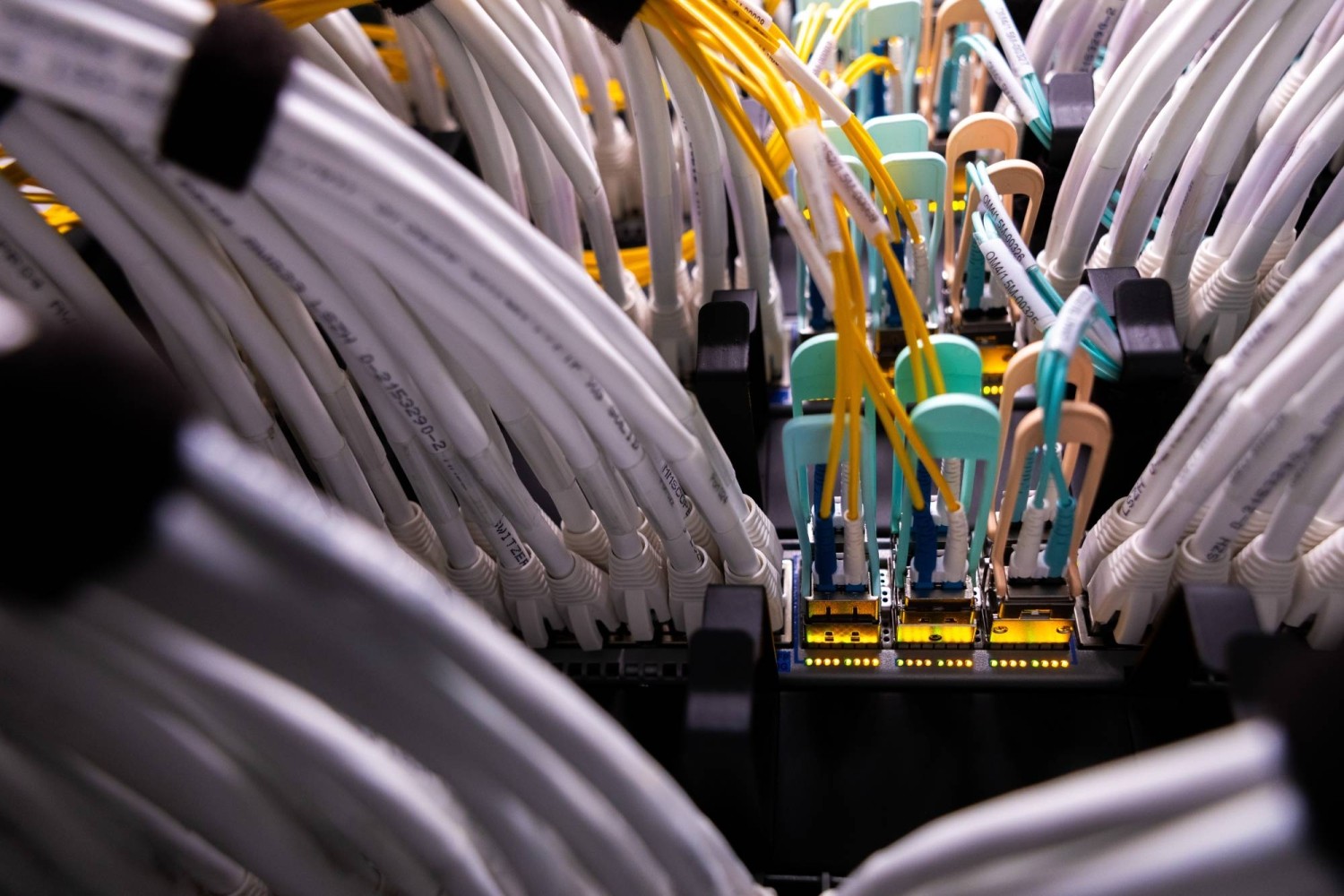
According to www.japantimes.co.jp, Sakura Internet — an Osaka-based data center operator — is accelerating capital investment to meet surging demand for AI infrastructure in Japan. Founder and CEO Kunihiro Tanaka, 48, confirmed the company may increase its fiscal year 2026 capital expenditures to as much as ¥20 billion to ¥30 billion ($125 million to $190 million), a figure nearly seven times higher than its originally announced plan of ¥4.4 billion.
AI Demand Driving Capacity Expansion
Tanaka cited intense utilization pressure as the primary catalyst:
“AI server usage rates are 80% to 90%,” Tanaka, 48, said in an interview.
With order volumes rising sharply, the company is prioritizing rapid scale-up — not only in compute capacity but also in specialized hardware. Sakura Internet has stated it is evaluating an additional ¥6.5 billion in capital spending specifically for procuring AI accelerators, underscoring the technical specificity required to support large language models and inference workloads.
Geopolitical Context and National Resilience
The expansion occurs amid growing recognition across Asia-Pacific that sovereign control over foundational AI infrastructure — chips, data centers, and models — directly underpins national resilience. As the source notes, countries including Japan view this capability as essential in a technology landscape increasingly bifurcated between U.S. and Chinese ecosystems. This aligns with broader Japanese government initiatives: in May 2026, just days before Sakura’s announcement, Japan’s Minister Takaichi unveiled a $19 billion extra budget for digital infrastructure — explicitly excluding new borrowing — signaling coordinated public-private momentum.
Industry-Wide Acceleration
Sakura’s move reflects a wider industry trend. NTT Docomo, another major Japanese telecom and infrastructure player, recently sold Tokyo land plots for ¥59 billion — proceeds widely expected to fund AI and cloud investments. Globally, hyperscalers and colocation providers have reported similar strain: Uptime Institute’s 2025 Global Data Center Survey found that 68% of Japanese enterprise respondents cited AI-driven workload growth as their top driver for new data center builds or upgrades — the highest regional share in Asia. Meanwhile, global AI chip shipments grew 124% year-on-year in Q1 2026 (according to IDC), further validating the hardware procurement urgency Sakura is addressing.
Practical Implications for Infrastructure Planners
For supply chain professionals managing IT infrastructure procurement, Sakura’s pivot highlights three concrete operational shifts. First, lead times for AI-optimized servers and accelerators now routinely exceed 24 weeks — up from 8–12 weeks in 2024 — demanding earlier forecasting and buffer stock strategies. Second, power density requirements have surged: new Sakura AI racks target 45 kW per rack, more than double the 20 kW average in legacy deployments, triggering concurrent upgrades in cooling and electrical distribution. Third, geographic diversification is intensifying: Sakura’s current expansion focuses on Osaka and Tokyo, but its 2025–2026 roadmap includes feasibility studies for northern Kyushu and Hokkaido — regions offering lower ambient temperatures and stable grid access. These decisions directly affect vendor selection, SLA negotiation, and long-term TCO modeling for enterprise AI deployment.
Source: www.japantimes.co.jp
Compiled from international media by the SCI.AI editorial team.