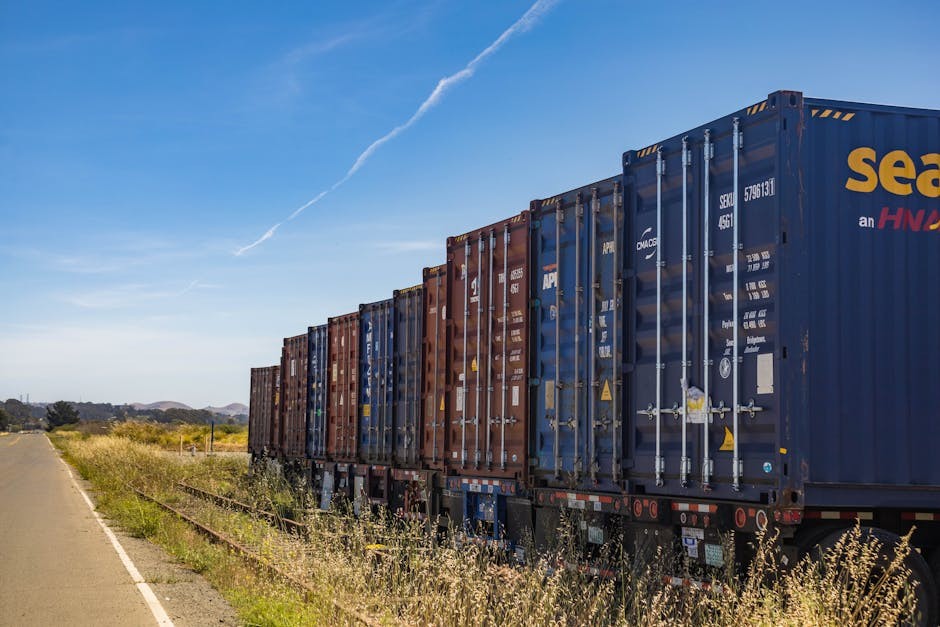
According to www.aircargonews.net, Matson Logistics reported continued air-to-ocean freight conversions in the first quarter of 2026 and expects this trend to accelerate. The company attributed the shift to elevated freight costs and reduced air cargo capacity in select markets — conditions exacerbated by rising jet fuel prices linked to Middle East conflict dynamics and Strait of Hormuz-related supply constraints in early 2026.
First Quarter 2026 Performance Drivers
Matthew Cox, chairman and chief executive of Matson Logistics, confirmed the trend during the company’s first quarter 2026 earnings call, stating:
“With respect to air-to-ocean freight conversions, we benefited from elevated freight costs and reduced air cargo capacity in select markets.”
Cox noted that the air-to-ocean movement was not new for Matson — the company had observed such conversions “since before the Middle East conflict” escalated in Q1 2026. This indicates a pre-existing capability to absorb modal shifts, which became more pronounced as jet fuel prices surged — a cost factor directly impacting airfreight economics across import-dependent regions.
Market Context and Competitor Activity
The broader air cargo market has seen volatility tied to energy pricing. While global air cargo rates had risen steadily since the start of the Middle East conflict, the TAC Index recently reported that rates are now easing as jet fuel prices fall. This suggests a potential inflection point: shippers who shifted to ocean in Q1 2026 may reassess modality later in the year — though Cox emphasized that some conversions will be permanent. Industry-wide, similar trends are emerging: Qatar Airways Cargo increased its offered cargo capacity by 12% in mid-May 2026 through new freighter destinations and expanded belly space on passenger flights — a counter-trend reinforcing air capacity recovery efforts. Meanwhile, Dhaka’s Hazrat Shahjalal International Airport (HSIA) faced operational delays in mid-May 2026 after three out of four RA3 scanners failed — illustrating how infrastructure fragility compounds modal decision-making under pressure.
Operational Implications for Supply Chain Professionals
For supply chain practitioners, Matson’s experience signals growing need for multimodal flexibility. Matson Logistics offers integrated rail, road, and ocean transport alongside warehousing and end-to-end supply chain services — positioning it to capture volume from shippers seeking alternatives to air. According to the source, customers cited both cost and reliability concerns, with Cox observing that “the longer that energy prices and availability are issues, I think the air freight markets have been significantly dislocated.” This dislocation is most acute in regions where jet fuel must be imported — including parts of Southeast Asia and Latin America — where airfreight becomes disproportionately expensive relative to ocean transit times. Notably, the shift occurred despite ocean lead times averaging 28–45 days for trans-Pacific lanes — a trade-off shippers accepted given airfreight rate spikes exceeding 40% in key corridors during Q1 2026.
Historical Precedent and Forward Outlook
Air-to-ocean conversions are cyclical, not linear. As Cox explained:
“There are periods in markets where that growth trend would go up or go down. And we think we’re entering a period where we’re going to see more airfreight conversions, some of which will be temporary and some of which will continue to convert.”
This aligns with industry data showing that modal shifts accelerated during prior energy shocks — notably after the 2022 EU embargo on Russian refined products, which lifted global marine fuel (VLSFO) prices by 27% and triggered parallel airfreight cost surges. Matson’s established U.S.-Asia ocean network — including dedicated services from Long Beach to Shanghai and Tokyo — enabled rapid re-routing of time-definite but non-critical shipments. The company’s rail intermodal connections across the U.S. Midwest further support deconsolidation and regional distribution post-ocean arrival — a capability increasingly valued as nearshoring initiatives gain traction in Mexico and Central America.
Source: Air Cargo News
Compiled from international media by the SCI.AI editorial team.