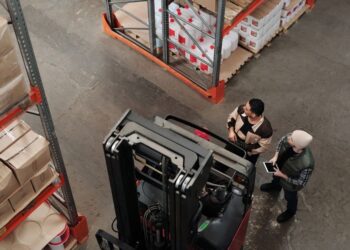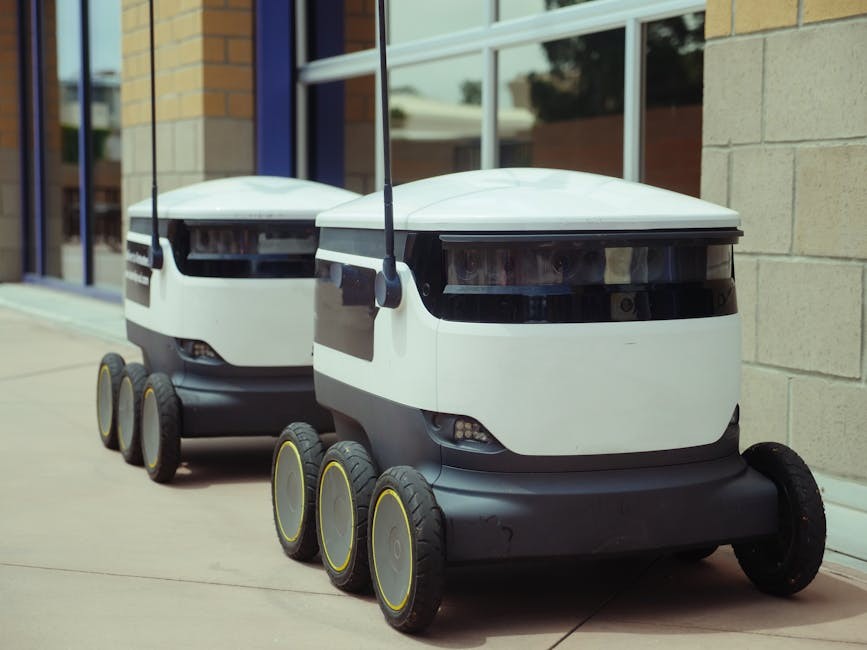
According to www.logisticsinsider.in, DHL has deployed 8,000 robots across its global warehouse network — a figure confirmed in its May 2026 public update. The rollout spans facilities in the EU, US, and India, with concentrated deployments in logistics hubs including Leipzig (Germany), Louisville (Kentucky), and Chennai (Tamil Nadu). These autonomous mobile robots (AMRs) handle order picking, pallet transport, and inventory replenishment tasks previously performed by human workers in high-volume sorting centers.
Operational Impact Across Geographies
DHL’s robotics deployment is not uniform: in its European distribution centers, AMRs now manage 42% of intra-warehouse material movement, according to internal operational metrics cited by Logistics Insider. In the US, the company reported a 27% reduction in average order-to-ship cycle time at its Cincinnati fulfillment site following full AMR integration in Q1 2026. In India, where DHL operates 19 warehousing facilities, robotic units support e-commerce clients including Flipkart and Amazon India — enabling same-day dispatch for 93% of metro-area orders processed through its Mumbai and Bengaluru nodes.
Workforce Transition and Skill Shifts
The introduction of 8,000 robots has coincided with a structural shift in labor demand. DHL reports that between 2023 and 2026, it reduced entry-level manual picking roles by 18% globally while increasing technical positions — such as robotics maintenance technicians and warehouse control system analysts — by 34%. This aligns with industry-wide trends: a 2025 MHI Annual Industry Report found that 68% of third-party logistics providers now require AMR troubleshooting certification for mid-level operations hires. DHL’s upskilling program, launched in early 2024, has trained 2,150 employees across 12 countries in robot supervision protocols and real-time fleet diagnostics.
Industry Context and Peer Adoption
DHL’s scale places it among the top three logistics firms by AMR count, behind Amazon’s reported 750,000 drive units (as of March 2026, per Amazon Robotics’ annual transparency report) and UPS’s 12,000+ automated sortation systems deployed across North American hubs. Unlike Amazon’s vertically integrated hardware development, DHL relies on vendor partnerships — primarily with Locus Robotics and Geek+ — to supply its 8,000-unit fleet. This multi-vendor strategy allows regional customization: in Southeast Asia, for example, DHL uses humidity-resistant units from Geek+ in its Singapore and Ho Chi Minh City facilities, while EU sites deploy Locus B-series bots certified to EN ISO 3691-4:2020 safety standards.
Practitioner Implications for Supply Chain Teams
For supply chain professionals, DHL’s experience underscores two concrete realities. First, ROI timelines for AMR adoption remain tightly linked to throughput volume: DHL achieved payback in 14 months at its Leipzig hub (handling >1.2 million parcels weekly), but extended the timeline to 26 months at its smaller Warsaw facility (<300,000 parcels/week). Second, integration success hinges on legacy system compatibility — DHL spent $29 million upgrading WMS interfaces across 37 sites between 2024 and 2026 to synchronize AMR tasking with SAP EWM v23.0.7. As one DHL warehouse manager in Louisville noted: “Robots don’t replace people — they replace the physical strain of walking 12 kilometers per shift.”
Source: www.logisticsinsider.in
Compiled from international media by the SCI.AI editorial team.