Explore

  • Trending
  • Latest
  • Tools
  • Browse
  • AI Assistant
  • Subscription Feed

Logistics

  • Ocean
  • Air Cargo
  • Road & Rail
  • Warehousing
  • Last Mile

Regions

  • Southeast Asia
  • South Asia
  • Central Asia
  • Japan & Korea
  • Middle East
  • Europe
  • Russia
  • Africa
  • North America
  • Latin America
  • Australia
SCI.AI
  • Supply Chain
    • Strategy & Planning
    • Logistics & Transport
    • Manufacturing
    • Inventory & Fulfillment
  • Procurement
    • Strategic Sourcing
    • Supplier Management
    • Supply Chain Finance
  • Technology
    • AI & Automation
    • Robotics
    • Digital Platforms
  • Risk & Resilience
  • Sustainability
  • Research
  • Expert Columns
  • English
    • Chinese
    • English
No Result
View All Result
  • Login
  • Register
SCI.AI
No Result
View All Result
Home Latin America Supply Chain

Bluebotics CEO: Mixed Fleet ROI Drops 20% Without Safety Integration

2026/05/22
in Latin America Supply Chain
0 0
Bluebotics CEO: Mixed Fleet ROI Drops 20% Without Safety Integration

By Robert J. Bowman, SupplyChainBrain

Hybrid Fleet Operations Challenge Warehouse Efficiency

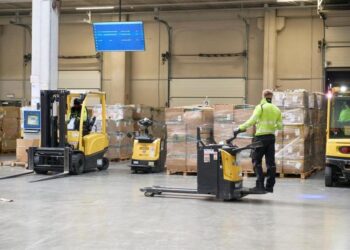
According to SupplyChainBrain, the integration of automated guided vehicles (AGVs) and human-operated forklifts in the same warehouse environment poses significant operational and safety risks if not properly managed. Nicola Tomatis, chief executive officer of Bluebotics, emphasized that while automation offers efficiency gains, the coexistence of both human-driven and robotic systems can reduce return on investment (ROI) by up to 20% due to inefficiencies and incidents.

“Having both automated vehicles and human-operated forklifts within the same facility can cause problems if they’re not properly managed.” — Nicola Tomatis, CEO, Bluebotics

Safety Risks Rise with Mixed Fleet Deployments

One common scenario involves a human-operated forklift navigating a dead-end aisle when an AGV enters unexpectedly, creating a blockage. These collisions or near-misses can lead to costly downtime and safety hazards. Tomatis noted that human drivers typically lack the collision-avoidance systems built into automated vehicles, increasing the likelihood of accidents. In one reported incident, a forklift operator reversed without seeing an AGV, resulting in a collision that damaged equipment and delayed operations.

The source states that facilities have begun equipping forklifts with laser scanners to match the safety capabilities of AGVs. This shift reflects a growing industry trend toward sensor-enabled hybrid fleets. According to Bluebotics, the inclusion of real-time location systems and centralized data management is critical to ensuring both vehicle types operate safely and efficiently in shared spaces.

Industry Shift Toward Integrated Sensor Systems

While some warehouses initially relied on wideband communication systems to coordinate mixed fleets, recent deployments show a preference for equipping forklifts with active sensing technology. These upgrades allow for real-time tracking of both human and machine operators, improving situational awareness across the facility. The source notes that such systems are now being adopted by an increasing number of distribution centers, especially those managing high-volume e-commerce fulfillment.

Despite the advantages of automation, Tomatis stressed that human operators remain essential for handling complex, unstructured tasks. “The human remains the most flexible solution in the world,” he said. “There will be processes that you’re not able to automate.”

Industry data from 2024 shows that over 68% of large warehouses now operate with mixed fleets, up from 42% in 2020, according to a report by the Material Handling Institute. This growth underscores the need for scalable safety and coordination technologies.

ROI and Safety as Key Performance Indicators

Facility managers must balance automation investment with operational continuity. A study cited by the source found that warehouses with poorly integrated mixed fleets experienced a 20% reduction in ROI compared to those using centralized monitoring and sensor-based coordination. This decline is attributed to increased downtime, higher maintenance costs, and delayed order fulfillment.

Best practices now include deploying unified software platforms that aggregate data from both AGVs and forklifts. These systems enable real-time alerts, route optimization, and incident tracking—key tools for improving both safety and efficiency.

Source: Supply Chain Brain

Compiled from international media by the SCI.AI editorial team.

More on This Topic

  • Ormuz Crisis Halts $125B in Cargo, Asia Builds Supply Chain Resilience (Jul 9, 2026)
  • Brazilian Orange Juice Export Revenue Falls 30% in 2025/26 (Jul 8, 2026)
  • NY Fed Supply Chain Index Falls to -1.06 in March (Jul 8, 2026)
  • Toyota invests $3.6B to shift Tacoma production to Texas (Jul 7, 2026)
  • Brazil’s China exports up 24.4% in June, $19.8B H1 surplus (Jul 6, 2026)
ShareTweet

Related Posts

Ormuz Crisis Halts $125B in Cargo, Asia Builds Supply Chain Resilience
Latin America Supply Chain

Ormuz Crisis Halts $125B in Cargo, Asia Builds Supply Chain Resilience

July 9, 2026
0
Brazilian Orange Juice Export Revenue Falls 30% in 2025/26
Latin America Supply Chain

Brazilian Orange Juice Export Revenue Falls 30% in 2025/26

July 8, 2026
2
NY Fed Supply Chain Index Falls to -1.06 in March
Latin America Supply Chain

NY Fed Supply Chain Index Falls to -1.06 in March

July 8, 2026
2
Toyota invests $3.6B to shift Tacoma production to Texas
Latin America Supply Chain

Toyota invests $3.6B to shift Tacoma production to Texas

July 7, 2026
6
Brazil’s China exports up 24.4% in June, $19.8B H1 surplus
Latin America Supply Chain

Brazil’s China exports up 24.4% in June, $19.8B H1 surplus

July 6, 2026
7
EU imposes €3 duty per parcel, ending de minimis exemption
Latin America Supply Chain

EU imposes €3 duty per parcel, ending de minimis exemption

July 3, 2026
12

Leave a Reply Cancel reply

Your email address will not be published. Required fields are marked *

Recommended

Trailer Storage Demand Up 37% Amid Tariffs, Nearshoring

Trailer Storage Demand Up 37% Amid Tariffs, Nearshoring

6 Views
March 28, 2026
Container Rates Surge 239% Amid Carrier Oligopoly, Not Demand

Container Rates Surge 239% Amid Carrier Oligopoly, Not Demand

12 Views
July 4, 2026
Zhipu AI Shares Surge 48% as US Blocks Anthropic Models

Zhipu AI Shares Surge 48% as US Blocks Anthropic Models

28 Views
June 26, 2026
US pushes India for trade deal amid $34.41B surplus, tariff uncertainty

US pushes India for trade deal amid $34.41B surplus, tariff uncertainty

19 Views
May 26, 2026
Show More

SCI.AI

Global Supply Chain Intelligence. Delivering real-time news, analysis, and insights for supply chain professionals worldwide.

Categories

  • Supply Chain Management
  • Procurement
  • Technology


  • Risk & Resilience
  • Sustainability
  • Research

© 2026 SCI.AI. All rights reserved.

Powered by SCI.AI Intelligence Platform

Welcome Back!

Sign In with Facebook
Sign In with Google
Sign In with Linked In
OR

Login to your account below

Forgotten Password? Sign Up

Create New Account!

Sign Up with Facebook
Sign Up with Google
Sign Up with Linked In
OR

Fill the forms below to register

All fields are required. Log In

Retrieve your password

Please enter your username or email address to reset your password.

Log In

Scan to share via WeChat

Open WeChat and scan the QR code to share

QR Code

Add New Playlist

No Result
View All Result
  • Supply Chain
    • Strategy & Planning
    • Logistics & Transport
    • Manufacturing
    • Inventory & Fulfillment
  • Procurement
    • Strategic Sourcing
    • Supplier Management
    • Supply Chain Finance
  • Technology
    • AI & Automation
    • Robotics
    • Digital Platforms
  • Risk & Resilience
  • Sustainability
  • Research
  • Expert Columns
  • English
    • Chinese
    • English
  • Login
  • Sign Up

© 2026 SCI.AI