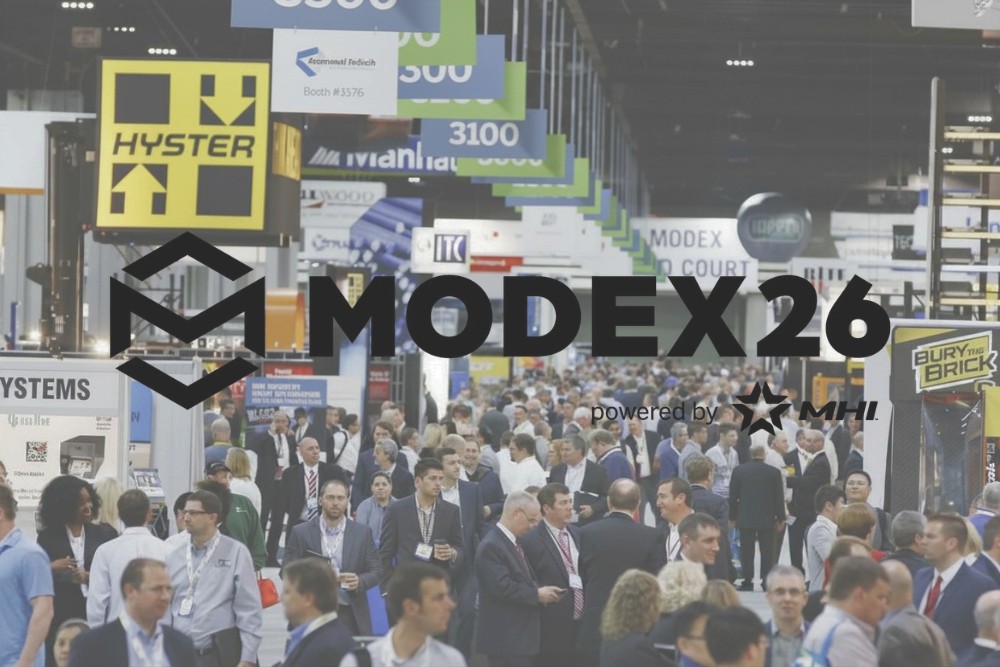
According to www.globaltrademag.com, the 2026 MODEX exhibition in Atlanta marked a decisive pivot in global supply chain strategy — from cost containment to technology-driven competitive advantage. The event’s defining theme was the operationalization of AI and automation, with industry leaders declaring the supply chain a “strategic weapon”.
The AI Inflection Point
The newly released 2026 MHI Annual Industry Report, Rewiring the Future: A Supply Chain Playbook for Innovation, states that 56% of supply chain leaders are currently increasing their technology and innovation investments. Of those, 52% plan to spend over $1 million, while 17% are planning investments exceeding — though the source cuts off before specifying the upper threshold.
Leadership Mandate and Event Expansion
This strategic shift was underscored during the opening keynote by Richard McPhail, Chief Financial Officer of The Home Depot, who declared the transformation of the supply chain from a traditional cost center into a “strategic weapon”. His remarks set the tone for the entire event. In response to MODEX 2026’s explosive growth, John Paxton, CEO of MHI, announced that MODEX will expand to a second location in Las Vegas starting in October 2028.
Execution Over Exploration
For attendees at the Georgia World Congress Center, the message was unambiguous: the era of merely discovering new technologies has ended. As stated in the source, “the focus must now shift entirely to physical execution”.
Context for Practitioners
This acceleration mirrors broader industry momentum. According to established public reporting, major logistics providers such as C.H. Robinson and DHL have rolled out AI-powered demand forecasting and dynamic routing tools since 2024. Similarly, warehouse automation adoption — particularly autonomous mobile robots (AMRs) and integrated digital twin platforms — has grown rapidly across North American distribution centers, driven by labor constraints and e-commerce fulfillment pressures. For supply chain professionals, this means vendor evaluation must now prioritize interoperability with existing WMS/TMS ecosystems and measurable ROI on throughput, labor reduction, and exception handling — not just feature sets. Investment decisions are increasingly tied to near-term deployment velocity and change management readiness, not just long-term vision.
Source: www.globaltrademag.com
Compiled from international media by the SCI.AI editorial team.